“Not all of us can do great things. But we can do small things with great love.” (Mother Teresa)
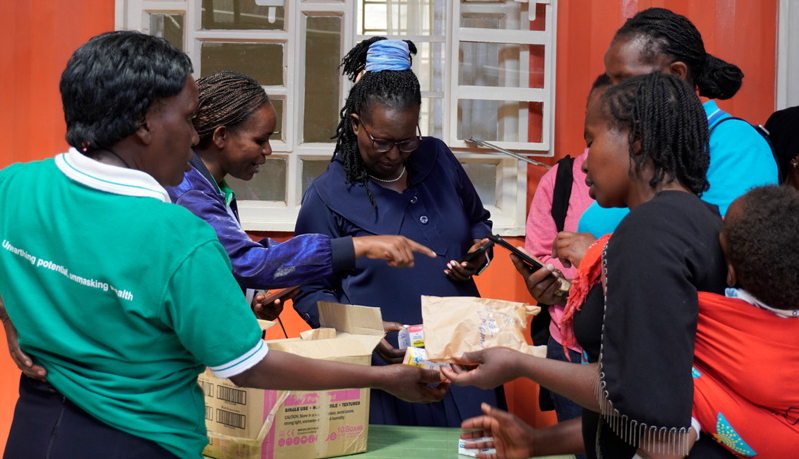
The Women’s Institute at William Carey International University recently had the rare and humbling opportunity to speak with Jane Thuo, the Founder and Managing Director of Dorcas Creation Kenya. It was a conversation marked by honesty, quiet laughter, tears held back, and a deep sense that real transformation often begins in places few people are willing to stay long enough to listen.
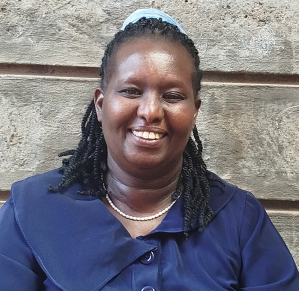
Jane founded Dorcas Creation Kenya to work with women in low-income and informal settlements in Kenya, many of whom carry life on their backs quite literally. Single mothers, young girls forced out of school, women surviving violence, abandonment, hunger, and stigma are words that begin to capture their stories.
Jane describes the mission simply: "transforming women one at a time through biblical discipleship and economic empowerment". Simple words. Heavy realities.
A beginning that did not look promising
Jane’s own story begins far from leadership titles and organizational vision statements. It begins with interruption. As a teenager, she was forced to leave school because her transfer papers were lost when her dad moved to a new city for work. For two years, she stayed home with no education, no documents, and no clear future.
Her daily work? Herding her father’s goats and sheep. “It was very embarrassing for me,” Jane recalls. “People would pass by, and I would hide myself because of the comments they made.” Anyone who has ever felt watched, judged, or quietly dismissed will recognize her instinct to hide.
She made a promise that would later shape everything.
Jane did not hide from God, though. She carried a Bible with her into the fields. There, between long walks and longer silences, she began to pray. Reading about David, another shepherd overlooked by many, she made a promise that would later shape everything. “One day you will take me out of this situation,” she told God. “And I will follow not after the flock, but after your people.“ It was not a polished prayer. It was a desperate one. Those tend to be the most honest.
From bead work to putting bread on the table
Through God’s mercy a friend of her father intervened and made it possible for Jane to finally return to school. Though her friends had already graduated, Jane persevered and completed high school and then was able to go to university. When she finished her studies, she worked full-time in campus ministry.
She found herself once again surrounded by women in survival mode.
There she found herself once again surrounded by women in survival mode. They gathered in her home for prayer and Bible study. Over time, their stories became harder to ignore. Hunger. Debt. Exploitation. One woman admitted she had turned to witchcraft simply to survive poverty.
Jane listened and realized something important: prayer alone, though essential, was not enough.
Jane said, “I kept asking myself, how can I help a woman get money in her pocket?” That question is deceptively simple. It carries within it the weight of dignity, agency, and survival.
Like many holistic mission groups, Dorcas Creation initially began with bead work and jewelry-making. It was familiar, accessible, and helpful. But Jane noticed a pattern. Jewelry could supplement income, but it could not always sustain a household. School fees, rent, food, medication, these required something more consistent. So, Jane shifted. Quietly. Strategically. Courageously.
Dorcas Creation began training women in skills people need every day.
Dorcas Creation began training women in skills people need every day: hairdressing, tailoring, catering, beauty services, soap and detergent making, yogurt production, and fuel-efficient cooking. Skills that do not wait for tourists. She taught them skills to start their own businesses so they could pay their rent.
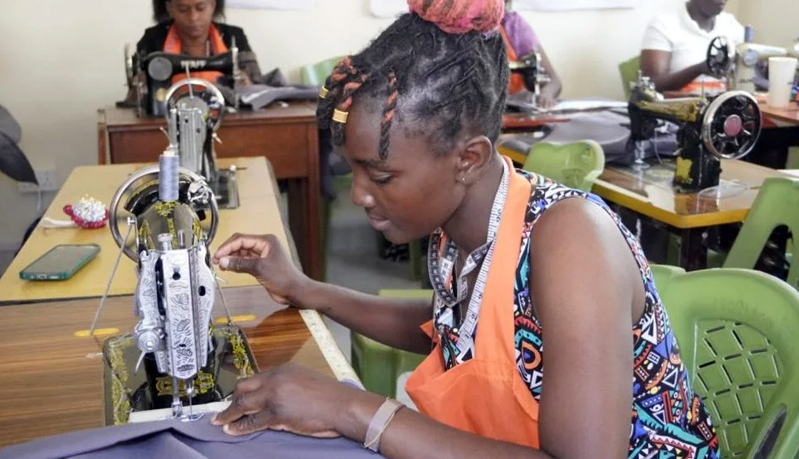
“We designed short courses because women are the breadwinners.” Jane explains. “They come twice a week, three hours a day, for ten weeks.” It sounds simple. But for a woman balancing childcare, trauma, and survival, showing up twice a week is an act of courage.
Walking with women through heavy realities
The challenges facing the women Dorcas Creation serves are not abstract. They are layered and relentless. Unemployment caused by limited education and skills. Gender-based violence that often begins at home. Early marriage and teenage pregnancy that pushes girls out of school before they have had a chance to imagine a future. Food insecurity. Limited access to healthcare.
Then there are the mothers of children with disabilities. In many communities, disability is still viewed as a curse. Jane speaks carefully here, but honestly. "Many women are abandoned by husbands. Families withdraw. Childcare options disappear. Therapy and medication are expensive. Mental health struggles quietly grow.“ The emotional and financial strain affects them deeply,” Jane says. She pauses. The weight of those words lingers longer than the sentence itself.
Hope, it turns out, often begins with companionship.
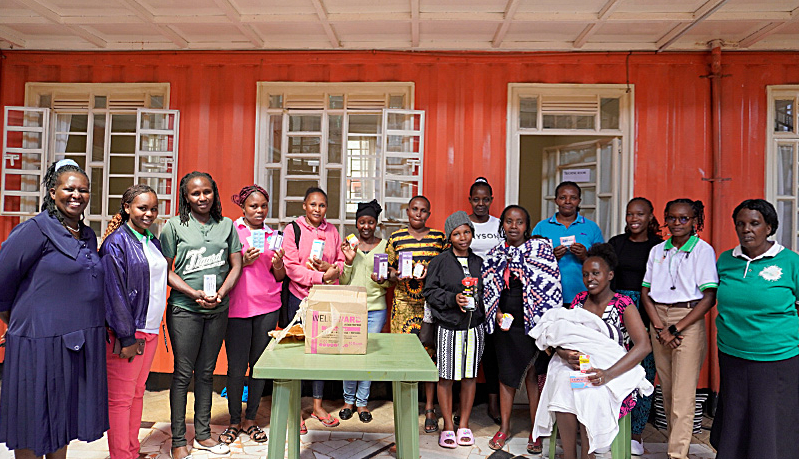
Dorcas Creation responds with what it can: therapy services, skills training, counseling, and community. Mothers learn skills while their children receive therapy for their disabilities. Women sit together, learning, praying, sometimes laughing at their own small business mistakes. Hope, it turns out, often begins with companionship.
As Dorcas Creation’s work has expanded, practical limitations have become more visible. Transportation remain some of the operational challenges. Without a dedicated vehicle, reaching families beyond the center often depends on irregular and costly transport arrangements.
This affects follow-up visits, therapy outreach, and timely responses to urgent cases. “We are being called to serve in many places,” Jane notes, “but sometimes we simply cannot go.” The constraint does not diminish the vision, but it shapes how far and how often the team can extend their presence.
What keeps her going
“My relationship with God has been paramount,” Jane says. Not as a slogan. As a survival truth.
Prayer shapes the rhythm of Dorcas Creation.
Prayer shapes the rhythm of Dorcas Creation. Teams pray together. Women are taught to pray for themselves. Faith is not added on top of the work; it is woven through it.
“I believe one of the causes of poverty is broken relationships,” Jane reflects. “Broken relationships with God, with oneself, with others.” It is a deeply theological statement, delivered with the gentleness of lived experience.
More than 4,000 women have been equipped.
Over the years, more than 4,000 women have been equipped, and many have come to faith in Christ. Former participants are now teachers, accountants, entrepreneurs, pastors, and founders of new organizations of their own. Jane shares these stories not with pride, but with gratitude. Sometimes with a soft laugh, as if still surprised by what God can do with very little.
Loving, small, faithful
Reflecting upon her own story she says, “Somebody showed me mercy. I want to show mercy to others.” Mercy, in her hands, looks like skills training, therapy sessions for children with disabilities, Bible studies, sitting with women who are tired of needing to be strong all the time.
The Lord says, "I have come so that they may have life, life in all its fullness." John 10:10 (GNB) At Dorcas Creation Kenya, fullness of life does not arrive all at once. It arrives slowly, in small businesses, in healed relationships, in people coming to faith, in one brave woman at a time.
Benjamin (Ben) Mudahera is a Guest Writer at the Women’s Institute at William Carey International University. Ben is a development practitioner and writer who is currently completing a Master of Arts in Development Studies, specializing in Global Women’s Empowerment. Ben has over 15 years of experience serving across humanitarian and development organizations in Rwanda. His experience spans education, refugee affairs, WASH, and community development, with a strong focus on supporting women, youth, and marginalized communities. Through his writing, Ben brings a people-centered, reflective, and faith-informed perspective, seeking to amplify stories of dignity, leadership, and transformation.
Mary Lederleitner has a MA in Intercultural Studies from Wheaton College and a PhD in Educational Studies from Trinity Evangelical Divinity School (TEDS). She has taught as an Adjunct Professor in the graduate programs at both institutions, and currently in the D.Min. Program at TEDS. Mary served for twenty years in a variety of global leadership roles with Wycliffe Global Alliance and SIL Global. She has authored books including Women in God’s Mission: Accepting the Invitation to Serve and Lead which won a book-of-the-year award from Christianity Today in the Missions / Global Church Category. Mary now serves as Associate Professor and Director of the Women’s Institute at William Carey International University.
William Carey International University (WCIU) seeks to provide innovative distance education to enhance the effectiveness of scholar-practitioners as they serve with others to develop transformational solutions to the roots of human problems around the world.