An advocacy group defending Judeo-Christian values in Australia has launched a database to track infringements of Christians’ religious freedom.
The Canberra Declaration, a group calling on Australian leaders to rebuild the country’s Judeo-Christian foundations, on March 11 launched the Australian Christian Freedom Index (ACFI) with a 40-page report on anti-Christian currents in 2025.
The launch of the index and the report came in a webinar in which key Christian leaders and legal experts mapped religious discrimination across Australia.
Panelists argued that anti-discrimination laws in Australia silence the church. They contended that a formal index must prove to the government that structural forces erode religious rights. To support this, the group is organizing a survey to record infringements of those liberties.
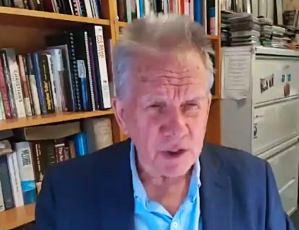
“The ACFI brings together multiple lines of evidence to paint the most comprehensive picture of Christian freedom in Australia ever produced,” said Kurt Mahlburg, one of the leaders of the Canberra Declaration.
Another leader, Warrick Marsh, said Australia needs freedom to share the gospel, “and that is probably the most critical freedom.”
“We’ve been losing these freedoms for many, many years – for decades – and we need to make a stand,” Marsh said.
He described the Index as a “line in the sand” to show politicians, the media and those antagonistic toward Christianity the benefits of religious freedom. He argued that Australia must maintain its foundations as a nation that holds Christian freedom as a core value.
The leaders intend to build a database of hard evidence and survey results to illustrate how the state restricts Christian freedoms. They plan to present the document to politicians and the media as evidence that Australian Christians face rising discrimination.
A central concern involves the “rule of silence,” in which Christians endure pressure to keep their faith private, especially regarding issues such as gender, parenting and education, said George Christensen, a former Member of Parliament representing CitizenGO.
Mahlburg noted that the group is auditing state laws following incidents of the state forcing Christian schools to hire staff members who do not share the institutions’ religious beliefs. He also cited cases of laws compelling medical workers to participate in abortion and euthanasia, alongside restrictions on street preaching near abortion clinics.
“We want to see which states are the freest and which are the least free,” Mahlburg said. “Hopefully, that puts the wind up legislators in the different parliaments.”
The panel highlighted lack of robust legal protection for religious belief in Australia. While the United States relies on the First Amendment, Mahlburg observed that Australia offers only small “exemptions” rather than strong rights.
“What strikes me is that in Australia, we really don’t have religious freedom explicitly protected in law – not robustly,” Mahlburg said.
He added that while Section 116 of the Australian Constitution offers a “nod” to religious freedom, the government has failed to build upon it.
“In the last couple of decades, federal and state governments have brought in anti-discrimination and vilification legislation,” Mahlburg said. “Christian freedom in Australia has become a series of ‘carve-outs’ or exemptions in other laws...Structurally, the situation in Australia is not good.”
Christensen lamented that Christians are learning a “new rule” in Australia: “Stay quiet.”
“The idea is that your faith is not to be lived openly or expressed in ‘controversial’ areas like gender, parenting or education,” Christensen said. “It’s not paranoia; it’s a pattern of expanding rules and complaint-based systems being used to pressure us into silence. People are self-censoring to protect their jobs.”
Christensen rebutted the notion that the ability to “still go to church and sing hymns” constitutes true religious freedom, calling that a “hollowed-out version of faith.” He reported that the U.S. State Department has already expressed interest in the index.
Other participants included Michelle Pearse, CEO of the Australian Christian Lobby (ACL); Peter Downie, National Director of FamilyVoice Australia; and Augusto Zimmerman, a law professor establishing Christian law schools. Zimmerman, who is establishing a Christian law school in Sydney, argued that the state’s “protection” via anti-discrimination laws remains unwarranted.
“I want the state to leave me alone,” Zimmerman said. “The greatest sin of Australia is the idolatry of the government. We need to stop asking for more laws and start voting for politicians who will repeal them. I don’t feel we are free in this country anymore. What God gives, no man can take away.”
The Canberra Declaration describes itself as an active, caring, “growing community of people who have a vision for an Australia where children are safe, women are secure, families are happy, everyone receives a fair go, incentive is rewarded, integrity is paramount, life is precious, freedom is for all, including those of faith. Where everyone is able to enjoy the prosperity that comes from the revitalisation of the Judeo-Christian Values that form the foundation of our nation.”
The Canberra Declaration calls on national leaders to protect life, defend marriage, support family, rebuild Judeo-Christian foundations, secure religious freedom and safeguard children.