
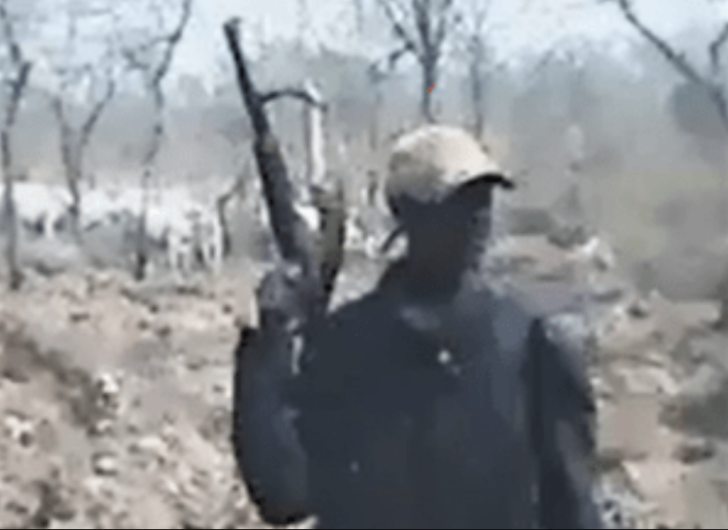
In attacks on three villages over two weeks, Fulani herdsmen killed 11 Christians and injured five others in one county in Plateau state, Nigeria.
On Sunday (May 3), Fulanis killed five Christians in Fan village, Barkin Ladi County, at about 9 p.m., said resident Bot James.
“Muslim Fulani gunmen killed five Christians in a fresh attack on Fan village, a Christian community in Barkin Ladi area of Plateau state,” James told Christian Daily International-Morning Star News. “The victims were ambushed and attacked as they were returning to their houses from their businesses within the area.”
Area community leader Rwang Tengwong corroborated the account in a press statement he issued in Jos on Monday (May 4), saying all residents of Fan village are Christians.
“The victims were ambushed, shot at and killed by the Fulani attackers as they were returning to their homes after their daily business activities in the area,” Tengwong said.
In Barkin Ladi’s predominantly Christian Kassa village, two Christians were reportedly killed on April 27; one was identified as Gyang Choji Kim. On April 19 in predominantly Christian Hurum village, also in Barkin Ladi, four Christians were slain and five others wounded, said resident Florence Yohanna.
“God have mercy and rescue us from armed Fulani band,” Yohanna said. “My village, Hurum in Barkin Ladi Local Government Area of Plateau state, has been attacked again by Fulani herdsmen; four Christians have been killed.”
Tengwong said the attack on Hurum village, Gashish District occurred at about 10 p.m.
“Fulani gunmen stormed the village and opened fire on residents, killing four Christians and injuring five others,” he said.
More Christians were killed in Nigeria than in any other country from Oct. 1, 2024 to Sept. 30, 2025, according to Open Doors’ 2026 World Watch List. Of the 4,849 Christians killed worldwide for their faith during that period, 3,490 – 72 percent – were Nigerians, an increase from 3,100 the prior year. Nigeria ranked No. 7 on the WWL list of the 50 countries where it is most difficult to be a Christian.
Numbering in the millions across Nigeria and the Sahel, predominantly Muslim Fulani comprise hundreds of clans of many different lineages who do not hold extremist views, but some Fulani do adhere to radical Islamist ideology, the United Kingdom’s All-Party Parliamentary Group for International Freedom or Belief (APPG) noted in a 2020 report.
“They adopt a comparable strategy to Boko Haram and ISWAP and demonstrate a clear intent to target Christians and potent symbols of Christian identity,” the APPG report states.
Christian leaders in Nigeria have said they believe herdsmen attacks on Christian communities in Nigeria’s Middle Belt are inspired by their desire to forcefully take over Christians’ lands and impose Islam as desertification has made it difficult for them to sustain their herds.
In the country’s North-Central zone, where Christians are more common than they are in the North-East and North-West, Islamic extremist Fulani militia attack farming communities, killing many hundreds, Christians above all, according to the report. Jihadist groups such as Boko Haram and the splinter group Islamic State in West Africa Province (ISWAP), among others, are also active in the country’s northern states, where federal government control is scant and Christians and their communities continue to be the targets of raids, sexual violence, and roadblock killings, according to the report. Abductions for ransom have increased considerably in recent years.
The violence has spread to southern states, and a new jihadist terror group, Lakurawa, has emerged in the northwest, armed with advanced weaponry and a radical Islamist agenda, the WWL noted. Lakurawa is affiliated with the expansionist Al-Qaeda insurgency Jama’a Nusrat ul-Islam wa al-Muslimin, or JNIM, originating in Mali.








