

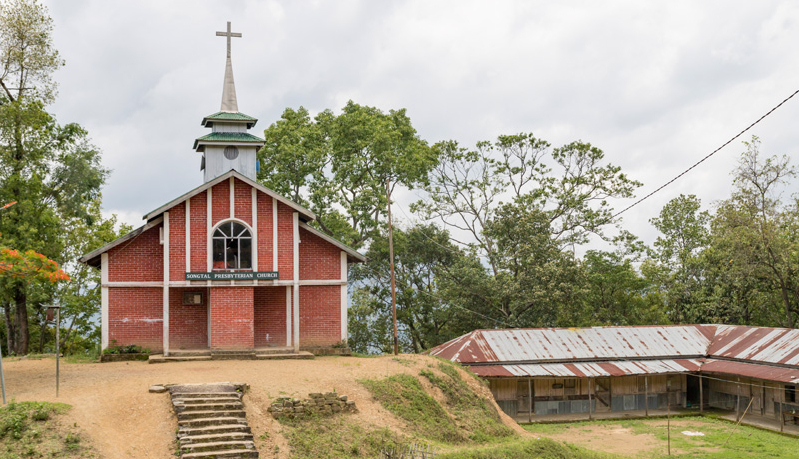
A conversation I had some years ago has stayed with me. A senior pastor in one of India's northern states, a man who had served the same rural community for more than two decades, described his own training simply. He had never attended a seminary. He had no certificate on his wall. What he had was a mentor who walked with him through his early years of ministry, a community that had trusted him through seasons of drought and difficulty, and decades of prayer that had cost him something real.
The most prepared shepherds I had ever met.
I have spent years watching pastors, churches, ministry networks, and theological institutions across very different parts of India. By most formal measures, this man would barely register as trained. By almost every measure that actually matters, he was among the most prepared shepherds I had ever met.
I have been thinking about him again recently, as conversations about measuring the global pastoral training gap have intensified. In many parts of the world, churches are growing faster than leaders are being formed. The concern motivating these efforts is genuine, and the desire to understand and address it is right.
But something in these conversations makes me uneasy, and I think it is worth naming.
The danger is that we will... allow measurement to replace formation as the goal.
The deeper danger is not that we will fail to measure pastoral training. The danger is that we will succeed, and in succeeding, quietly allow measurement to replace formation as the goal.
Global pastoral training conversations increasingly operate inside a logic that rewards what can be counted, categorized, and reported. Formal credentials can be documented. Seminar attendance can be recorded. Certificates can be counted. These things matter. They are not nothing. But they are also not the whole of what shapes a faithful shepherd.
In my context, and I suspect across much of the global Church, pastors are formed through realities that resist easy quantification. Responsibility shapes them. Failure shapes them. Suffering shapes them. Prayer shapes them. Sometimes persecution shapes them.
A pastor may accumulate impressive exposure to training programs and still be immature, proud, pastorally shallow, or morally compromised.
A pastor may accumulate impressive exposure to training programs and still be immature, proud, pastorally shallow, or morally compromised. Another may carry no institutional credential and yet be deeply trusted, biblically rooted, and spiritually mature within the community they serve.
These are not the same thing. And any framework that treats them as equivalent has already lost something essential.
There is also a harder question that rarely gets asked about the training ecosystem itself. In many parts of India, the problem is not a shortage of seminars, workshops, conferences, and programs. There is, if anything, an abundance of them.
The more searching question is whether these ecosystems are actually producing long-term pastoral formation, or whether they are producing something else. I am honestly not sure the question gets asked often enough.
High exposure to training program does not automatically produce depth of formation.
I have watched what I can only describe as a professional trainee culture develop in some contexts. Pastors move from event to event, accumulating exposure and visibility, without necessarily becoming more rooted, more accountable, or more faithful in the work entrusted to them. High exposure to training programs does not automatically produce depth of formation. In some cases, it substitutes for it.
Externally funded programs... provide not only travel and accommodation but cash payments for attendance.
Some externally driven training systems have compounded this in ways that are genuinely difficult to speak about. In some places, training cultures have become transactional. Pastors, many of them genuinely poor, have been conditioned by externally funded programs that provide not only travel and accommodation but cash payments for attendance.
Over time, attendance itself acquires a rate. Given the economic fragility of many pastoral contexts, this is understandable. It is also deeply corrosive. Formation becomes confused with event participation, and genuine pastoral development is weakened by an economy of attendance that poor pastors did not invent and cannot easily escape.
The question is not whether structure matters. It is whether we are honest about what structure alone cannot do.
The deeper problem runs further still. Seminaries have formed faithful leaders. Mentoring programs have changed lives. Structured training, at its best, has served the Church with genuine faithfulness. The question is not whether structure matters. It is whether we are honest about what structure alone cannot do.
There is a danger that the Church quietly adopts the logic of investment culture, where ministry is increasingly evaluated through visibility, scalability, measurable outcomes, and demonstrable returns rather than through the slower realities by which shepherds are actually formed.
What receives attention and continued support becomes shaped less by what forms pastors deeply and more by what can be shown convincingly to supporters. The pattern that emerges is familiar. A need is identified. Categories are standardized. Metrics are created. Mobilization follows. Training enterprises multiply. Reports demonstrate progress. Yet many of the deeper realities of pastoral formation remain largely unchanged.
Quieter, slower, more accountable forms of pastoral formation are systematically overlooked.
Global donor structures tend to reward the language of scale: churches planted, leaders trained, certificates issued. Quieter, slower, more accountable forms of pastoral formation are systematically overlooked, not because they are less effective, but because they leave less paperwork behind.
Large claims about churches planted or leaders trained may receive far less scrutiny than they deserve, because inflated numbers can end up serving the interests of many involved.
Some of the most faithful pastors I know would barely appear in any such framework. Much of what has formed them, including suffering, prayer, community trust, relational authority, apprenticeship, oral formation, and long years of faithful ministry under pressure, does not fit neatly into measurable categories.
A pastor may be deeply formed and spiritually trusted while remaining almost invisible to institutional systems.
A pastor may be deeply formed and spiritually trusted while remaining almost invisible to institutional systems. Meanwhile, a highly visible training ecosystem can generate impressive reporting metrics while producing relatively shallow long-term formation.
None of this means we should abandon efforts to understand or address the pastoral training gap. The need is real, and understanding it better is worth serious effort. But those designing measurement frameworks must remain humble about what measurement can and cannot capture.
Those designing measurement frameworks must remain humble about what measurement can and cannot capture.
Pastoral formation happens through realities that are relational, spiritual, contextual, and slow. Through mentors who stay. Through communities that hold pastors accountable. Through suffering endured with theological grounding. Through prayer that is practiced before it is preached. Through calling that is tested, not merely claimed.
These things can be encouraged. They can be cultivated. They are difficult to measure. And they must not be allowed to disappear quietly from view simply because they resist the categories a global framework requires.
The danger is not only that many pastors remain undertrained. The danger is also that we create systems which produce measurable activity, impressive reporting, and donor confidence while weakening the slower, costlier, less visible processes by which faithful shepherds are actually formed.
The shepherd I met in northern India would have had little to show any measurement framework. He had something better.
The shepherd I met in northern India would have had little to show any measurement framework. He had something better: a community that trusted him, a ministry that bore fruit over decades, and a faith that had been tested by everything the years could bring.
That, in the end, is what we are trying to produce. We should be careful not to build systems that make it harder to find.
Rev. Vijayesh Lal serves as the General Secretary of the Evangelical Fellowship of India (EFI). He has been deeply involved in training, socio-economic development, advocacy, and research initiatives in and outside India. He is the Editor of a monthly magazine AIM published by EFI publication Trust in India.


