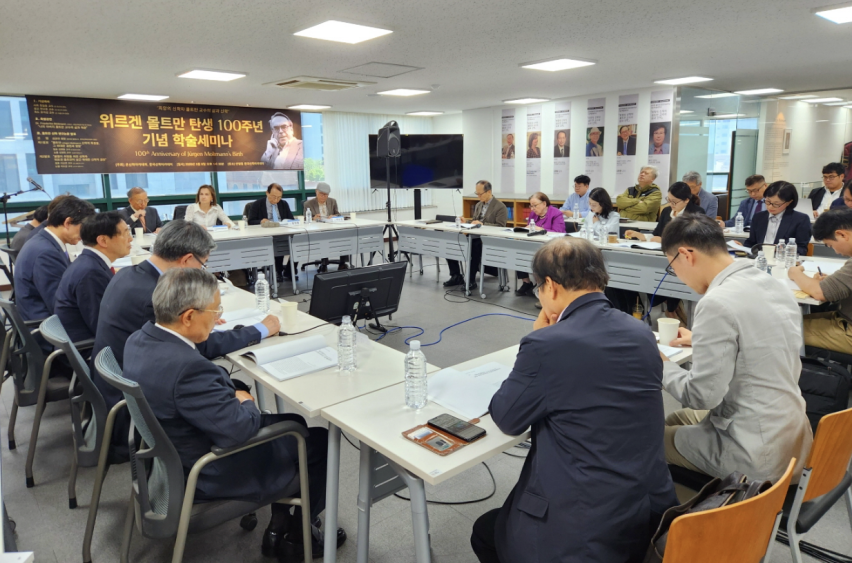
An academic seminar commemorating the 100th anniversary of the birth of the late Jürgen Moltmann was held on May 8 in Seoul, shedding renewed light on his theology, life, and influence on the Korean church and the global theological community.
The Korean Theological Academy (President Dr. Kyun-jin Kim) hosted the seminar at the academy’s seminar room in the Cross Building in Anam-dong, Seoul, under the theme “The Life and Theology of Dr. Moltmann, Theologian of Hope.” The event carried added significance in that it was organized primarily by Moltmann’s Korean disciples. The Korean Academy, headed by Kim, Moltmann’s first Korean disciple, jointly hosted the event with On Theology Academy (President Dr. Myung-yong Kim), where other disciples are active, and conducted it in the format of an international seminar.
Among those attending were Moltmann’s youngest daughter, Dr. Friederike Moltmann, director of research at the French National Center for Scientific Research, as well as seven of Moltmann’s nine disciples: Kyun-jin Kim (Korean Theological Academy, emeritus professor at Yonsei University), Jong-hwa Park (emeritus pastor of Kyungdong Church), Kyung-sik Bae (emeritus professor at Hanil University and Presbyterian Theological Seminary), Seok-sung Yoo (former president of Seoul Theological University), Myung-yong Kim (former president of Presbyterian University and Theological Seminary), Shin-gun Lee (former professor at Seoul Theological University), and Hye-won Kwak (visiting professor at Kyonggi University).
The first session, a commemorative worship service, was moderated by Dr. Il-woong Jung, former president of Chongshin University. Dr. Gyu-hong Yeon, former president of Hanshin University, delivered the sermon, followed by the benediction from Dr. Seok-sung Yoo, former president of Seoul Theological University.
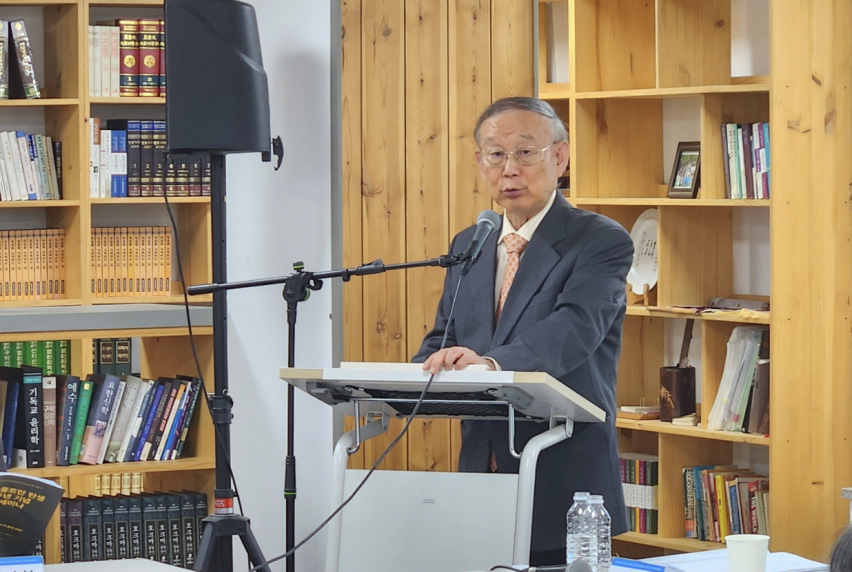
In his opening remarks, Kyun-jin Kim described Moltmann as “a comet-like figure in the history of 20th-century world theology,” saying his representative work, “Theology of Hope,” presented a new turning point to the global theological world, which had been trapped in postwar despair.
“Published in 1964, ‘Theology of Hope’ inspired new hope and strength to establish God’s just world on this earth, grounded in the Old Testament history of hope and the resurrection of Jesus Christ,” Kim said. “Dr. Moltmann was not merely a theologian but a deeply faithful and admirable man of character.”
He added, “I consider it a great joy and honor to jointly host this academic event commemorating the 100th anniversary of Dr. Moltmann’s birth.”
“The Korean church must creatively inherit the debt of love Moltmann left behind”
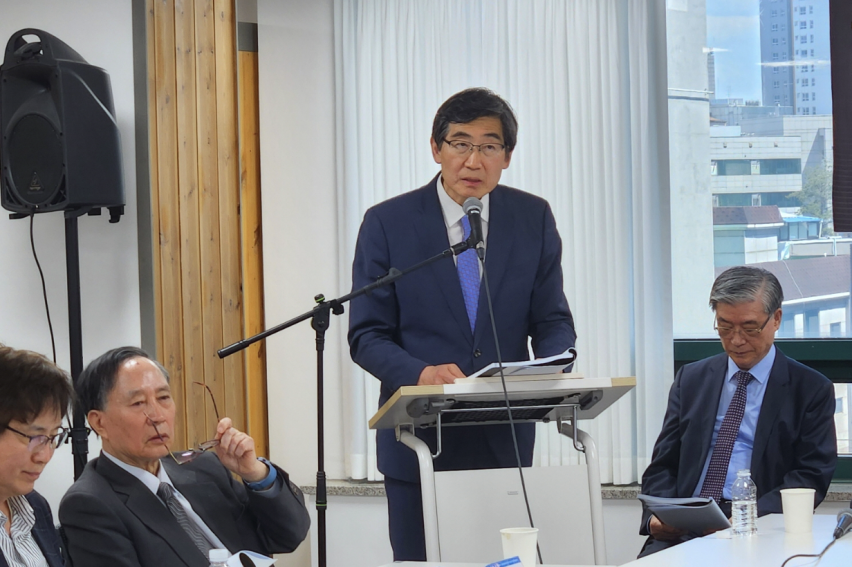
Dr. Gyu-hong Yeon, who preached under the title “The Debt of Love,” commemorated the 100th anniversary of the birth of the late Jürgen Moltmann and emphasized that “now is the time for the Korean church to repay the debt of love owed to Dr. Moltmann.”
In the sermon, Yeon said, “Today is a deeply meaningful day in which we remember and commemorate Dr. Moltmann, whom God sent into this world 100 years ago,” adding, “Everyone gathered here today is indebted to his love.”
Quoting the book of Romans, he said, “The Apostle Paul said we should owe nothing except the debt of love to one another,” explaining that “ordinary debt is a heavy burden, but the debt of love makes people free and happy.”
“Although Dr. Moltmann was German, he made Korea his second homeland and deeply loved the Korean church,” Yeon said. “The love he left behind was like unsecured, interest-free credit finance in which he gave himself completely.”
He added, “The love received from Jesus Christ crucified on the cross is never free but costly grace,” evaluating Moltmann as one who repaid the love he received by dedicating his life to the Korean church and the world.
“Dr. Moltmann tells us not simply to commemorate him but to remember him,” Yeon said. “That remembrance must lead to a life that repays the debt of love to the poor, the marginalized and the wounded.”
He then presented three tasks through which the Korean church should repay Moltmann’s debt of love.
First, he said, “In this age of crisis, we must creatively inherit Moltmann’s theology.” He explained that Moltmann experienced the living God in a World War II prisoner-of-war camp and discovered God not merely in texts but in the suffering and cries of people within history.
“The Korean church must respond theologically to the suffering of those living amid wars, economic exploitation and oppression around the world today,” he said. “Producing a distinctly Korean theology is one way of repaying the debt owed to Moltmann.”
Second, he stressed the importance of raising disciples.
“Even a great teacher without disciples is unhappy,” Yeon said. “Dr. Moltmann was a happy theologian who had countless disciples not only in Germany but throughout the world and in Korea.”
“We too must love and nurture disciples who will carry on the theological legacy and life we received from Moltmann,” he added. “That is another way of repaying the debt of love.”
Third, he pointed to a life of sharing and dedication.
“Dr. Moltmann regarded the life he received as a gift from God and devoted himself faithfully throughout his life,” Yeon said. “We too must share what we have received from the Lord with the poor and marginalized and give generously for world peace and the nurturing of the next generation.”
He concluded, “We too will go to the Kingdom of God with beautiful empty hands and light souls, where we will joyfully meet Dr. Moltmann again in the resurrection. This is the path of life and resurrection that those indebted to love must walk.”
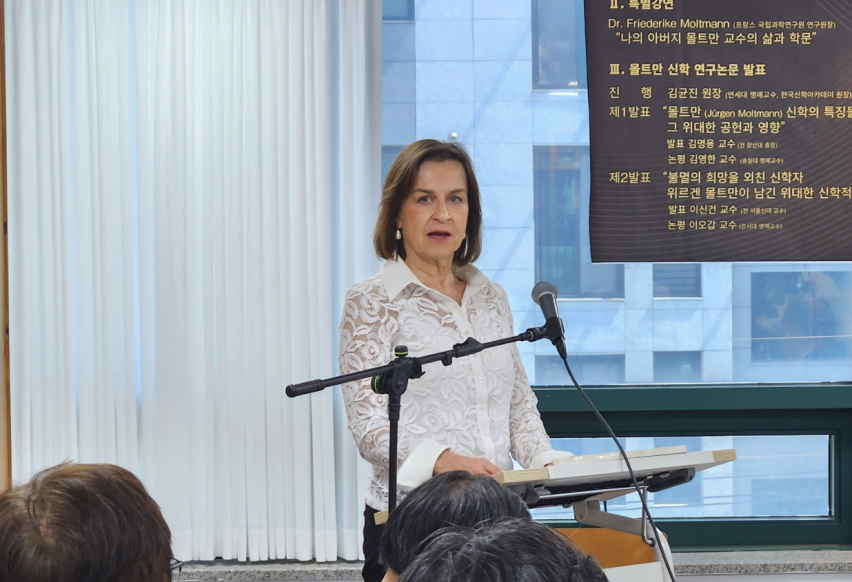
In the second session, Dr. Friederike Moltmann delivered a special lecture titled “The Life and Scholarship of My Father, Dr. Moltmann.”
“You all know my father as a theologian, but to me he was my father, a role model in the academic journey and a mentor,” she said. “Today I want to speak about him as the father of four daughters and about the Korean Pensive Bodhisattva, the image of the thinker he loved most.”
She first described Moltmann’s strict daily routine and academic discipline. According to Friederike Moltmann, he followed a fixed schedule of waking, meals, walks and writing every day, producing four pages in the morning and four pages in the afternoon, and this disciplined lifestyle became the foundation of his extensive body of work.
“My father willingly opened his academic world to his family,” she recalled. “He often discussed theology and intellectual topics with his daughters and took us with him to lectures and sermons.”
She added, “He also brought his daughters along to international conferences and travels so we could experience the world of scholarship and culture.”
She particularly shared memories from Venice during the pandemic period.
“My father visited Venice three times even after entering his 90s,” she said. “He formed a friendship with Francesco Moraglia, the Patriarch of Venice, and enjoyed special experiences such as a private tour of St. Mark’s Basilica and invitations to commemorative Masses.”
She also said the death of her mother, Elisabeth Moltmann-Wendel, came as a great shock to him, but that he continued seeking newness in life through new thinking, writing, travel and friendships.
“My father always tried to treat his daughters equally and showed deep concern and care whenever difficulties arose,” she added.
Friederike Moltmann also spoke about her academic relationship with her father.
“I chose analytic philosophy and theoretical linguistics at the intersection of linguistics and philosophy,” she said. “At first my father was cautious about it, but he soon respected my passion and became my steadfast supporter throughout my life.”
Toward the end of the lecture, she introduced one of Jürgen Moltmann’s best-known statements:
“God weeps with us so that someday we may laugh with Him.”
From ‘Theology of Hope’ to theology of life: Reexamining the core of Moltmann’s theology
The third session was moderated by Kyun-jin Kim, emeritus professor at Yonsei University, and featured presentations by Dr. Myung-yong Kim, former president of Presbyterian University and Theological Seminary, and Dr. Shin-gun Lee, former professor at Seoul Theological University. Dr. Young-han Kim, emeritus professor at Soongsil University, and Dr. Oh-gap Lee, emeritus professor at Kangseo University, later offered responses.
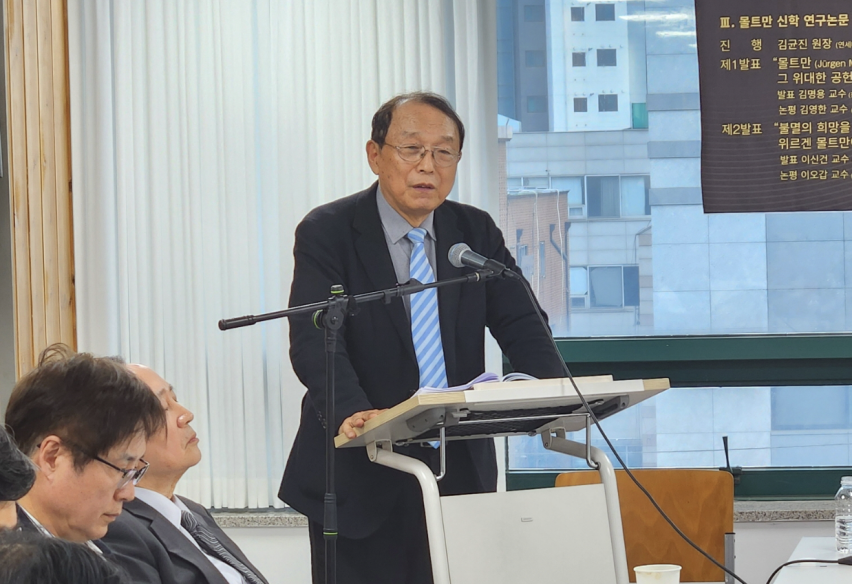
Presenting on “The Characteristics of Moltmann’s Theology, Its Great Contributions and Influence,” Myung-yong Kim analyzed Moltmann’s theological system through major works including “Theology of Hope,” “The Crucified God,” “The Trinity and the Kingdom,” and “God in Creation.”
Kim argued that Moltmann’s theology of the Kingdom of God fundamentally differed from existing liberal theology.
“Moltmann abandoned optimism about history and deeply recognized the seriousness of evil in the world,” he said. “He explained that the Kingdom of God is not a future created by human history itself but a future descending from heaven.”
He also identified theology of the cross as one of the core elements of Moltmann’s theology.
“Moltmann moved beyond abstract and philosophical understandings of God and presented a God who suffers together with humanity within the revelation of the cross,” Kim said. “He saw God’s omnipotence as revealed precisely through suffering.”
He further said Moltmann had a major influence on the reestablishment of Trinitarian theology in the Western church.
“Moltmann’s social doctrine of the Trinity provided an important theological foundation for democracy and communal peace,” Kim said. “It became a theological basis for communities in which humanity and creation live together.”
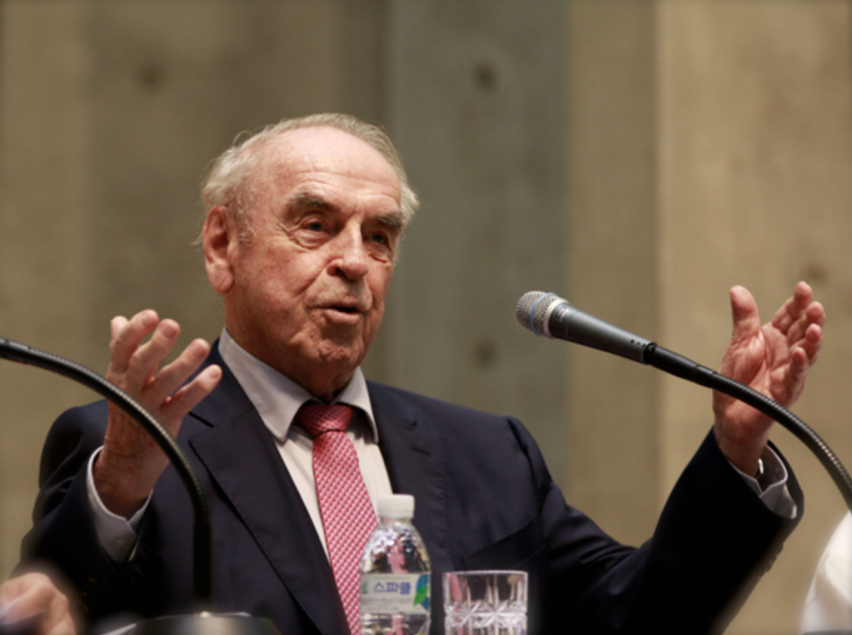
Peace theology and ecological theology were also introduced as core elements of Moltmann’s legacy. Kim described Moltmann as “the intellectual teacher of peace theology in the latter half of the 20th century,” saying his theology influenced Europe’s peace movements and historical changes.
“Moltmann was also a pioneer of ecological theology who led the global church to view ecology and creation theologically,” he added. “He went beyond merely raising questions and built a vast system of ecological theology.”
The presentation also addressed messianic Christology, holistic pneumatology, theology of life and universal salvation. Kim said Moltmann established a messianic Christology emphasizing the Kingdom of God and historical transformation beyond traditional church-centered Christology.
He also referred to theology of life as a key theme of Moltmann’s later theology.
“He emphasized a spirituality that resists the power of death and insisted that the church must become a community of life,” Kim said.
Finally, Kim introduced one of Moltmann’s final messages before his death.
“The teaching, ‘At the moment I die, I will rise again and live eternally,’ was the faith of hope that Moltmann held onto until the end,” he said.
“Moltmann’s hope is still needed in today’s age of crisis”
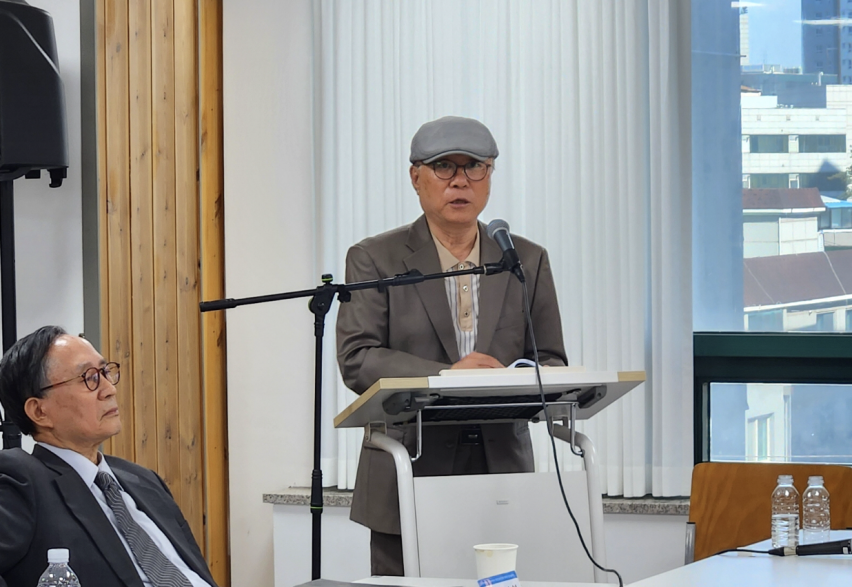
Presenting on “The Great Theological Contributions Left by Jürgen Moltmann, the Theologian Who Proclaimed Immortal Hope,” Shin-gun Lee described Moltmann as “a global theologian who opened a new horizon in 20th-century theology.”
“At a time when secular theology and ‘death of God’ theology were spreading across post-World War II Europe, Moltmann presented anew the futurity of Christian faith and eschatological hope through ‘Theology of Hope,’” Lee said.
He emphasized that Moltmann’s own life formed the background to his theology of hope. Born in Hamburg, Germany, in 1926 into an atheist family, Moltmann served in the German military during World War II and later experienced life in a prisoner-of-war camp.
“Moltmann encountered God while reading the Bible in the hopeless conditions of the prisoner-of-war camp,” Lee said. “He confessed that through Jesus’ suffering on the cross — crying out, ‘My God, my God, why have you forsaken me?’ — he discovered a God who understood him.”
“His theology was not merely a theoretical system but an existential confession of faith drawn out from war and despair,” Lee added. “Even amid the despair he experienced in the prisoner-of-war camp, he clung to hope in the resurrection and the future, which later developed into ‘Theology of Hope.’”
Lee explained that Moltmann’s theology did not develop according to a predetermined system or methodology but in response to historical demands and real-world crises.
“Whereas Karl Barth developed theology centered on Christology and Paul Tillich through the method of correlation, Moltmann developed theology by responding to new questions arising from the challenges and suffering of the times,” he said.
Lee identified “biblical grounding,” “eschatological orientation” and “political responsibility” as key characteristics of Moltmann’s theology.
“Moltmann believed theology should not remain merely a doctrinal system but should operate responsibly within real history,” he explained. “He especially emphasized that the church and theology must respond to the world’s suffering, oppression and despair.”
Lee also explained in detail Moltmann’s concept of “hope,” which stands at the center of his theology.
“For Moltmann, hope was not human optimism or mental determination but something that comes from God,” he said. “He understood God as the ‘God of hope’ who opens the future before humanity.”
He further explained that Moltmann understood divine revelation not simply as an explanation of past events but as “promise.”
“A promise is God’s word that leads humanity toward a future not yet realized,” Lee said. “For Moltmann, eschatology was not the final chapter of theology but the starting point guiding all theology.”
The presentation also dealt extensively with Moltmann’s understanding of resurrection.
“Moltmann regarded the resurrection of Jesus Christ as the core of Christian faith,” Lee explained. “He stressed that faith without resurrection cannot be Christian faith.”
Lee added that Moltmann criticized forms of cross-centered theology that tended to minimize the meaning of resurrection.
“Moltmann did not reduce the gospel merely to the issue of forgiveness of sins,” he said. “He understood Jesus’ resurrection as the overcoming of death, the beginning of new creation and an event opening the future of the whole world.”
Particular attention was given to Moltmann’s later understanding of “resurrection within death.”
“In his earlier theology, Moltmann emphasized resurrection on the last day according to traditional eschatology,” Lee said. “But later his thought shifted toward the idea that human beings awaken into eternal life at the very moment of death.”
Quoting Moltmann’s book “I Believe in Eternal Life,” Lee said, “Moltmann argued that ‘we are resurrected at the moment we die.’ He saw death not as the extinction of existence but as transformation into eternal life and awakening into new life in God.”
Lee also emphasized that Moltmann understood resurrection not only in terms of the individual soul but on a cosmic scale.
“Moltmann gave important interpretation to the ‘groaning of creation’ in Romans 8 and hoped that not only humanity but all creation would be restored in the new creation,” he said.
“For him, resurrection was not merely the salvation of individual human beings but the completion of the Kingdom of God and the restoration of all things,” Lee added. “Hope for a new heaven and new earth stands at the center of Moltmann’s eschatology.”
Lee also referred to Moltmann’s influence on the Korean church and Korean theology.
“Moltmann trained nine Korean disciples, and his theology has long been actively studied in Korean theological circles,” he said. “‘Theology of Hope’ became one of the most widely read theological books among Korean theology students.”
He further argued that Moltmann’s theology remains highly relevant amid contemporary crises such as artificial intelligence, war and climate change.
“Moltmann was a theologian who never abandoned hope even in despair,” Lee said. “The hope that looks toward the God who promised the resurrection of the dead and the new creation of all things is still needed for today’s church and world.”
Toward the end of the presentation, Lee referred to the Latin phrase Moltmann often quoted, “Dum spiro, spero” (“While I breathe, I hope”), saying, “According to Moltmann’s theology, we can now say, ‘Even if my breath stops, I still hope.’”
“The final message of Moltmann’s theology is trust in the God who promised resurrection and new creation,” he added.
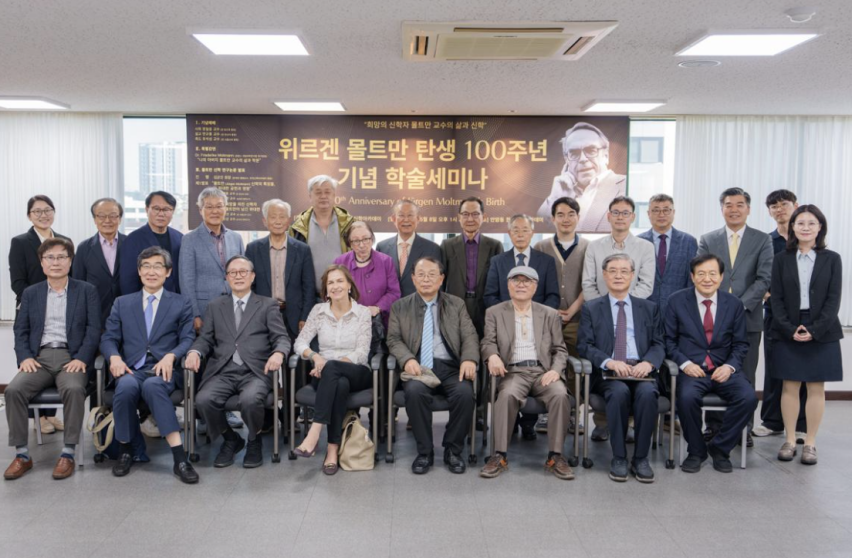
The event concluded with closing remarks by Kyun-jin Kim, who reflected on today’s theological climate in which faith and character can easily be lost amid the pursuit of theological research and academic achievement, urging participants to remember the example set by Moltmann’s life.
“Theology professors can easily neglect their own character and faith while concentrating on theological theory,” Kim said. “With the conviction that absolute truth belongs to them, there is also the danger of excluding others or becoming arrogant.”
He warned that theologians can become “inhuman humans” who lose genuine faith while being consumed by the desire for social recognition, citing Russian novelist Fyodor Dostoevsky to stress the importance of a theologian’s life and character.
Kim also expressed hope that the event would lead to deeper study of Moltmann’s theology.
“In the 1970s, when many German professors ignored Korean students from what was then one of the poorest countries in the world, Dr. Moltmann willingly accepted Korean students into doctoral programs,” he said. “I hope not only Dr. Moltmann’s great theology, but also his character and faith, will be remembered for a long time within the Korean church and theological community.”
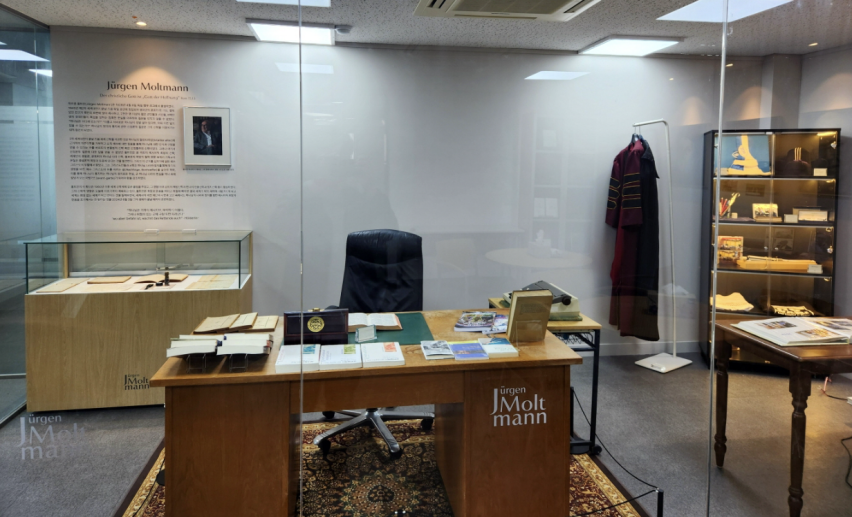
Meanwhile, a small museum displaying Moltmann’s personal belongings was also unveiled at the seminar venue in commemoration of the 100th anniversary of his birth. Moltmann, who died on June 3, 2024, reportedly donated various personal items he used during his lifetime to the Korean Theological Academy, headed by his first Korean disciple, Kyun-jin Kim.
In one section of the Korean Theological Academy conference room on the fifth floor of the Cross Building in Anam-dong, Seoul — which also houses Christian Daily Korea — visitors viewed framed displays introducing Moltmann alongside his desk and chair, typewriter, translated books, writing instruments, gown and hat, notebooks and photographs.
Participants walked through the exhibition space, examining traces of the life and scholarship of Moltmann, who was regarded as a world-renowned theologian, while reflecting again on the spirit of the man who proclaimed theology of hope throughout his life.
Originally reported by Christian Daily Korea.