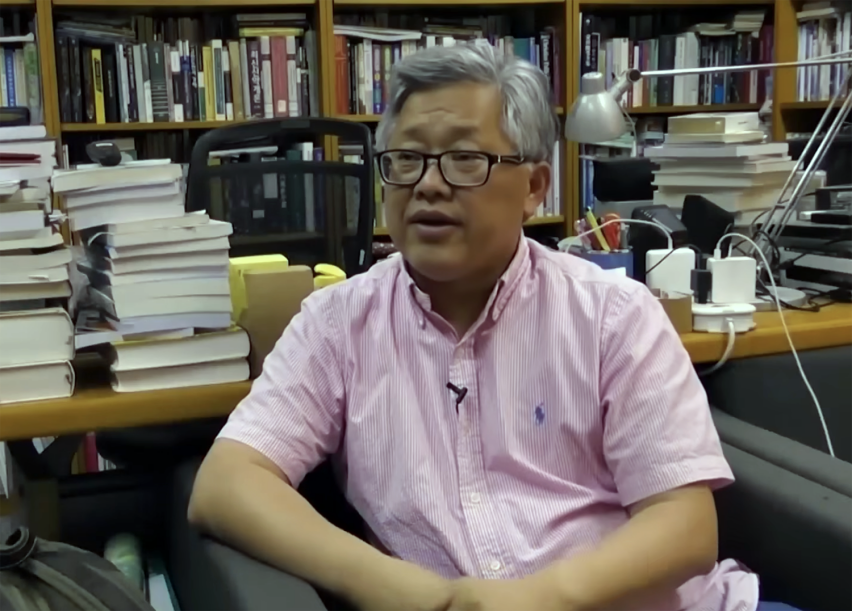
Days after reuniting with his family for the first time in eight years on the eve of America’s 250th anniversary, Chinese house church Pastor Ezra Jin Mingri has vowed not to rest until he sees the release of eight other church members still behind bars in China, where they are confined to cramped cells and must sleep on floor mats in blistering heat.
Jin, 56, was released from detention last week after 266 days in a Chinese prison. He was detained along with 28 other leaders and members of Beijing Zion Church last October. His release came less than two months after President Donald Trump raised his case with Chinese President Xi Jinping in Beijing.
In an op-ed published by The Wall Street Journal, the founder of Beijing Zion Church expressed hope that his release might mark a “new chapter for people of faith in China” where “people can freely worship.”
“Such a future might seem impossibly remote, but so did my release,” Jim wrote, after explaining that he thought he was being taken to a trial when guards ushered him into a van last Friday. While he expected a long sentence for leading an underground house church, he was instead freed with all charges dropped.
“I couldn’t be more thankful, and pray that others still imprisoned will experience this same freedom soon. Mine is a God of miracles, and he constantly surprises me.
However, eight of his fellow church members and several other church leaders remain prisoners of conscience in China. Jin said these “men and women [are] some of the most caring people I have met."
“[They] are confined in cramped cells and sleep on floor mats in blistering heat,” he wrote. “Many leave behind young families. I won’t rest until they see freedom.”
Jin stressed that Chinese authorities “have no reason to fear the tens of millions in China who worship in unregistered congregations.”
“These Christians love their nation,” Jin declared. “They only want to worship God peacefully according to the Bible and to serve others, especially the poor, the disabled and the elderly.”
“Freedom of religion is a universal right promised in the Chinese Constitution,” he continued. “I hope that all our church members are freed and that China becomes a place where all people can freely worship. A first step would be to legalize house churches alongside state-run churches in the same way China has legalized private industry alongside state-owned enterprises.”
Jin, who studied at Fuller Theological Seminary in California, founded Zion Church in 2007. After converting to Christianity following his participation in the 1989 Tiananmen Square protests, he helped build the congregation into one of China’s largest house churches. He and his wife are Chinese nationals, while his children are American citizens.
Authorities shut the church’s Beijing premises in 2018 after it refused government demands to install surveillance equipment. The congregation then moved to online gatherings, drawing as many as 10,000 participants through Zoom, YouTube and WeChat.
In an interview with The New York Times, Jin said that before his release, he was held in a “harsh jail environment” and had “no idea what the future held.” He said he was expecting around a 15-year sentence.
Jin said that he shared a roughly 1,000-square-foot room with dozens of prisoners. During the daytime, they were all required to sit on benches, and many developed sores because they had to request permission to stand. At night, they all slept on a platform bed.
The newspaper reports that officials often pressured Jin to plead guilty. Although he admitted that he established a church and continued to gather after authorities shut it down, he contended that such acts of worship were legal.
“[My release] may be because everybody knows President Xi personally made the decision,” Jin said. “Otherwise, this wouldn’t be possible.”
“I hope people don’t think ‘We succeeded’ and forget the others,” Jin added. “We must go all out and speak out. That’s what my family did, and look at the result.”
The ruling Communist Party views organized religion as a potential threat to its hold on power. Registered churches in China fall under either the Three-Self Patriotic Movement (TSPA) or the Catholic Patriotic Association (CPA), which are closely overseen by the state, according to the international persecution watchdog Open Doors.
“These strictures are to ensure the ‘sinicisation’ of churches – that is, the aligning of religious doctrine with Communist ideology,” the organization reports. “The crackdown on Christians in China continues, and the impact of laws banning the involvement of children in church activities is increasingly coming to the fore.”
Originally published by the Christian Post.