
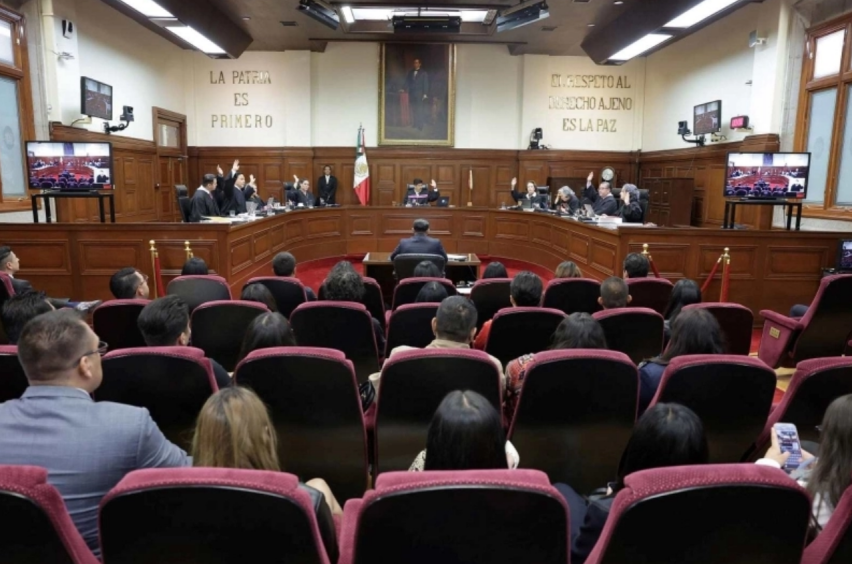
Mexico's Supreme Court unanimously struck down provisions of Guanajuato state's penal code that reduced penalties for parents or guardians who subject people in their care to conversion therapy. The ruling means parents and guardians can face prison sentences under the same standards applied to others convicted of the practice.
The court held that being a close family member of the affected person does not lessen the seriousness of the offense. On the contrary, the justices said such practices can constitute cruel treatment and ruled that a family relationship "makes the conduct more serious" because it violates the person's gender identity.
While presenting the case before the full court, Justice María Estela Ríos González stressed that parental rights and family relationships do not override legal protections. "The protection of the family cannot justify inadequate penalties for conduct that seriously harms legally protected interests," she said.
Debate over parental rights and religious freedom
Under current Mexican law, coercive efforts to change a person's sexual orientation are considered human rights violations.
At the same time, some conservative groups argue that biblical counseling is a voluntary faith-based practice protected by religious freedom.
The evangelical Christian organization Iniciativa Ciudadana criticized the ruling, arguing that the criminal penalties imposed on parents undermine parental rights. Representatives of the group said the court's decision amounts to "a direct attack on families and children."
Guanajuato's legislature had previously defended the law, arguing that states have the authority to determine criminal penalties and protect social institutions. State officials said the exceptions were intended to preserve family unity by imposing only fines and mandatory psychotherapy on parents convicted under the law.
Opposition from religious groups intensified after the Supreme Court also struck down a provision that exempted the practice from criminal liability when a participant had given "informed consent." Under current federal law, those convicted can face prison sentences ranging from two to six years, with penalties doubled when minors are involved.
Originally published by Diario Cristiano, Christian Daily International's Spanish edition.








