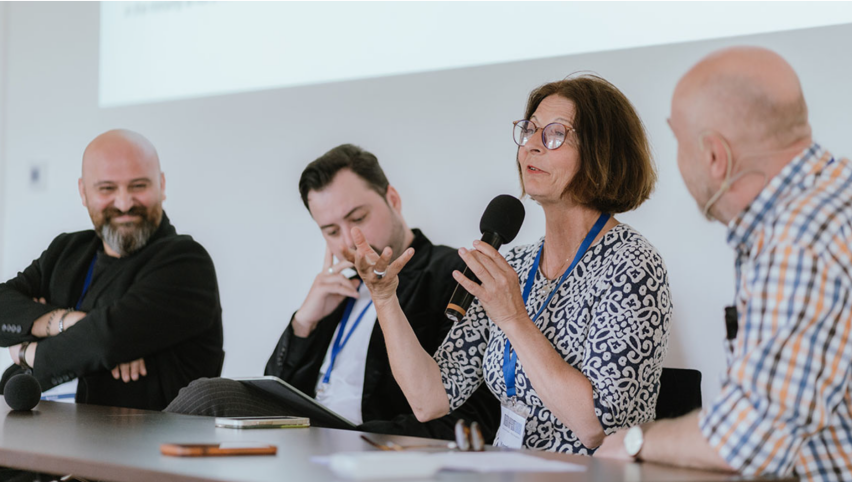
There is something fitting about holding a gathering on Christian communication inside a former monastery in the heart of Prague.
The ancient ceilings, the quiet courtyards, the sense that this building has held centuries of conversation, it all set the tone for what Media Associates International (MAI) Europe was attempting to do in its first pan-European MediaFest, held from 5 to 8 May 2026.
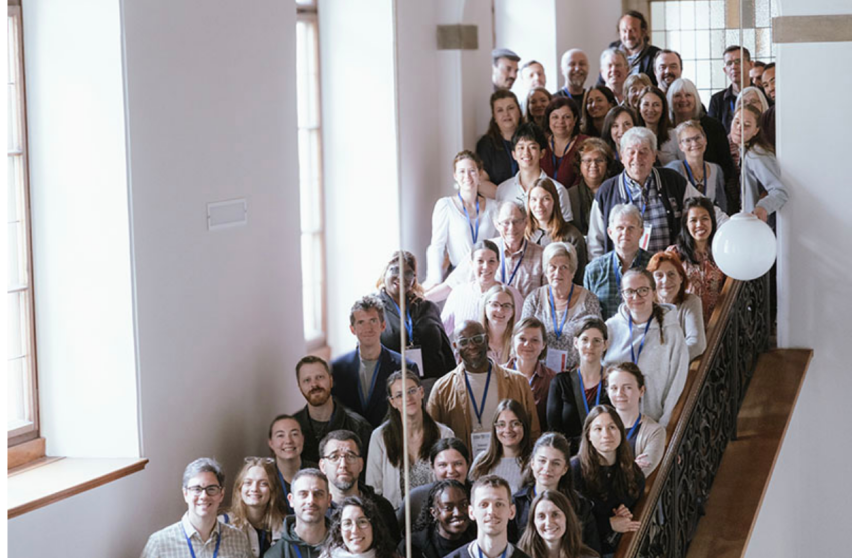
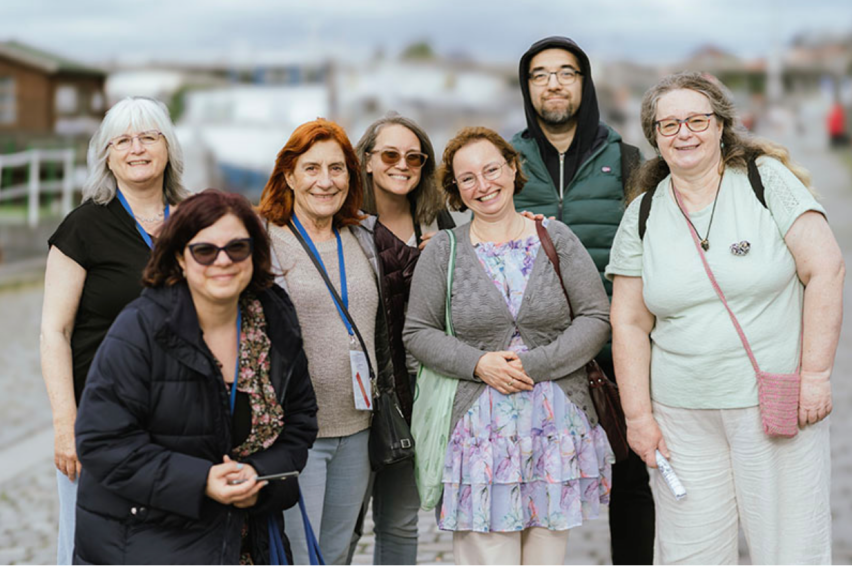
Seventy-two participants from 17 European countries gathered for the event, joined by three attendees from the United States including MAI president Heather Pubols , a genuinely pan-European gathering, with voices from Romania, Serbia, Hungary, Greece, Turkey, the UK, Spain, France, the Netherlands, the Czech Republic, Albania, Bulgaria, Sweden, Denmark, Germany and Italy.
The theme, Jesus is the answer. What is the question?, was not a provocation but an invitation. Before speaking, listen. Before publishing, understand. Before assuming you know what people need, ask what they are actually asking.
Listening as a discipline
The opening plenary set the theological frame. Alexandr Flek reminded participants that the Passover meal begins not with a statement but with a question — and that the story cannot be told until the question is asked.
He also noted that the very first question in the Bible is “Where are you?”, not because God lacks information, but because he desires relationship.
After fifteen years of translating the Bible, Flek has come to see Scripture as containing not only answers, but all the main questions humanity asks.
Jesus himself asked nearly a hundred questions in the Gospels. The point was clear: effective communication is not about having better answers, but about learning to sit with the right questions.
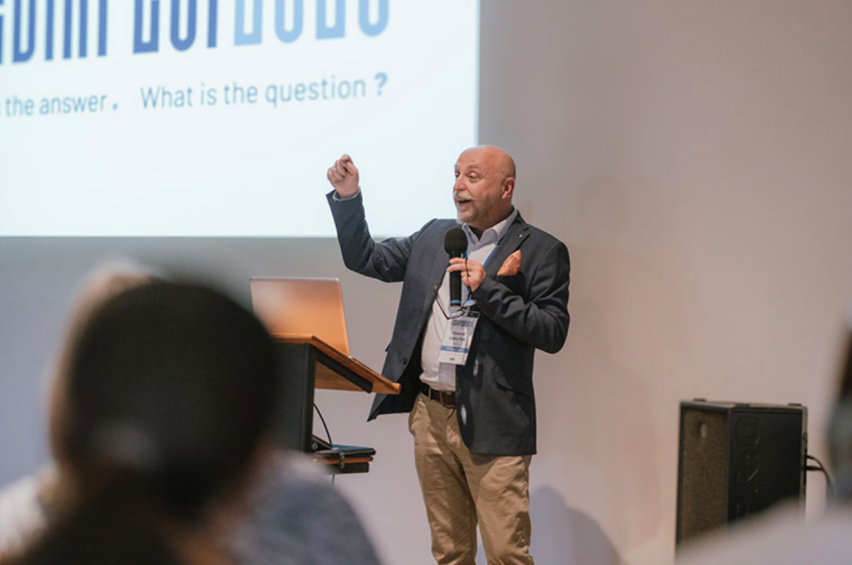
That guiding thread ran through the entire programme. Sam Richardson, CEO of SPCK, the UK’s leading independent Christian publisher, brought it down to earth in a session on understanding today’s content consumer.
His diagnosis was straightforward but sobering: we live in a world of more content than ever and less attention than ever.
Drawing on researchers like Sherry Turkle and Nicholas Carr, he described how technology is reshaping not just what we consume but who we are, pulling us away from deep conversation, from solitude, from sustained reading.
And yet, Richardson argued, the answer is not to simplify. SPCK’s bestselling book this year has been John Lennox’s God, AI and the End of History, a 608-page hardback. A YouTube interview on suffering drew over half a million views. “Never underestimate the intelligence of your audience”, he said, “nor over-estimate their knowledge”.
The questions people are actually asking
Richardson identified four questions he believes cut across generations and cultures today.
The first: Am I going to be alright? A world shaped by Covid, climate anxiety, war and economic uncertainty, has produced what he called an epidemic of fear and the Bible’s “do not be afraid” appears, by some counts, 365 times.
The second: Who am I? Identity, whether it is racial, gender, personal, is one of the hottest topics of our moment, and the effort people invest in curating their online profiles is evidence of a deep hunger for self-definition.
The third: Where can I find community?, particularly urgent when one in four young Europeans say they feel lonely.
And the fourth, perhaps the most surprising for traditional Christian communicators: Why am I drawn to the supernatural? People are not rejecting meaning, Richardson noted, they are overwhelmed by noise.
Many are turning to witchcraft, tarot, crystals and astrology, not out of conviction but out of longing. A new SPCK book, The Sacred Ache by Belle Tindall-Riley, names this phenomenon directly.
The session on authenticity was also straightforward: audiences no longer trust platforms or institutions, they trust people and brands that have earned their trust.
They want raw honesty and real, messy stories. And as Christians, Richardson added, we are called to be faithful, not successful, to try, not to succeed.
A gathering of voices
What made MediaFest distinctive was not just the content of the plenary sessions but the breadth of voices around the table.
Gökhan Talas described the challenge of communicating the gospel in Turkey, where anything Christian is seen as a cultural import from the West, and where, people do not perceive faith through theological language, but through the way Christians live, how they respond to injustice, and treat others.
Pavel Eder spoke about building community in post-secular Prague, where belonging often precedes believing, and where his SafePoint ministry began by asking a simple question: why would people want to follow me online?
Kerstin Hack reflected on the practical questions that open doors: grief, anxiety, exhaustion.
Daniela Benevelli, from Italy, offered a sharp reminder that behind every text there is a person, and that the editor’s task is to guide a voice, not to replace it.
Janet Wilson called for better content for children and young people, with a simple approach: listen, respond, collaborate.
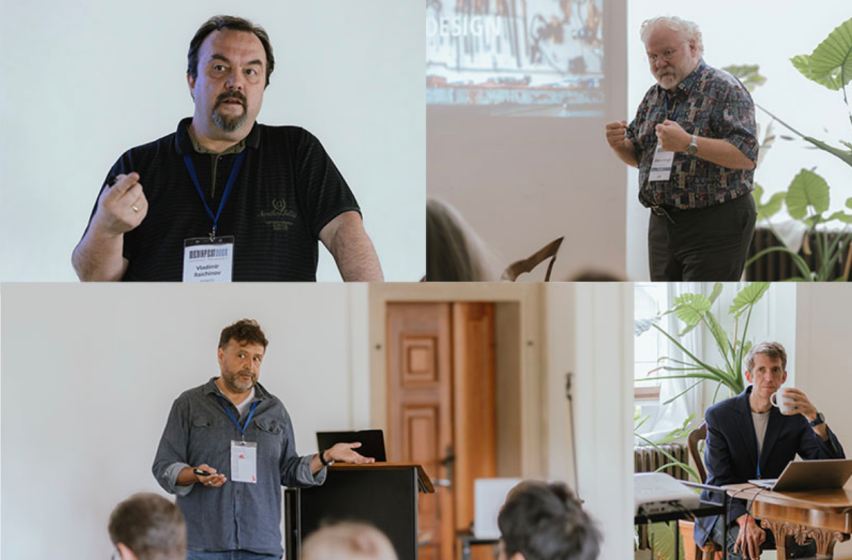
Vlady Raichinov from Bulgaria addressed something many in the room quietly struggle with: how to organise an overfull life without losing the things that matter most.
Carlo Carrenho outlined the shifting landscape of publishing, where AI is already an undeniable force; and argued for embracing these tools creatively rather than fearfully.
And Klaus Krogh showed how thoughtful typographic design can open the written word to people who have never been able to access it easily, including those with dyslexia.
The participants themselves reflected the network MAI has been quietly building across the continent for years: writers, editors, journalists and digital creators from Albania to Denmark, Turkey to Spain, many of them doing this work as a second calling alongside other professions.
Each day, Dutch spoken-word artist Rik Zuzu offered something unusual: a poetic distillation of what had been shared and experienced, turning the day’s ideas into something you could feel as well as think.
Prague as backdrop
The venue helped. Mornings were dense with workshops and plenary sessions; afternoons opened up for connection, reflection and exploration.
On Thursday, participants spread out across the city in five guided routes through Prague’s history, its hidden churches, its layers of memory, its complicated relationship with faith. It was, by several accounts, one of the highlights of the week.
The gathering was not without experimental moments, there was room for various creative and liturgical expressions, not always shared but certainly respected, but the overall atmosphere was one of genuine hospitality and intellectual seriousness, a combination that is rarely found.
One participant described the event as “an extended family”, a phrase that, according to the organisers, captured something they had been hoping for but could not quite guarantee in advance.
A network in formation
MediaFest was, in the words of the MAI Europe team, “the culmination of almost ten years of work and vision”, born from a conversation between three trustees who dreamed of creating a celebration of European Christian creativity that was warm, welcoming, culturally engaged and spiritually rich.
What surprised them most was how quickly deep connections formed, particularly between younger and older generations. Younger attendees were inspired not only by the workshops, but by simply listening to the conversations happening around them.
The future outlook is clear. MAI Europe has already received requests to return to Greece, Italy and Bulgaria, and new invitations from Serbia, Albania and Turkey.
The hope is that MediaFest will become the network’s flagship event, hosted in a different European country every three to four years , with each edition reflecting the culture and creativity of its host, while maintaining the same quality of content and community.
Whether the church in Europe is ready to listen before speaking is a question that cannot be answered in four days. But in Prague, for four days, a community of proffesionals tried to do exactly that, and left, it seems, wanting more.
Originally published by Evangelical Focus