A British newspaper investigation alleging that the brother of Pakistan Ulema Council (PUC) Chairman Hafiz Muhammad Tahir Mahmood Ashrafi is connected to a network accused of using Pakistan’s blasphemy laws to abduct, torture and extort people has raised fresh questions about Ashrafi’s own defense of his brother and the Church of Pakistan’s decision to endorse him as an advocate for religious harmony.
The Telegraph reported that Hassan Muawiya Ashrafi had filed blasphemy complaints against 26 people over the past four years, according to police chargesheets reviewed by the newspaper. The investigation alleges that a wider network, allegedly involving corrupt officials, used women and social media “honey traps” to lure men, including Christians, into sharing material that could then be used to initiate blasphemy cases.
Relatives of alleged victims told The Telegraph that men were subsequently abducted, tortured and subjected to demands for money, while some remained imprisoned after blasphemy cases were registered against them.
The allegations have not been established in court. Muawiya Ashrafi has denied being part of a blasphemy gang or taking money from accused people, while the PUC has rejected The Telegraph’s investigation as false and said it is pursuing legal action against the newspaper.
But the investigation has put renewed focus on Tahir Ashrafi’s public defense of his brother, and on why a church leader continued to portray Ashrafi as a champion of religious minorities despite longstanding questions surrounding his record on blasphemy cases.
According to The Telegraph, Tahir Ashrafi publicly defended his brother last year, challenging anyone to prove that either he or Muawiya had received money in connection with blasphemy cases.
“If anyone can prove that my brother or I took a single rupee from someone on these cases, you can hang me,” Ashrafi said during a television program, according to the newspaper.
Ashrafi also attacked Islamabad High Court Justice Sardar Ejaz Ishaq Khan, who had conducted dozens of hearings involving petitions filed by more than 100 families alleging serious irregularities in blasphemy investigations.
The proceedings examined allegations of missing evidence, police failures and the alleged use of women to establish online relationships with men who were later accused of blasphemy.
At a political conference in July 2025, Ashrafi intensified his criticism of the judge. “I don’t even consider him a judge. I don’t even consider him a dog,” he said, according to The Telegraph.
The newspaper reported that Justice Khan subsequently ordered the government to establish a commission of inquiry into the allegations, but the order was suspended nine days later following an appeal by lawyer Rao Abdur Raheem.
The Telegraph also reported that Ashrafi, when questioned about accusations that he had provided protection to people involved in the alleged network, said that if he had the authority or opportunity to provide them with a “political umbrella,” he would do so.
The allegations involving Muawiya Ashrafi come against a broader backdrop of concerns within Pakistan’s law enforcement and human rights communities about the misuse of blasphemy laws.
A 2024 Punjab Police Special Branch report attributed an increase in blasphemy cases to what it described as a “blasphemy business gang” involving corrupt officials within the Federal Investigation Agency. The report named lawyer Rao Abdur Raheem and Sheraz Ahmad Farooqi among alleged ringleaders but did not name Muawiya Ashrafi.
The Telegraph reported that Fact Focus subsequently identified Muawiya as a manager of the alleged network’s Lahore operations and published CCTV footage purportedly showing him accompanying police during arrests of people accused of blasphemy.
The newspaper cited relatives of several alleged victims who described a pattern in which men were allegedly lured into online conversations, induced to share material that could be characterized as blasphemous, and then subjected to arrest or abduction.
One family told The Telegraph that a relative was allegedly tricked into sending blasphemous material through WhatsApp before being abducted. The family said it was subsequently asked about the value of its house and jewelry while the man remained imprisoned after a blasphemy case was registered against him.
The newspaper also cited a Fact Focus investigation that reported that at least four alleged victims of the network had died following torture. One alleged victim was reportedly raped with a wooden baton, while another was found with severe bruising around the groin. A prison post-mortem report cited “urine retention” as the cause of death in the latter case, according to The Telegraph.
The allegations are particularly grave in a country where a blasphemy accusation can expose Christians and other religious minorities to mob violence even before a case reaches trial.
Pakistan’s National Commission for Human Rights has previously raised concerns about alleged networks using women operating under false identities to lure men into online conversations that could result in blasphemy accusations, with some alleged victims subsequently being detained by private individuals rather than law-enforcement authorities.
The Telegraph investigation comes days after Lambeth Palace withdrew a major interfaith award from Ashrafi, making Marshall’s continued defense of the Pakistani cleric increasingly controversial.
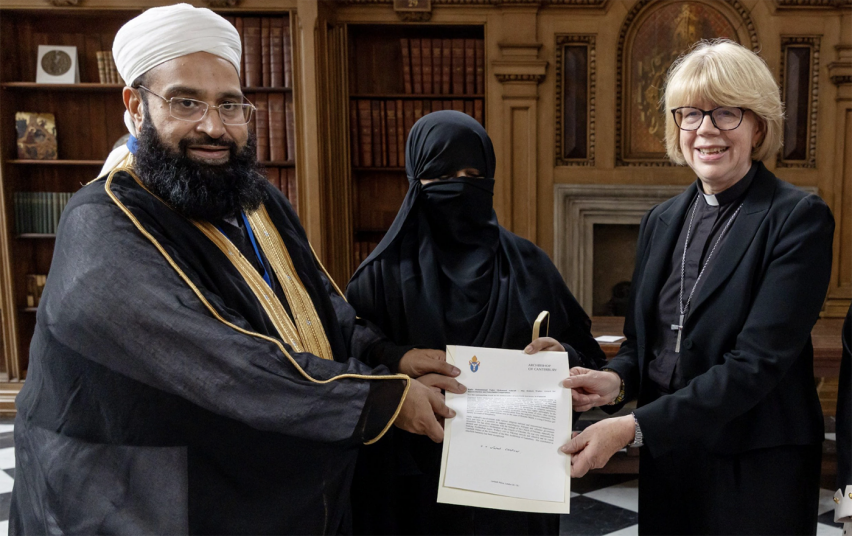
Archbishop of Canterbury Dame Sarah Mullally presented Ashrafi with the Hubert Walter Award for Reconciliation and Interfaith Cooperation on Sept. 11, describing him as an ambassador of interfaith harmony. Days later, Lambeth Palace withdrew the award after renewed scrutiny of Ashrafi’s previous comments, including his description of Osama bin Laden as a “Sword of God” in response to Salman Rushdie receiving a British knighthood. Lambeth Palace subsequently said it was reviewing the award as well as its nomination and vetting procedures.
Marshall, however, strongly criticized the decision.
In an interview with Anglican Mainstream, the already controversial Church of Pakistan moderator said the withdrawal had “humiliated” the Church of Pakistan and argued that Archbishop Mullally should “apologize” to Ashrafi.
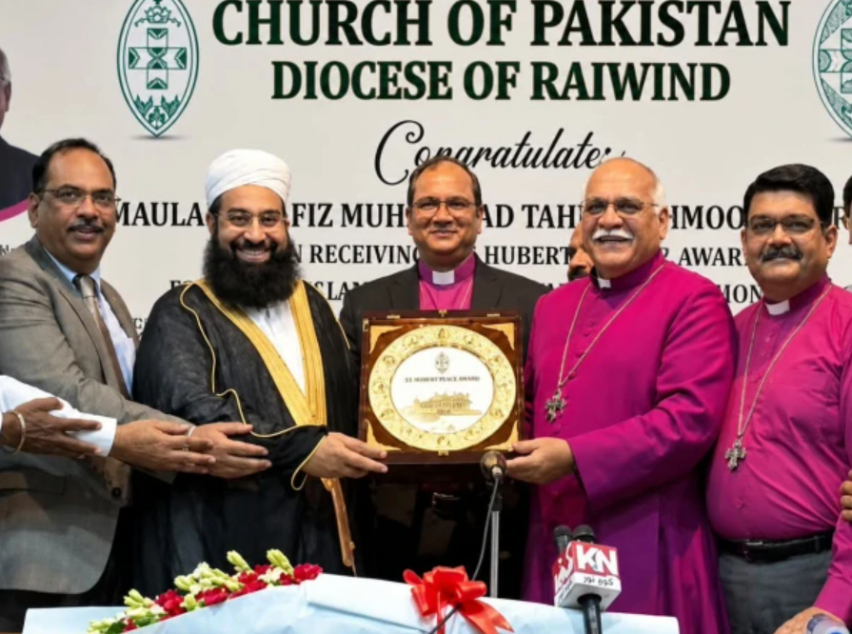
Marshall cited Ashrafi’s condemnation of the 2023 Jaranwala violence against Christians and claimed that Ashrafi had been “instrumental in releasing many people before the mob can lynch them.” He did not publicly provide details of the cases in which he said Ashrafi had secured the release of people facing blasphemy accusations.
The Telegraph investigation now raises a different question: how should Ashrafi’s alleged links to, and public defense of, a person accused of involvement in a network exploiting blasphemy laws be weighed against the Church of Pakistan’s portrayal of him as a defender of religious minorities?
Several minority rights advocates interviewed by The Telegraph disputed Marshall’s characterization of Ashrafi’s record.
Human rights defender Sardar Gill said Ashrafi intervenes on behalf of Christians primarily when there is international pressure. Journalist and former Amnesty International researcher Rabia Mehmood told the newspaper that Ashrafi had provided “political cover” to his brother’s campaign.
The controversy is particularly significant for Christians in Pakistan, who have repeatedly been targeted by blasphemy accusations, mob attacks and vigilante violence.