Russia’s General Prosecutor’s Office has ruled that foreign organizations, including Christian ministries, threaten the security of the country, according to rights group Forum 18.
Following the ruling, the Justice Ministry added U.S.-based Mission Eurasia to its official register of “undesirable organizations.” Under Russian law, citizens and entities who cooperate with blacklisted organizations risk administrative fines and potential criminal prosecution.
The consequences have already reached local Christian institutions. In July, a court found Pyotr Mitskevich, president of the Russian Union of Evangelical Christians-Baptists and rector of Moscow Theological Seminary, guilty under Article 20.33 after prosecutors inspected the seminary library and discovered books published by Mission Eurasia.
The literature included Christian leadership and ministry resources from the ministry's School Without Walls program. The court fined Mitskevich 20,000 rubles ($234).
In another case, authorities fined a local Baptist pastor after finding 178 copies of the New Testament and 74 Gospel of John booklets published by Mission Eurasia inside his church. A Moscow Region court ordered officials to destroy the confiscated Scripture.
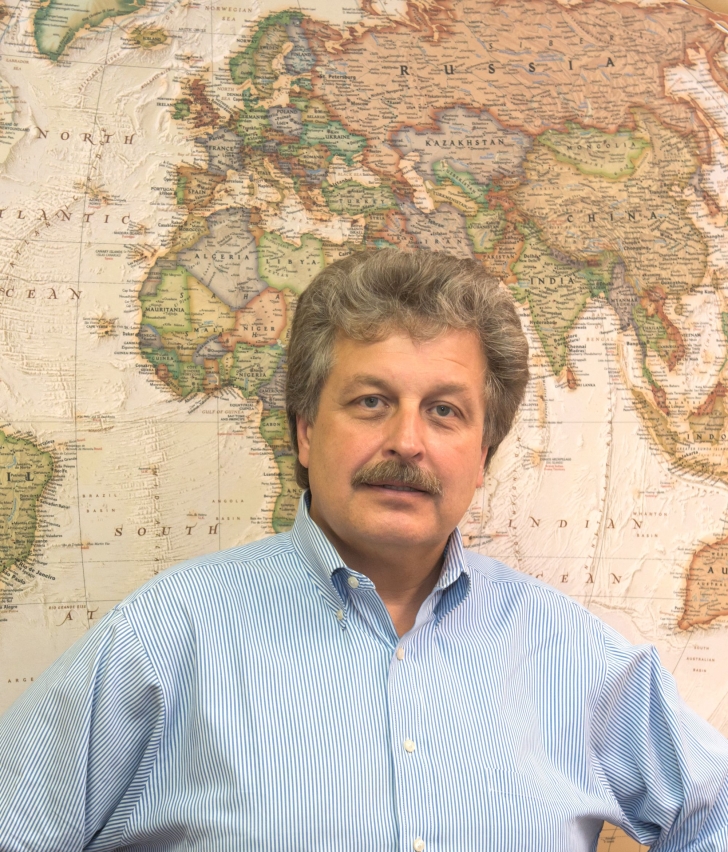
Mission Eurasia President Sergey Rakhuba, a native of eastern Ukraine’s Donbas Region, said the Russian government provided no advance warning or explanation for blacklisting the ministry.
“We received no warning, no heads-up, no request for clarification – nothing,” Rakhuba said. “So, I don’t want to speculate about their exact motivation. But I think we have to look at this in the much larger context of what has been happening in Russia for a number of years.”
Rakhuba emphasized that Mission Eurasia is not a political organization. Having lived in Russia for many years before moving to the United States, Rakhuba noted the mission’s 35-year history in the region, established during the collapse of the Soviet Union in 1991. Over three decades, the organization trained thousands of young leaders, distributed Bibles and literature, planted churches, and supported humanitarian work.
“I know Russia very well. We have deep, lifelong relationships throughout the evangelical community there,” Rakhuba said. “We have never gone to Russia to organize political opposition. That has never been our mission.”
Instead, the mission focused on equipping national Christian leaders to serve their own communities while helping the global church to understand the needs of evangelicals across Eurasia. Rakhuba noted the Russian government increasingly views independent organizations with international ties, especially those outside state control, with deep suspicion.
“Mission Eurasia is an American-based organization with deep historic relationships with evangelical Christians throughout the former Soviet Union, including both Russia and Ukraine,” Rakhuba said. “Since Russia’s full-scale invasion of Ukraine, we have also spoken openly about the enormous suffering we see there.”
Through its Religious Freedom Initiative, Mission Eurasia has documented human rights abuses in Russia and Russian-occupied territories of Ukraine. Independent reports have detailed abduction and torture of religious leaders, confiscation of property, restrictions on religious minorities, and preferential treatment given to the Russian Orthodox Church of the Moscow Patriarchate in occupied areas.
Rakhuba said the “undesirable” label fits a broader pattern of state control over civil society and independent religious activity. He cited a “sad historical irony” in remembering a warning by mission founder Peter Deyneka Jr., who noted in 1991 that while God had opened an extraordinary window of opportunity for the gospel in Russia, that window would eventually close.
“For more than three decades we worked while that window was open,” Rakhuba said. “Today, unfortunately, we are watching it close.”
Rakhuba expressed that his greatest concern centers on ordinary Russian evangelicals who may face penalties simply for possessing materials linked to Mission Eurasia.
“For more than 35 years, since the collapse of the USSR, we have published millions of copies of Scripture, Christian books and training materials,” Rakhuba said. “Some of those materials have been sitting peacefully on church and seminary bookshelves for many years. And now, against all possible logic, those books can suddenly become dangerous.”
During the Soviet era, authorities treated the Bible as a dangerous book and branded U.S.-printed Christian literature as a Western ideological weapon.
“Now Russia presents itself as a defender of traditional Christian values – and yet once again, evangelical Christians can face trouble because they have Bibles and Christian books connected to a foreign Christian ministry,” Rakhuba said.
The risk of prosecution creates widespread anxiety among some pastors across Russia.
“Think about the message that sends to an ordinary pastor somewhere in Russia,” Rakhuba said. “If the president of the Baptist Union can be taken to court because Mission Eurasia books are sitting in a seminary library, an ordinary pastor naturally begins asking, ‘What can they do to me?’ That creates fear. And I believe fear and intimidation are among the most damaging effects of these actions.”
Soviet Patterns
Rakhuba described the emotional toll of seeing Russian courts order the destruction of New Testaments.
“For someone who grew up in the Soviet Union, it is difficult to describe what it feels like to hear in 2026 that a Russian court has ordered copies of the New Testament destroyed because of the Christian organization that published them,” Rakhuba said. “We can replace books. We can change methods. Mission Eurasia can adapt to this situation. But I do not want a pastor, a young Christian leader or a church family in Russia to suffer simply because they received a Bible with Mission Eurasia’s imprint on the back page.”
Mission Eurasia is altering its operating methods to protect local Christians. The organization can no longer legally operate offices in Russia, and historic partnerships, resource sharing, and financial support must now adapt to avoid endangering Russian evangelicals.
Rakhuba stressed that this legal pressure built up over years rather than happening overnight. In 2016, Russia passed anti-terrorism legislation known as the Yarovaya law, which severely restricted missionary work and public evangelism. Subsequent “foreign agent” laws forced church leaders to reconsider whether accepting foreign training or financial aid carried too much risk.
“For evangelical Christians, this is especially painful because Christianity by its very nature is broader and global,” Rakhuba said. “The church does not stop at national borders.”
He noted that after the fall of the Soviet Union, Mission Eurasia purposefully focused on empowering local, indigenous Russian leaders rather than sending U.S. missionaries to run programs. Yet, Russian authorities now treat even these local-led international partnerships with suspicion.
Looking ahead, Mission Eurasia will alter its strategy inside Russia to protect local Christians while continuing to seek responsible ways to support Russian evangelicals. In contrast to its restricted work in Russia, Mission Eurasia has expanded its operations in Ukraine, providing trauma care, food, and ministry support to affected families and children.
“Governments can close an organization’s office. They can prohibit a foreign organization. They can confiscate books. They can block financial channels,” Rakhuba said. “But it is much harder to stop the gospel when it is already in the hearts and hands of thousands of local believers.”
Reflecting on his childhood in the USSR, Rakhuba noted that while modern Russia is not identical to the Soviet Union, the patterns of surveillance, restrictions on literature, and suspicion toward Christians feel painfully familiar.
“So, if the Russian government completely closes the door to Mission Eurasia as a foreign organization, we will recognize that reality and we will not recklessly endanger believers inside Russia,” Rakhuba said. “Governments can blacklist organizations...But they cannot blacklist the gospel, and they cannot stop what God is doing in the hearts of His people.”