Religious freedom advocates have urged U.S. lawmakers to push Pakistan to end the abduction, forced religious conversion and marriage of minority girls, warning that weak law enforcement and judicial failures leave Christian and other religious minority children vulnerable to abuse.
The concerns were raised during a congressional staff briefing organized by Christian rights organization Jubilee Campaign in collaboration with Ex-Muslims of North America (EXMNA) and the U.S. Commission on International Religious Freedom (USCIRF) in Washington D.C. on Oct. 13. Besides the issue of forced faith conversions/marriages, the speakers also highlighted extrajudicial killings, arbitrary detention on blasphemy accusations and restrictions on freedom of religion and expression, according to a press statement released by Jubilee Campaign.
The briefing brought together staff representatives from the congressional offices of Reps. Young Kim, Bill Huizenga, Marlin Stutzman, Pramila Jayapal and Chris Smith. Huizenga chairs the U.S. House Foreign Affairs Subcommittee on South and Central Asia.
Joseph Janssen, chairperson of Voices for Justice and advocacy officer at Jubilee Campaign Netherlands, presented findings from the updated “Stolen Girls” report, which documented 210 cases of abduction, coerced religious conversion and forced marriage involving Christian girls in Pakistan between January 2019 and December 2025.
The report updates an earlier study released in 2022. Its findings have also informed discussions about the failure to protect minority girls in Pakistan, including in a report by the National Commission for Human Rights (NCHR) titled “Drivers of Forced Conversion Through Marriage in Pakistan.”
Janssen told the gathering that families seeking justice frequently encounter resistance from police, discrimination within the justice system and institutions that accept allegedly falsified documents or statements made by girls under coercion without adequately investigating the circumstances.
“Protecting a child is a duty of the state,” he said. “Religious claims cannot excuse an abduction, and a marriage certificate cannot erase a child’s age.”
He cited the cases of Maria Shahbaz, Amber Nadeem, Sataish Mariam and other Christian girls whose families continue to seek their daughters’ return and protection. Maria, 13, was abducted from Lahore in July 2025. Her case has drawn particular concern over allegations of forced conversion and marriage and the difficulties her family has faced in pursuing legal remedies.
Janssen urged U.S. lawmakers to use diplomatic pressure to help secure the girls’ release and hold Pakistani authorities accountable for failures to protect them.
“Freedom of religion means freedom to choose. It cannot be built on threats, isolation or captivity,” he said. “No girl should be prevented from returning to her family or practicing her faith because someone threatens her with consequences for leaving a religion she was pressured to adopt.”
Miuse of Blasphemy Laws
Aysha Khan, project manager at EXMNA, highlighted Pakistan’s blasphemy laws, which prescribe severe penalties, including death, for certain offenses and have been associated with mob violence, arbitrary arrests and the targeting of religious minorities and dissenters.
Khan challenged the argument that the central problem lies only in the misuse of the laws, saying their restrictions themselves violate fundamental freedoms.
“This is not simply a problem of laws being misused,” she said. “It is also a problem with what the laws prohibit.”
She emphasized that freedom of religion and belief must protect the right to change one’s religion, reject religious beliefs and criticize religious ideas without fear of prosecution or violence.
Pakistan has ratified the International Covenant on Civil and Political Rights (ICCPR), which protects freedom of thought, conscience, religion and expression. The country’s blasphemy laws, however, continue to restrict criticism of religious ideas, sometimes with potentially fatal consequences for those accused of crossing the boundaries they establish, Khan said.
She cited the 2011 assassination of former Punjab Province Gov. Salman Taseer, who was killed by his bodyguard after publicly criticizing the country’s blasphemy laws, as an example of the violence surrounding efforts to challenge them.
Khan also raised concerns about online censorship. In 2025, Pakistan’s telecommunications regulator reported blocking more than 100,000 URLs classified as blasphemous, according to her presentation. Authorities have also pressured social media platforms to remove content considered offensive to Islam.
EXMNA’s own online resources have been affected, she said, noting that WikiIslam, a platform examining Islamic texts, teachings and history from a critical perspective, has been blocked in Pakistan.
Although Khan welcomed a reduction in blasphemy-related prosecutions following Pakistan’s 2025 crackdown on the hardline Islamist group Tehreek-e-Labbaik Pakistan (TLP), she warned that arrests alone would not address the underlying problem.
“Religious extremism cannot be defeated simply by arresting extremists,” she said, adding that institutions must protect people who challenge ideas that sustain intolerance.
Khan called on the U.S. Congress to make religious freedom, freedom of conscience and freedom of expression consistent elements of Washington’s diplomatic and economic engagement with Islamabad. She also pointed to Pakistan’s concerns about maintaining preferential access to European markets as a factor in its efforts to curb blasphemy-related mob violence and arrests.
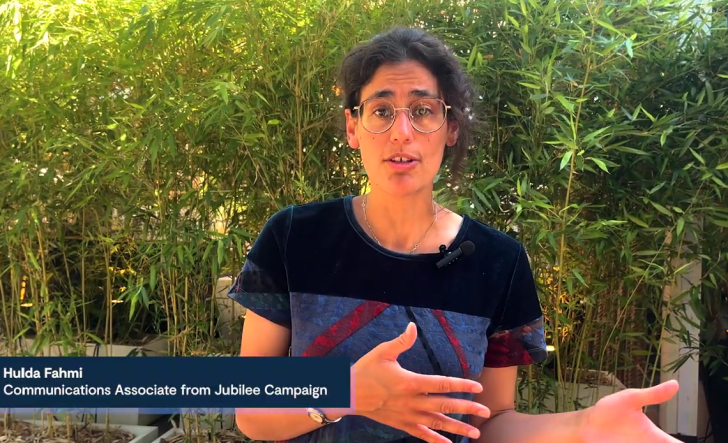
Hulda Fahmi of Jubilee Campaign, who moderated the briefing, read remarks from USCIRF Chair Asif Mahmood supporting stronger U.S. action on religious freedom in Pakistan. Mahmood welcomed the U.S. State Department’s designation of Pakistan as a Country of Particular Concern (CPC) in December 2023 but urged the administration to make the designation effective by lifting the national security waiver.
USCIRF has recommended that Pakistan be designated a CPC since 2002, citing its blasphemy laws and the government’s failure to prevent forced religious conversions and child marriages involving Hindu, Sikh and Christian girls and women. A CPC designation is intended to identify governments responsible for tolerating or causing particularly severe violations of religious freedom and can provide a basis for U.S. policy measures. A waiver, however, can limit the practical consequences of such a designation.
Shagufta Kausar, a Pakistani Christian woman who spent more than seven years in prison after being sentenced to death on blasphemy charges, also addressed the briefing. Her case became a prominent example of the risks faced by people accused under Pakistan’s harsh blasphemy laws.
Kausar recounted how women in prison pressured her to convert to Islam, telling her that reciting the Islamic declaration of faith could bring better prison conditions and eventual release. She refused to abandon her Christian faith, she said. Kausar was eventually freed following sustained international advocacy.
Her case drew attention in Europe, including through a European Parliament resolution calling for her release and debate over Pakistan’s preferential trade arrangements with the European Union.
The activists also called for congressional action through existing legislative initiatives addressing religious freedom and human rights in Pakistan. They highlighted the proposed “Pakistan Freedom and Accountability Act” (H.R. 5271), which calls for stronger U.S. engagement with Pakistan to uphold democracy, human rights and the rule of law. They also cited House Resolution 594, concerning the persecution of Christians in Muslim-majority countries, which identifies Pakistan among the countries where Christians face blasphemy accusations, mob violence and the threat of capital punishment, while Christian girls face abduction and forced marriage and conversion.
They further urged lawmakers to ensure that Pakistan receives explicit attention in House Resolution 738, which expresses concern over severe restrictions on religious freedom abroad.