

I was attending the Movement Day conference in Dubai in the United Arab Emirates last Saturday, February 28, 2026, when we received news that war had erupted following the U.S.–Israeli attack on Iran.
The airspace of both Israel and Dubai was shut down.
Within a few hours, the airspace of both Israel and Dubai was shut down, and all the foreign participants attending the conference—more than a hundred people—were confined to the same hotel. We were stranded there for several days.
It was surreal to spend those days with a group composed mainly of Arab men and women—alongside others from different nationalities—many of whom were key servants of the gospel, including senior pastors, heads of evangelical alliances and International Christian organizations. For four days, we found ourselves together in circumstances none of us had planned.
We spent our time in prayer meetings, worship, and hearing preaching. There were also circles of fellowship, moments of rest, and occasional short walks around the hotel, always mindful that Dubai itself had become a potential target for attacks.
I was eventually able to travel back to my hometown of Nazareth.
At the same time, we carried a deep yearning to return home to our loved ones during such a difficult time. We waited anxiously for arrangements that would allow us to return. I was eventually able to travel back to my hometown of Nazareth, four days after my scheduled return, through Jordan. Others left few days later as the opportunity came.
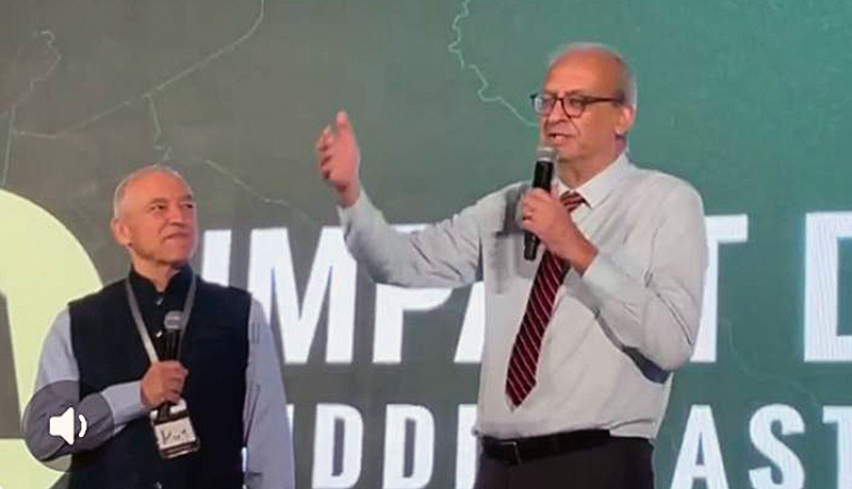
Our hosts from Movement Day Dubai were gracious and did everything possible to make us comfortable during those uncertain days.
Seemingly, no one had expected Dubai to become a target for attack.
As retaliation for the attack against it, Iran did not limit its response to Israel but also targeted U.S. allies in the Gulf, including Dubai. This glamorous haven was suddenly struck at its most vulnerable point. Seemingly, no one had expected Dubai to become a target for attack.
Unlike Israel, where sirens and shelters are part of daily preparedness, many buildings lacked shelters and the public was not alerted by warning sirens.
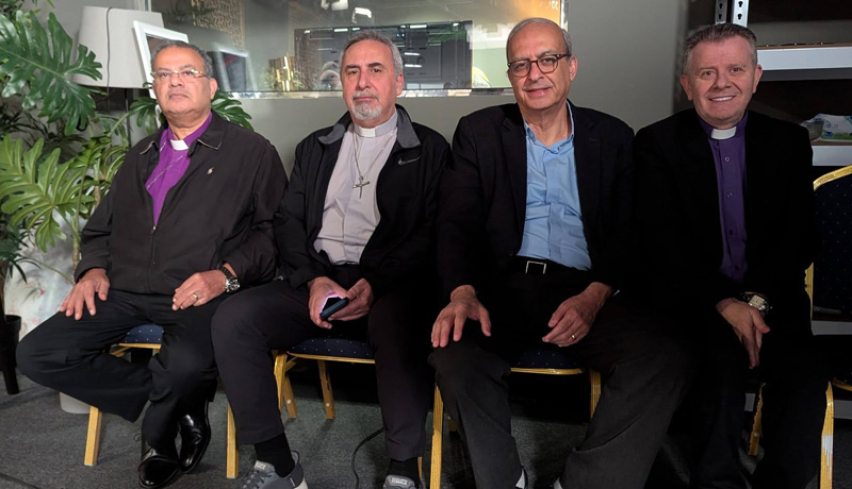
Those extraordinary days brought several insights, seven of which I share for your encouragement.
1. The weariness of war
For those of us from Israel and Palestine (and probably from other countries in the Middle East as well), the eruption of another war brought a deep sense of distress and discouragement.
Another war? Again?
Staying in a peaceful and glamorous environment among fellow believers, made the contrast even more vivid.
We had only recently begun to recover from the Hamas–Israel war, which put so much of life on hold and caused significant suffering in the region especially the open wound in Gaza. Being temporarily removed from the land of conflict, and staying in a peaceful and glamorous environment among fellow believers, made the contrast even more vivid. While we prayed together in Dubai, sirens were sounding back home in our land of conflict.
In such moments we cling to the assurance of Scripture: “The Lord is close to the broken-hearted and saves those who are crushed in spirit” (Psalm 34:18).
2. Becoming the prayer request
Within a few hours, I began receiving messages from friends around the world asking how we were doing and promising to pray for us and for our families.
I was tired of being a prayer request.
My first reaction surprised me. I realized that I was tired of being a prayer request. I would rather be an answer to prayer—a blessing to someone else—rather than an object of concern or pity, even though I deeply appreciate the faithful prayer warriors who stand with us.
Yet perhaps this is exactly how the body of Christ works. As Paul writes, “If one member suffers, all suffer together” (1 Corinthians 12:26). At times we carry others in prayer; at other times we are the ones being carried.
3. The irony of comfort and longing
There was an ironic aspect to our situation.
We were staying in a comfortable hotel, our expenses fully covered by the UAE government, which had pledged to care for stranded visitors. We enjoyed generous buffet meals three times a day, large rooms, and attentive service.
Yet none of this could replace home.
Despite the comfort surrounding us, we longed to be with our families—even though, for many of us who live in the Middle East, home meant sirens, uncertainty, and danger.
It gave us a glimpse of the feelings experienced by those who are displaced.
Ironically, we prayed to return to the very places under threat. In a small way, it gave us a glimpse of the feelings experienced by those who are displaced or forced to leave their homes.
4. The fragility of power and prosperity
Dubai is known as a global symbol of prosperity—luxury brands, impressive architecture, and endless activity. Yet during those days the city seemed transformed.
It was surreal to see parts of the city so quiet. The airport, which normally welcomes around 90 million visitors each year, appeared almost deserted. When we finally departed early on Thursday morning, the runway looked like an empty field.
The moment brought to mind the words of David: “How the mighty have fallen in battle” (2 Samuel 1:25).
Even the most impressive cities are vulnerable.
Even the most impressive cities are vulnerable. It was a sobering reminder of the fragility of human achievement.
5. The gift of slowing down
Many of the pastors and leaders in our group live highly structured lives filled with programs, services, and conferences. They are often driven by results and constant activity.
Yet our unexpected confinement forced us to slow down. Without rigid schedules, we had time for extended fellowship, personal prayer, and spontaneous gatherings for worship. In many ways, these moments became some of the most meaningful of the entire conference.
It reminded us of the simplicity of the early church.
It reminded us of the simplicity of the early church, when believers devoted themselves to fellowship and prayer (Acts 2:42).
Such slowing down would help energize us through connection with God and help us focus so we are more effective in our role as salt and light in our communities.
6. The call to peacemaking
The repeated seasons of war in my region continue to convince me that peacemaking must be central to our Christian witness.
If we proclaim the gospel—the good news of reconciliation with God—we cannot ignore the need for reconciliation among people. Jesus is called the Prince of Peace, and in the Sermon on the Mount he declares: “Blessed are the peacemakers, for they will be called children of God” (Matthew 5:9).
As Evangelicals, we must encourage dialogue.
As Evangelicals, we must encourage dialogue, pursue reconciliation where possible, and demonstrate that the gospel has implications not only for eternity but also for how we live together today.
7. The burden of constant knowledge
Many carry apps on their phones that notify them when sirens sound in their hometowns—even if they are traveling abroad.
Those alerts continued to reach our phones in Dubai.
At times, in the early hours of the morning, the sharp notification would wake us: sirens were sounding back home, and our loved ones were running to shelters.
We could have removed the app, but who would want to do that? We want to know what is happening to those we love.
Interestingly, some members of our group occasionally ventured outside the hotel. They heard distant booms but continued their activities, not knowing exactly when danger might come. Paradoxically, their lack of constant alerts seemed to give them greater peace of mind.
Constant information can intensify anxiety.
I am not suggesting we should ignore warnings or be careless. Yet it was striking how constant information can intensify anxiety.
Conclusion
Looking back, those unexpected days of confinement became something of an unplanned spiritual retreat. Leaders who normally live at a relentless pace—filled with meetings, conferences, and responsibilities—were forced to slow down.
We returned to the essentials of the Christian life.
With fewer updates and less control over events, we returned to the essentials of the Christian life: prayer, worship, fellowship, and waiting on God.
In a world that constantly demands more information and more activity, the experience reminded us of the wisdom of Scripture: “Be still, and know that I am God” (Psalm 46:10). Paradoxically, knowing less and surrendering more brought renewed strength and clarity.
As we prayed and worshiped together, unity among believers from different nations deepened, and our focus returned to what truly matters. Perhaps in times of uncertainty, God invites us to slow down, trust him more fully, and rediscover the strength that comes from surrender.
Botrus Mansour from Nazareth, Israel, is the Secretary General of the World Evangelical Alliance. After he graduated from Nazareth Baptist School, Botrus completed a law degree in the Hebrew University in Jerusalem (1991) and was then admitted to the Israeli Bar Association (1993) and practiced Law in Haifa and Nazareth. In 2009 Botrus completed an MBA (specializing in non-profit organizations) from Haifa University. In 2004 he was invited to lead Nazareth Baptist School as the General Director. Botrus co-founded the Local Baptist Church in Nazareth in 1996 and was ordained as an elder in 2001. Botrus has served in various leadership positions including: the Chairman of The Convention of Evangelical Churches in Israel; Secretary and Chairman of the Alliance of Evangelical Conventions in Jordan and the Holy land; Member of the Executive Committee for Christian Schools in Israel; Deputy Chairman of “Nazareth Village” board; Member of Global Council of Advocates International; Co-Chairman of the Lausanne Initiative for Reconciliation Israel-Palestine. Botrus and his wife, A’bir, have three grown up children and a grandson. They live in Nazareth, Israel.








