
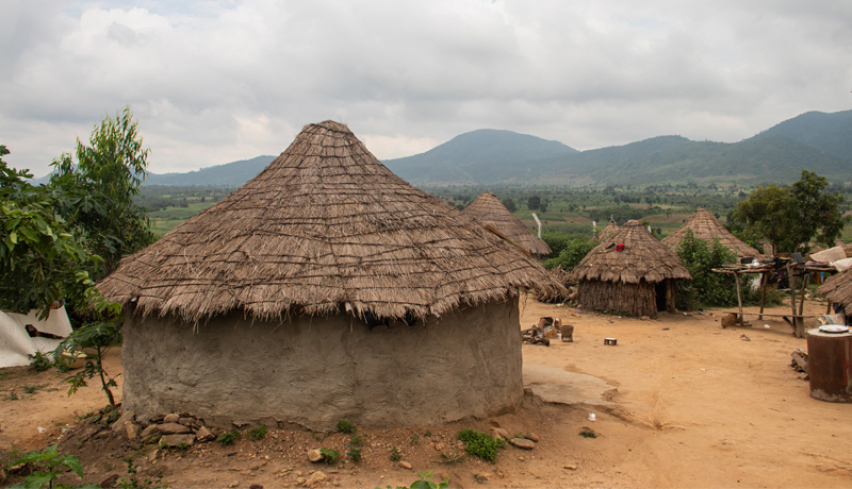
In the fertile farmlands of Nigeria’s Middle Belt, yet another village is attacked at night. Homes are burned, churches reduced to ash, families scattered or killed. By morning, the survivors gather what remains and bury their dead. The devastation and heartbreak repressed by the knowledge that it will soon happen again.
Last week, 29 young Christians were gunned down at a football pitch in Adamawa state, where their church was burnt to the ground. The previous week, 26 were kidnapped, with 17 killed in a separate attack in Benue State in northern Nigeria, where four police officers also died.
These atrocities are often described as the byproduct of “communal clashes” or “resource conflicts.” The violence directed at Christian communities in Nigeria is not random, nor is it simply the result of environmental stress or local disputes.
A long history that stretches from pre-colonial state formation.
It is rooted in a long history that stretches from pre-colonial state formation through colonial governance to the fractured political economy of modern Nigeria. To understand the suffering of Christians today, one must first understand the structures that made it possible.
One country, two faiths
Islam reached Nigeria before Christianity did. The Sokoto Caliphate was founded by Usman dan Fodio in the early nineteenth century. The Caliphate established a system of Islamic governance across much of northern Nigeria, creating a rift between the many tribes of Nigeria that has never healed, and one that has been endlessly exploited by radical groups.
This governance did not disappear with the arrival of British colonial rule. Instead, it was preserved, and in some respects exploited, through the policy of indirect rule.
Christian missionary activity was restricted in the north.
British administrators governed the vast regions of northern Nigeria through existing Muslim emirates, lacking the resources to rein in the existing Islamic institutions. Christian missionary activity was restricted in the north, in stark contrast to the south where it flourished.
The result was a bifurcated colonial state: a predominantly Muslim north with entrenched Islamic legal structures, and a largely Christian south shaped by missionary education and British administrative norms.
A fragile national framework that struggled to reconcile competing identities and institutions.
At independence in 1960, these asymmetries were not resolved. They were carried forward into a fragile national framework that struggled to reconcile competing identities and institutions.
Over time, religious affiliation became increasingly politicized, particularly in the north where Islamic identity remained closely tied to political legitimacy, and where education was heavily restricted.
The return to civilian rule in 1999 marked a turning point. Beginning in Zamfara State, a wave of northern states adopted expanded interpretations of Sharia law, extending its application beyond personal status matters into criminal law.
Christians could find themselves marginalized or vulnerable.
While proponents argued this reflected democratic will, its implementation raised profound concerns for religious minorities. In practice, Sharia systems often operated alongside secular courts, creating parallel legal regimes in which Christians could find themselves marginalized or vulnerable.
It was in this environment that Boko Haram emerged in the early 2000s. Initially a fringe Islamist movement rejecting Western education and state authority, it evolved into one of the most violent insurgencies in the world.
Under Abubakar Shekau, Boko Haram explicitly targeted Christian communities, framing its campaign in religious terms. Churches were bombed, clergy assassinated, and entire towns overrun. The group later fragmented, prompting the rise of Islamic State West Africa Province (ISWAP)—another of the most murderous groups in the nation’s history.
Herder violence
In Nigeria’s Middle Belt, where Muslim-majority northern states meet predominantly Christian southern ones, another form of violence has intensified: attacks by armed groups often described as “Fulani herders.”
These conflicts are frequently reduced to disputes over land and grazing routes. Climate change, poverty, desertification, and population growth have increased competition for resources, pushing pastoralist groups southward.
The militarization of herder groups led to prepared and coordinated attacks on villages.
The militarization of herder groups led to prepared and coordinated attacks on villages. Churches are frequently singled out, and the timing of attacks (sometimes during religious festivals) reinforces the perception among victims that they are being targeted not only as farmers, but as Christians.
Data from conflict monitoring organizations such as ACLED indicates tens of thousands of recent fatalities are linked to both insurgency and communal conflict. According to the United Nations and the International Organization for Migration, millions of Nigerians have been forcibly displaced from their homes, many of them from predominantly Christian areas in the north and Middle Belt.
The response from Nigerian authorities has been uneven.
Despite the scale of the crisis, the response from Nigerian authorities has been uneven. Security forces are often overstretched, and in some cases accused by local communities of arriving too late or failing to intervene effectively.
Prosecutions for mass violence remain rare, reinforcing a cycle of impunity and loss of trust, with many US politicians accusing the Nigerian government of being complicit.
International accountability
In several northern states, Sharia blasphemy laws have been enforced with increasing severity. High-profile cases have drawn such international attention, including from the UN Commission on International Religious Freedom. For Christians living in these regions, the boundaries of permissible expression are often uncertain, and the consequences of crossing them severe.
The tragedy of Nigeria is not only the violence itself, but the way it is misunderstood.
The tragedy of Nigeria is not only the violence itself, but the way it is misunderstood. When attacks are framed as inevitable by-products of poverty or climate change, the political choices that sustain them are obscured. When they are described as ancient tribal conflicts, the modern institutions that fail to prevent them escape scrutiny.
Azeem Ibrahim is the Chief Strategy Officer at the New Lines Institute for Strategy and Policy and a columnist at Foreign Policy magazine. He has written extensively on the persecution of religious minorities, including essays for Foreign Policy on the targeting of Christian communities in Myanmar and China. See Azeem's website for more information: https://www.azeemibrahim.com/.








