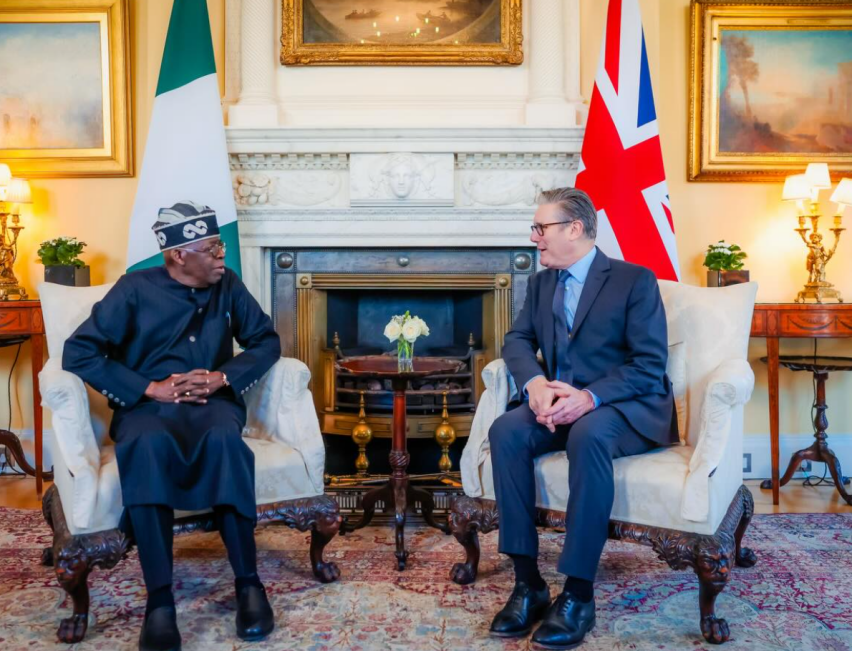
Nigeria and the United Kingdom have moved to strengthen economic and diplomatic ties following President Bola Tinubu’s state visit on March 18 - 19. But UK lawmakers and Christian groups warn that future cooperation should depend on ending violence against Christians.
Tinubu’s official state visit, which is the first by a Nigerian president to Britain in nearly 40 years, was framed by Nigerian officials as a turning point in bilateral relations, focused on trade, investment and global partnership.
In an official statement, the Nigerian presidency described the trip as “the beginning of a renewed phase in diplomatic, economic and cultural relations between Nigeria and the United Kingdom,” highlighting efforts to deepen cooperation across multiple sectors.
Presidential spokesman Tunde Rahman called the visit a “historic and glorious moment for Nigeria,” emphasizing its symbolic importance and the country’s re-emergence on the global stage.
Meetings during the visit included engagements at Windsor Castle and Downing Street, alongside discussions on expanding trade and investment. Reports also pointed to major economic interests, including infrastructure and port development projects, as central to the talks.
Commentary by The Guardian noted that the visit reflects Nigeria’s broader ambition to position itself as a regional power and attract foreign investment, signaling what it described as a return to the global stage.
But even as both governments emphasized renewed partnership, UK lawmakers and Christian advocacy groups cautioned that the issue of violence against Christians in Nigeria cannot be ignored.
Conditional cooperation
More than 200 members of Parliament and peers called on Prime Minister Keir Starmer to raise the matter directly with Tinubu, urging that human rights, particularly religious freedom, be made a condition of future cooperation.
In a joint letter, lawmakers from the All-Party Parliamentary Group for Freedom of Religion or Belief warned that Nigeria must take urgent steps to address attacks on Christian communities.
The group’s chairman, Jim Shannon, said Nigeria must take “concrete steps to prevent the harassment, persecution and killing of Christians, while ensuring that perpetrators are investigated and prosecuted.”
The letter also called for human rights obligations to become “fundamental to all future diplomatic, security and trade discussions” between the two countries.
Christian campaigners have echoed those demands, arguing that Nigeria has become one of the most dangerous places in the world for Christians. They cite ongoing attacks on churches, kidnappings and killings in rural communities, often linked to extremist groups and armed militias.
Advocates say economic leverage may be one of the few tools capable of driving meaningful change, and have urged the UK government to tie trade deals and diplomatic engagement to measurable improvements in security and accountability.
Some lawmakers had gone further, calling on Starmer to confront Tinubu directly over the issue during the visit, describing the situation as urgent and long overdue for action.
Despite the pressure, Nigerian officials have not publicly responded to calls for conditional trade or acknowledged the issue in the same terms as UK critics.
Instead, the Nigerian government has consistently framed the violence as part of a broader security crisis affecting multiple communities, including both Christians and Muslims, driven by terrorism, banditry and communal conflict.
Nigeria has faced years of instability involving insurgent groups such as Boko Haram and Islamic State West Africa Province, alongside criminal gangs responsible for kidnappings and attacks on villages, according to international media reports.
While Christians are among those affected, experts say the wider conflict is fueled by a complex mix of factors, including economic hardship, land disputes and weak security infrastructure.
The differing narratives have created a delicate diplomatic balancing act for the UK government.
On one hand, Britain maintains strong historical and economic ties with Nigeria, one of Africa’s largest economies and a key regional partner. On the other, domestic political pressure is mounting for a more values-driven foreign policy that prioritizes human rights.
Lawmakers warn that failing to act risks undermining the UK’s global commitment to freedom of religion. For Nigerian officials, however, the focus remains firmly on strengthening ties and projecting stability.
The visit was presented as an opportunity to deepen cooperation, attract investment and reinforce Nigeria’s position as a significant global player.
The contrast in priorities underscores a broader tension between economic diplomacy and human rights advocacy - one that remains unresolved.
As both countries move forward with plans to expand cooperation, the question of whether human rights concerns will shape future agreements continues to hang over the relationship.