A U.N. panel last week cited India for discrimination against its Christian and Muslim minorities.
The U.N. Committee on the Elimination of Racial Discrimination (CERD) in Geneva on Aug. 25 adopted findings that included forced reconversion campaigns against Christian and Muslim tribal and Dalit communities, a discriminatory citizenship process affecting Muslims in Assam state, and the disproportionate impact of a new voter roll purge on Muslim voters in two states.
The findings, known as concluding observations, marked the panel’s first review of India in 19 years. Its previous assessment took place in 2007.
CERD is the independent expert body that monitors compliance with the International Convention on the Elimination of All Forms of Racial Discrimination, a 1965 U.N. treaty India helped draft and has ratified. Member states periodically submit reports on their compliance, and the committee questions government delegations before issuing its findings.
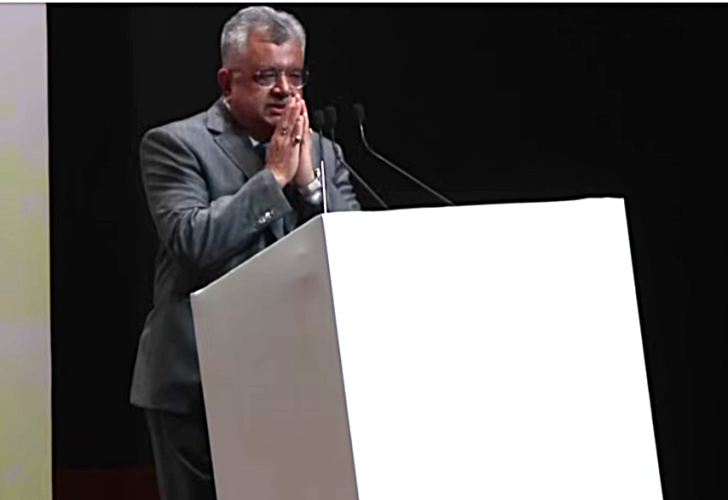
The observations followed a two-day dialogue on Aug. 11-12 between the committee and an Indian delegation led by Solicitor General Tushar Mehta, India’s second-highest law officer, covering a review of India’s human rights record from 2007 to the present.
One of the report’s central concerns was the treatment of Christian and Muslim members of India’s Scheduled Castes and Scheduled Tribes. These are official government categories: Scheduled Castes refers to communities historically subjected to caste-based discrimination and segregation, sometimes called Dalits, a term meaning “oppressed,” while Scheduled Tribes refers to India’s indigenous communities, often called Adivasis.
Both groups qualify for constitutional protections and affirmative action benefits. Yet Christian and Muslim members of these communities, the panel found, face discrimination in exercising their right to freedom of thought, conscience and religion, a right guaranteed under Article 25 of India’s constitution.
Investigators cited reports of hate speech and hate crimes, including forced reconversion campaigns, carried out by civilian and organized vigilante groups targeting Christian and Muslim members of Scheduled Tribes and Scheduled Castes.
Several Indian states have also enacted laws prohibiting religious conversion among Scheduled Tribe members, laws that rights groups say are used disproportionately against Christian missionary activity.
Christian and Muslim Dalits, the report found, remain excluded from protection benefits available to other Dalits under a 1950 presidential order that restricts official Scheduled Caste status largely to Hindus, Sikhs and Buddhists. The panel regretted the delay in publishing the findings of a government commission of inquiry, established in 2022, to examine the socioeconomic conditions of Christian and Muslim Dalits and whether they should be extended the same reservation benefits.
It urged India to repeal discriminatory provisions, prosecute those responsible for hate speech and forced conversion, disband vigilante groups targeting these communities, and publish the delayed 2022 report.
Regarding the National Register of Citizens (NRC), a citizenship verification process unique to Assam that requires residents to prove their family lived in India before 1971 (when a war led to the creation of Bangladesh and a wave of migration across the border), the panel said Bengali-speaking Muslims continue to face “systematic and structural racial discrimination” in the process. It expressed grave concern that the process could lead to “mass arbitrary deprivation of citizenship,” noting that applicants struggle to produce family and birth records, with women and children worst affected.
CERD recommended the NRC process be suspended and that the Citizenship Amendment Act, a 2019 law that fast-tracks citizenship for non-Muslim migrants from three neighboring countries while excluding Muslim applicants, be reviewed.
Also under scrutiny was the Election Commission’s Special Intensive Revision (SIR), a door-to-door voter list verification launched in November across nine states and three union territories. Roughly 52 million names have been removed from voter rolls nationwide, the panel found, including 9.1 million in the eastern state of West Bengal ahead of its April 2026 elections. Muslim voters were reportedly disproportionately affected in West Bengal and Assam, and the panel cited statements by senior state officials that it said conflated lawful Indian Muslim citizens with foreign nationals.
Committee expert and country rapporteur Stamatia Stavrinaki told the dialogue that independent monitoring had recorded more than 1,300 anti-Muslim hate speech incidents in 2025, including remarks attributed to senior officials. In response, the Indian delegation said a 2023 law had criminalized hate speech and hate crimes, and that freedom of religion remained a constitutional guarantee.
Law enforcement operations targeting Rohingya refugees and Bengali-speaking Muslims have also increased, the report noted, following a 2017 government order and an attack by militants in India’s Jammu and Kashmir region in April 2025. It cited reports of poor conditions at a migrant detention facility in Assam known as the Matia Transit Camp.
The Rev. Vijayesh Lal, general secretary of the Evangelical Fellowship of India (EFI), noted that the CERD Committee has raised concerns around hate speech and violence against religious minorities in India.
“EFI’s Religious Liberty Commission documented 747 verified incidents against Christians in 2025 alone, including disrupted worship, violence, arrests, and tribal Christian families driven from their villages for refusing to renounce their faith,” Lal told Christian Daily International. “Our concern remains constant, whatever view is taken of any particular report: that the constitutional guarantees of equality and religious freedom be upheld for every Indian.”
The Rev. Cedric Prakash, a Jesuit priest and longtime human rights advocate based in Ahmedabad, India, and founder of the Jesuit human rights center PRASHANT, said the CERD review “is a step in the right direction and must be welcomed by all who care for the future of India.”
“The report highlights the widespread racial discrimination, including hate crimes and hate speech. It focuses on human rights violations on minorities, tribals/indigenous peoples and non-citizens,” he told Christian Daily International. “These violations include extrajudicial killings, arbitrary detentions, torture and sexual violence. The report demands that the Indian authorities prosecute the perpetrators of these heinous crimes and hold them responsible. Finally, it urges the Indian government to fully implement CERD’s recommendations without delay.”
It is doubtful that the government will take this report seriously, he said.
“It normally pooh-poohs most international observations on the Indian reality despite the objectivity and accuracy of such reports,” Prakash said. “In this dimension of racial discrimination, there is enough evidence to show how the government is in nexus with the perpetrators of these crimes and will ensure their immunity.”
Shrinking civic space was another concern, with the report pointing to laws including the Foreign Contribution Regulation Act (FCRA), which governs foreign funding to nonprofit and religious organizations. More than 1,800 licenses under this law were canceled between 2019 and 2021, it noted, with organizations working to protect the rights of minorities disproportionately affected.
The International Federation for Human Rights (FIDH), which submitted reports to the committee ahead of the review, welcomed the findings on Friday (Aug. 28), saying they reflected concerns it had raised jointly with partner organizations, including the use of hate speech by politicians targeting Rohingya refugees and Bengali-speaking Muslims.
Caste discrimination was addressed more broadly as well. The report noted continuing segregation of Dalits from public, religious and cultural spaces, and cited the forced eviction of approximately 89,000 tribal families across 18 states following a June 2024 government order aimed at tiger conservation.
Responding on Wednesday (Aug. 26), India’s Ministry of External Affairs rejected the findings as “politically motivated” and “highly malicious,” saying its delegation had already contested “sweeping generalizations” and “unsubstantiated allegations” during the Geneva session. The ministry said India would respond through the established U.N. procedure while stressing that its “commitment to combating racial discrimination remains unwavering.”
Dr. John Dayal, a veteran human rights defender and spokesperson for the All India Catholic Union, said the government’s response followed a familiar pattern.
“This isn’t new to anyone who has watched India’s minorities live under one machine of suspicion for a decade,” he told Christian Daily International. “The NRC, the CAA, the SIR: different papers, same target, and it doesn’t stop at Bengali-speaking Muslims. Anti-conversion laws and FCRA raids hitting the church in Chhattisgarh and Manipur come from the same design. Muslims, Christians, Dalits, Adivasis: one battle, not four.”
Both Chhattisgarh and Manipur have significant tribal Christian populations.
“So, the government calling this report ‘politically motivated and highly malicious’ isn’t a rebuttal, it’s a reflex, the same one used on USCIRF [U.S. Commission on International Religious Freedom], on Open Doors, on our own organizations like EFI, every time someone counts the burned churches, the arrested Christians and the reconversion drives,” he said. “CERD took 19 years to look at India again. Denial for 19 years isn’t a policy. It’s a habit.”
India has been asked to report back within two years on steps taken on law enforcement accountability, tribal rights and its migration framework, and to submit its next periodic report by January 2030. CERD specifically drew attention to the importance of its recommendations on the situation of Dalits, Indigenous and Tribal Peoples, the right to freedom of thought, conscience and religion, and the situation of migrants and asylum seekers.