Many children remain at risk of sexual exploitation, human trafficking and poverty—particularly migrant children—the Salvation Army warned during the 61st session of the United Nations (UN) Human Rights Council on March 9.
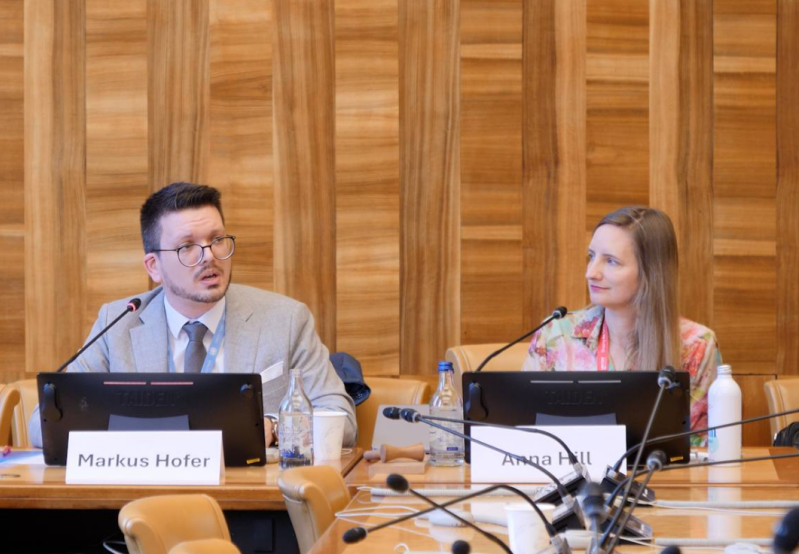
Markus Stefan Hofer, UN communications and advocacy officer for the World Evangelical Alliance, delivered an oral statement in his dual role as representative speaker for the Salvation Army’s International Social Justice Commission.
He spoke during an interactive dialogue with attorney Mama Fatima Singhateh at the council. Singhateh serves as UN Special Rapporteur on the sale, sexual exploitation and sexual abuse of children.
The statement follows a UN report by Singhateh published in January 2026 titled Protecting children from sale, sexual exploitation and sexual abuse: progress, new frontiers and the path forward.
“Over the past six years, the Special Rapporteur has observed persistent and evolving forms of the sale, sexual exploitation and sexual abuse of children,” Singhateh says in the report.
“Online child exploitation and abuse have surged, driven by misuse of technology and emerging tools.
“The COVID-19 pandemic and other crises have amplified children’s vulnerabilities, increasing their exposure to sexual exploitation and abuse.
“Challenges in child protection continue to increase in industries such as travel and tourism, as well as entertainment. Some children in vulnerable situations, including boys, gender-diverse children and street-connected children, remain largely invisible in protection efforts, reinforcing cycles of exclusion and rights violations.”
Hofer said the Salvation Army welcomed the report and reaffirmed its commitment to protecting every child from sale, sexual exploitation and abuse.
However, many children lack safe reporting mechanisms, Hofer warned, adding that “significant gaps remain.”
“Migrant and displaced children face heightened risks,” he said. “Frontline workers need stronger trauma-informed training and resources.”
Hofer said the Salvation Army’s commission works in more than 130 countries, supporting children and families affected by poverty, displacement, trafficking and online exploitation.
In 2025, more than 25,000 survivors of modern slavery and human trafficking received support, including many children subjected to sexual exploitation.
“Their resilience guides our advocacy,” Hofer added.
Hofer recalled the case of an unnamed girl trafficked across borders under false promises of education and how the Salvation Army assisted her.
“After escaping, she received emergency care, psychosocial support, and safe reunification through cross-border cooperation,” he said.
“She is now back in school and receiving follow-up care—demonstrating the importance of coordinated international protection.”
Hofer outlined three priorities to address the issue: invest in community-based prevention; strengthen cross-border collaboration so protection—not bureaucracy—guides recovery; and ensure child- and survivor-led approaches shape policy and accountability.
“We remain committed to partnering with States to ensure every child is safe, valued and free to flourish,” he added.