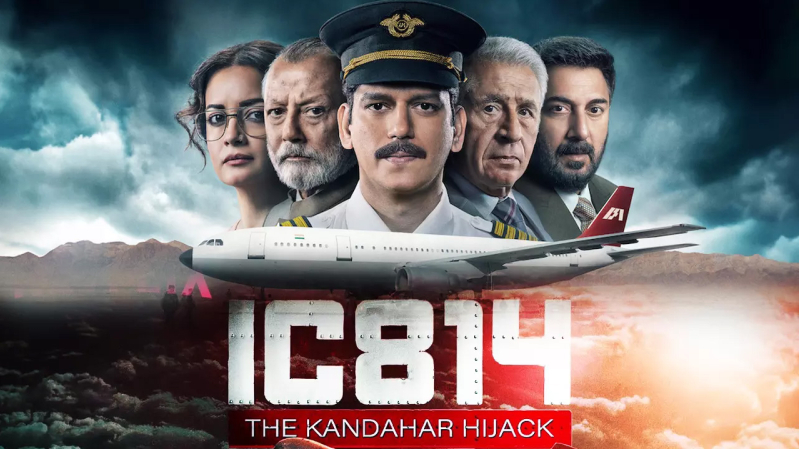
There has been fresh discussion in the media and on social networks about the hijacking of Indian Airlines IC-814 by the terrorist group Harkat-ul-Mujahideen on December 24, 1999. Considered the longest hijacking in aviation history, this incident was truly horrifying. In 2024, Netflix released a serialized version of the same event titled “IC-814: The Kandahar Hijack,” which has amplified the conversation.
A compelling story of hope at Christmas time, 1999.
Less known is the fact that the outcome could have been far worse if it were not for the prayers of God's people. My friend Frederick James was on that flight. He tells a very different story—a compelling story of hope at Christmas time, 1999.
On December 24—a cold winter's day—the Indian Airlines IC-814 flight was scheduled to depart from Kathmandu International Airport for New Delhi. The flight time was 2:30 PM, but due to technical issues, there was a two-hour delay, and the plane finally took off around 4:30 PM. There were 190 people on board, including passengers and crew. According to India Today, 26 newly-wed couples returning from their honeymoon in Kathmandu were among the passengers.
Around 5:03 PM, as an air hostess was distributing snacks, a masked man ran out of the cockpit into the cabin and announced:
We have hijacked this plane!
“We have hijacked this plane! You must follow our instructions. We have no enmity with you. But if you try to act smart, look—this is a grenade. We are flying at 33,000 feet. If I pull this pin, the plane will explode, and your family will not even find your bones. So do as we say.”
There were four hijackers in the cabin and another inside the cockpit holding a pistol to the pilot’s shoulder.
The passengers, who had just been cherishing happy memories and were excited to reunite with their loved ones, could not tell whether they were dreaming or awake. No one imagined death could come so suddenly, unexpectedly, and violently. Everyone was stunned, their limbs numb. All hope of survival seemed lost.
The hijackers pressured the pilot to divert the plane to Lahore, Pakistan. They wanted to exit Indian airspace as quickly as possible. But the Lahore airport shut off all lights to prevent the plane from landing, forcing the pilot to turn toward Amritsar, Punjab. After landing there, the hijackers demanded fuel. India, already aware of the hijacking, used the time to prepare a strategy and delayed the fuel tanker for 50 minutes.
Realizing India was stalling, the hijackers dragged Rupin Katyal (one of the honeymoon passengers) forward and slit his throat. His death from blood loss was meant to pressure the Indian government.
The hijackers threatened to kill all passengers.
Soon, a vehicle approached the plane from the front instead of the back, making the hijackers suspect an attack. Panicked, they ordered the pilot to take off immediately, even though the aircraft was positioned mid-runway without enough runway left. Taking off under those conditions risked a crash, but the hijackers threatened to kill all passengers if the plane did not take off. The pilot took the risk and managed a sudden takeoff.
Once again, the plane headed to Lahore but the airport still refused to allow them to land. With only three minutes’ worth of fuel remaining, the pilot considered an emergency landing on a wide highway to save lives. Knowing that a highway landing would be disastrous, the authorities permitted an airport landing.
The plane refueled in Lahore and then flew toward Kandahar, Afghanistan—then under Taliban rule amid rising conflict. As it was evening, Kandahar initially denied landing as well, forcing the plane to circle to Dubai, Muscat, and Sharjah, none of which granted permission. Finally, under U.S. pressure, Dubai allowed the landing.
The hijackers again demanded fuel, but the UN and the Indian Embassy insisted the passengers be released instead. Struggling to manage children, mothers, and the elderly, the hijackers allowed 26 passengers to disembark in Dubai.
From December 25 to 31, the aircraft sat parked in a corner of the Kandahar airport.
Then the plane flew to Kandahar. As it was morning, Kandahar airport allowed landing this time. From December 25 to 31, the aircraft sat parked in a corner of the Kandahar airport. The incident dominated global news.
The passengers’ families lost sleep for days. Inside the plane, the passengers lived like “living corpses,” bearing constant fear of sudden death. They were given only 50 ml of water per day.
Blindfolded most of the time, they experienced darkness even during daylight. At one point, they were forced to sit hunched with their heads between their knees for 16 hours, leaving everyone’s back severely strained.
The toilet clogged, causing urine to flow into the passenger area, filling the plane with stench. With no water or toilet paper left, passengers had to carry newspapers to the lavatory.
Release 40 imprisoned associates and two hundred million US dollars.
During the first two days in Kandahar, negotiations between India and the hijackers made no progress. The hijackers had demanded the release of 40 imprisoned associates and two hundred million US dollars, though they later dropped the monetary demand at the Taliban’s request.
Three days later, negotiations began to improve and the hijackers softened somewhat.
The most terrifying day was December 30. A hijacker ran from the cockpit and announced:
“Negotiations have failed. Now we will show your government what we can do. Remember your gods. We will kill you one by one. No crying. No removing your blindfold. We did not want this, but your government has forced us. They have rejected our demands.”
A deadly silence filled the plane. Death seemed unavoidable. Passengers waited helplessly for the first gunshot.
But a few hours later, another hijacker ran in joyfully and announced:
“It seems there are praying people among you. God has heard your prayers. The shadow of death has passed. Negotiations have progressed. The Prime Minister of Afghanistan himself has mediated. He says no blood will be shed on his soil. There will be a solution by evening.”
Hope returned.
Hope returned instantly.
By December 31, a black van arrived carrying the three prisoners the hijackers had agreed to accept, concluding negotiations. When the hijackers left in the van, the cabin erupted in joy. Like birds escaping the hunter’s snare, passengers finally found freedom after eight terror-filled days.
This December marks 26 years since this event. It is natural to credit the Indian government for the successful negotiation that saved the passengers. But let us take a deeper look, a look "behind the scenes" as it were.
Let us take a deeper look.
Among the 175 passengers was an Indian citizen, my friend Frederick James, a businessman who traveled frequently between Nepal and India. He was also an active member of Faith Home Church in Kathmandu.
He had originally booked a flight for December 22 to spend Christmas with his family in Delhi, but since his cargo was not ready, he postponed to the 23rd. When it still wasn’t ready, he finally booked the 24th—the ill-fated flight.
When the hijacking began, he too struggled to believe it. As he questioned God why this was happening to him, God showed him his sins from childhood till that day. Confessing them, he eventually reached a point where he felt completely freed from the fear of death. He even prayed to prepare himself for death. Once again we learn that God restrains destruction for the sake of even just one righteous person.
Only after returning home did Frederick James fully comprehend the significance of this event.
The Holy Spirit interrupted the pastor.
On December 25, during the church service he normally attended in Delhi, the Holy Spirit interrupted the pastor mid-service and instructed him to pray for a plane—unaware that James was on it.
Later, James’s brother and sister-in-law informed the pastor about James' circumstance.
From the 26th to the 31st, the church held its annual fasting and prayer for the New Year. This year it included sustained intercession for James.
Angels guarding the seat where James was sitting.
A senior prayer warrior who knew James closely also prayed intensely. After many days of prayer without a clear answer, he prayed through the night of December 29. At 4 AM he fell asleep and at 7 AM God gave him a vision—he saw angels guarding the seat where James was sitting.
God told him James would return home safely. He alerted the entire church.
The world often will not accept the spiritual reality behind the scenes, but with this hijacking situation we have abundant evidence that God is often at work and intervenes directly through prayer and intercession.
Pilot Captain Devi Sharan said it was a miracle that the plane could take off from Amritsar despite insufficient runway. Had the fuel truck contained commandos instead of fuel and a clash occurred, many passengers might have died. Flying with barely minutes of fuel remaining was terrifying. Attempting a landing on a highway could have been disastrous.
The invisible hand of God at work.
The sudden shift from “we will kill you all” to “negotiation successful” within hours shows the invisible hand of God at work for those with eyes to see and a heart to believe. And what moved God’s hand was nothing other than the church’s commitment to prayer and sustained intercession.
This incident stands as a powerful testimony to John Wesley’s statement: “God does nothing except in response to prayer.”
It is also a vivid example of how God uses praying, Spirit-led intercessors to prevent disasters, tragedies, and destruction—with all but one passenger returned safely after eight days of terror.
Surendra Bajracharya is a freelance writer and translator of Christian materials based in Kathmandu, Nepal. He has previously worked with Tiny Hands Nepal, a non-profit organization focused on combating human trafficking—an issue he considers one of the gravest evils facing Nepal today. Surendra carries a deep burden to see the body of Christ become salt and light by engaging both spiritually and socially in the nation's transformation.