Articles by Dr. Salim J. Munayer
-
In John's passage about the Good Shepherd, Jesus describes disciples who know the Shepherd's voice, distinguish it from competing voices, refuse to follow strangers, and walk after Christ even when other authorities demand their loyalty. The sheep are not passive recipients of leadership. Sheep carry a responsibility as faithful moral witnesses: to live righteously, act justly, and defend truth with great courage. -
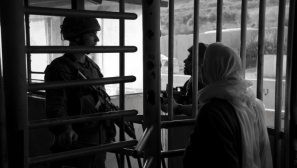
Humans not stereotypes: we must uphold the dignity of all people
Why do we instinctively search for history, memory, and trauma behind one people’s violence while reducing another people’s violence to labels, culture, or religion? Why is one people granted a biography while the other is assigned an identity? These questions are pertinent for followers of Jesus when discussing the Israel and Palestine conflict. -
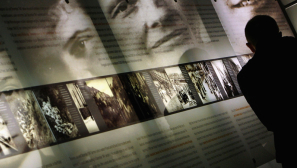
What does 'never again' mean when others become victims
Auschwitz stands as a permanent memorial to horrors against humanity. However, memory can be manipulated and newly published research from a leading Jewish scholar has confirmed that there is much cause for concern. While antisemitism should absolutely be met with moral outrage, it should not eclipse compassion for other suffering groups, especially not for our fellow followers of Jesus within those groups. We need to be led by a biblical understanding of remembrance. -

A Christian perspective on the Bible, Israel, Christian Zionism, and the myth of holy war
The Hebrew scriptures are easily weaponized when passages are taken out of context of the whole Christian Bible. The advent, death, and resurrection of Jesus changes the entire narrative. Here is an example leveraged by Christian Zionists in favor of Israel's continuing attack on Gaza. -

The abuse of unity: a call to truth, justice, and reconciliation in the global Church
Unity, one of Christianity’s most beautiful concepts, is one of its most abused. Throughout Church history, unity has been used to silence criticism, suppress prophetic voices, protect institutions, and preserve existing power structures. But that is not the unity Jesus prayed for. -
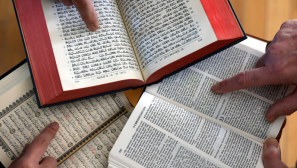
Within the Holy Land there exists a complex relationship paradox
The relationship between Christians and Zionism in the Holy Land is a dissonant one. While Zionists are willing to relate to Christian Zionists for their multifaceted support, Jewish religious leaders find the end-times theology of Christian Zionism deeply uncomfortable. Add Palestinians into the mix and the reality becomes very complex. -

2033 in Paul's perspective: suffering, reconciliation, and biblical ethics for outreach
The year 2033 has become significant focal point for the global Church, in an attempt to rally fresh evangelistic energy leading up to the 2,000th anniversary of Christ's resurrection. Yet we must not forget that the Church's authority is rooted in Jesus' example on the cross. Broad-spectrum evangelistic initiatives will not replace the need for embodied witness with those who are suffering.