Recently, I attended a large gathering of Christian leaders from different countries, traditions, and ministries. Throughout the conference, one theme appeared repeatedly: unity. Speakers preached about unity, leaders called for unity, and participants were challenged to examine themselves and ask whether they were contributing to the unity of the church or becoming a source of division.
In a world increasingly marked by polarization, nationalism, war, tribalism, and social fragmentation, Christians should take seriously Jesus’ prayer that his followers “may all be one”.
As I listened, I found myself agreeing with much of what was being said. In a world increasingly marked by polarization, nationalism, war, tribalism, and social fragmentation, Christians should take seriously Jesus’ prayer that his followers “may all be one” (John 17:21). Unity is not an optional part of Christian discipleship. It lies at the heart of the church’s witness to the world.
Yet as the conference continued, I became increasingly uncomfortable. While unity was celebrated from the platform, other voices were noticeably absent. Certain questions were not asked. Certain realities were not acknowledged. The suffering of Christian communities living in contexts of war, occupation, displacement, and injustice received little attention.
What kind of unity are we talking about?
Appeals to unity were abundant, but space for lament, protest, and prophetic witness seemed much more limited. I left the gathering with an important question: What kind of unity are we talking about?
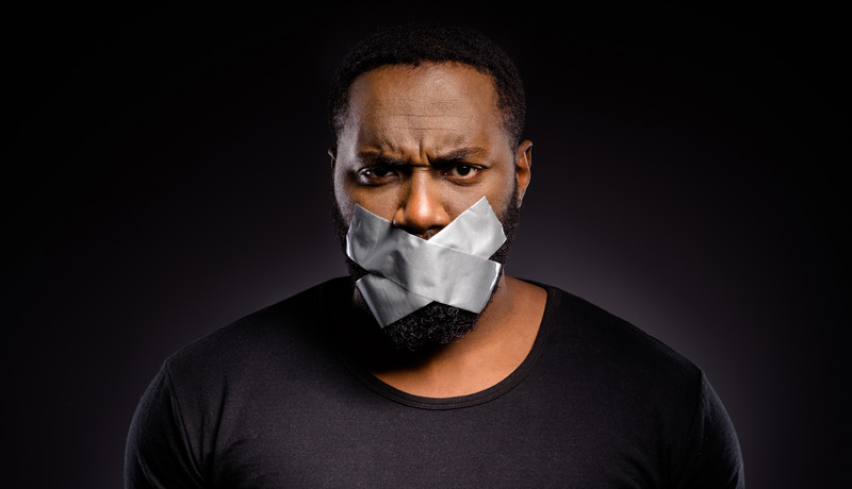
The more I reflected on this question, the more I became convinced that one of Christianity’s most beautiful concepts has often become one of its most abused. Throughout Church history, unity has sometimes been used to silence criticism, suppress prophetic voices, protect institutions, and preserve existing power structures.
Unity ceases to be a gift of the Holy Spirit and becomes a tool in the hands of those who benefit from maintaining the status quo.
Instead of serving reconciliation, it has occasionally become a mechanism of control. Instead of creating space for truth, it has discouraged difficult conversations. In such situations, unity ceases to be a gift of the Holy Spirit and becomes a tool in the hands of those who benefit from maintaining the status quo.
Many Christians have experienced this reality. Questions about abuse, corruption, racism, nationalism, injustice, or failures of leadership are often met with a familiar response: “Do not create division.” The implication is that maintaining unity is more important than addressing the problem itself. Yet the biblical witness points in a different direction.
The prophets of Israel consistently challenged false peace. Jeremiah condemned leaders who proclaimed peace while ignoring injustice. Amos denounced religious systems that maintained worship while neglecting righteousness.
Jesus repeatedly confronted religious authorities who prioritized institutional stability over faithfulness to God.
Jesus repeatedly confronted religious authorities who prioritized institutional stability over faithfulness to God. Truth was never the enemy of unity. On the contrary, genuine unity depends upon truth. Unity that cannot tolerate truth is not Christian unity at all; it is simply conformity.
False unity rarely exists in a vacuum. It is often connected to questions of power. When certain groups possess greater influence, resources, or institutional authority than others, appeals to unity can become a means of preserving existing arrangements rather than pursuing faithfulness.
We must examine the relationship between unity and power within the history of the Church.
To understand why unity is sometimes abused, we must examine the relationship between unity and power within the history of the Church. Throughout Christian history, relationships between powerful and marginalized communities have often been shaped by colonialism, economic inequality, and institutional dominance.
While the modern missionary movement made significant contributions through evangelism, education, healthcare, and church planting, Western Christianity frequently assumed that its theological and ecclesial models represented the norm for the global Church.
Although Christianity’s demographic center has shifted to the Global South, much of the influence within global Christian institutions remains concentrated in the Global North. This imbalance is visible in theological education, publishing, missions strategy, and funding.
Local leaders often learn which issues are welcomed and which may threaten important relationships.
As a result, local leaders often learn which issues are welcomed and which may threaten important relationships. In such contexts, appeals to unity can become closely tied to silence.
These dynamics continue to shape whose voices are heard within the global Church. Few examples reveal this more clearly than the experience of Palestinian Christians.
For decades, Palestinian Christians have attempted to communicate the realities of occupation, displacement, violence, and suffering to the wider Church. Through theological reflection, advocacy initiatives, reconciliation ministries, and personal testimony, they have sought to connect faith with lived experience.
The language of unity often comes with expectations of silence.
Yet many have discovered that the language of unity often comes with expectations of silence. Christians who speak openly about justice, occupation, human rights, or political realities are frequently accused of politicizing the gospel or creating division. Reconciliation is welcomed, but justice is often regarded as controversial.
This became especially visible in the context of Gaza. As Palestinian Christians sought to describe the suffering of their communities, many found that appeals to unity were used to discourage difficult conversations.
Those directly affected by violence were often expected to moderate their voices.
Churches feared controversy. Organizations worried about donors. Leaders hesitated to speak because they did not want to offend supporters. As a result, those directly affected by violence were often expected to moderate their voices, while those far removed from the consequences of conflict continued to shape the conversation.
Such unity is not only unhealthy; it is damaging to the witness of the Church itself. When Christians speak passionately about reconciliation but hesitate to acknowledge suffering, their credibility suffers.
When churches proclaim justice while remaining silent in the face of injustice, their moral authority is weakened. When institutional relationships become more important than truth, the gospel itself is obscured.
If the problem is false unity, what is the alternative? The answer is not greater division, nor endless conflict. The alternative is reconciliation grounded in truth.
The distinction between reconciliation and what might be called cheap unity.
One of the most important lessons I have learned through decades of reconciliation work is the distinction between reconciliation and what might be called cheap unity. Cheap unity seeks harmony without truth. It avoids difficult conversations. It values institutional stability over transformation. It prioritizes comfort over justice.
Reconciliation is fundamentally different. Reconciliation requires truth-telling. It requires acknowledging pain. It creates space for lament, confession, and accountability. It confronts injustice while seeking restoration.
This has been one of the central lessons of Musalaha (a faith-based reconciliation organization founded in Jerusalem in 1990). Genuine reconciliation between Palestinians and Israelis cannot occur through denial or silence.
Any unity that depends upon suppressing difficult truths ultimately undermines itself.
Participants must be free to tell their stories, express their fears, acknowledge their wounds, and challenge one another honestly. The same principle applies to the global Church. Any unity that depends upon suppressing difficult truths ultimately undermines itself.
Perhaps the Church today needs not only a theology of unity but also a theology of repentance. We must repent when unity has been used to silence prophetic voices. We must repent when unity has protected institutions more than people.
We must repent when unity has become a mechanism for preserving power. We must repent when we have listened more carefully to the influential than to those who suffer. We must repent when appeals to unity have prevented us from confronting injustice.
Such repentance is not a threat to unity. It is the pathway toward genuine unity.
The future of Christian unity must therefore look different. Unity must be rooted in truth rather than image management. Unity must be connected to justice rather than detached from it.
Unity must be built upon mutuality rather than paternalism.
Unity must create space for lament, critique, and prophetic witness. Unity must be built upon mutuality rather than paternalism. Unity must empower voices from the margins rather than merely tolerate them.
Most importantly, unity must be grounded in the cross of Christ. At the cross, God does not ignore brokenness; he confronts it. He does not avoid suffering; he enters it. He does not preserve false peace; he creates reconciliation through sacrifice, truth, and love.
The unity for which Jesus prayed... was achieved through self-giving love.
As I reflect again on that Christian gathering, I remain convinced that the church desperately needs unity. But the unity for which Jesus prayed in John 17 was never built upon silence. It was built upon truth. It was never achieved through domination. It was achieved through self-giving love.
Such unity is costly because it requires humility, repentance, and the courage to hear uncomfortable truths. Yet it is precisely this kind of unity that becomes a witness to the world.
The question before us is therefore not whether unity matters. It does. The question is whether our understanding of unity reflects the kingdom of God or merely serves the interests of those who hold power.
Only when unity is joined to truth, justice, humility, and reconciliation can it become the powerful witness that Jesus intended.
Only when unity is joined to truth, justice, humility, and reconciliation can it become the powerful witness that Jesus intended for his Church. Only then can the world look at the Church and see not an institution protecting itself, but a community faithfully following the crucified and risen Christ.
Professor Dr. Salim J. Munayer is the founder of Musalaha, an organization dedicated to fostering reconciliation between Palestinians and Israelis and other divided communities in the Middle East. He served for several years as Academic Dean at Bethlehem Bible College and has authored several theological books focusing on theology, reconciliation, and justice. Professor Munayer currently serves as the Coordinator for the MENA region for the Peace and Reconciliation Network (PRN) of the World Evangelical Alliance (WEA).