Christian disability advocates say a new U.K. report underscores a moral as well as social responsibility to remove barriers that prevent blind and partially sighted people from travelling independently by train, after research found that one in three face obstacles so severe they are unable to use rail services at all.
The findings come from the Platform for Change report published Jan. 22 by the Royal National Institute of Blind People (RNIB), based on a survey of 1,200 people with sight loss and follow-up focus groups. The study concludes that inconsistent assistance, inaccessible ticketing, and poor station and train design continue to restrict mobility, even as the U.K. marks two centuries of railway travel.
“Our experiences as rail passengers are vital to our ability and willingness to get out and about: trains allow blind and partially sighted people to do everything from daily commutes to travelling across the country,” said Lucy Edwards, broadcaster, disability activist and content creator.
The report identified practical barriers—including unreliable assistance, complex ticketing systems, and inaccessible trains and stations—that continue to limit everyday mobility for people with sight loss, affecting their ability to live independently, reach workplaces, maintain relationships, and attend medical appointments.
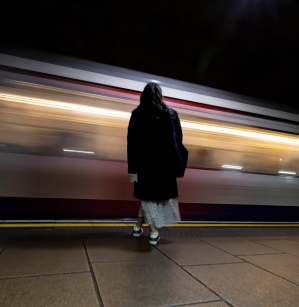
Respondents to the survey revealed that each aspect of train travel can be inconsistent and stressful. An overwhelming number — 82 percent — feared stepping across without falling into the gap between the edge of a railway platform and the open door of a train carriage, when embarking or disembarking for journeys. Only 44 percent told the RNIB that they are reliably met by assistance staff.
RNIB Policy Lead Erik Matthies, who has sight loss, called on British lawmakers to proactively enforce change in the ongoing situation.
“With the creation of Great British Railways (GBR) via the Railways Bill that is currently going through Parliament, there’s a unique opportunity for the UK Government and transport authorities to embed accessibility from the start - to make sure everyone can travel freely and safely. We’re calling on the UK Government, devolved administrations, and transport providers to ensure accessibility is at the heart of GBR as it is rolled out.
“Ticketing should be simplified and all concessions made available online and at stations so that people with sight loss can buy the right ticket at the right price. Staff training should be improved to ensure consistent passenger assistance, and stations and trains need to become more accessible, incorporating tactile wayfinding and improving the prevalence of accessible on-board facilities like toilets and audible announcements.”
The report is the third in a series showing that popular travel methods do not work for people with sight loss. The first report was titled “In My Way” report on pedestrian journeys (September 2025) and the “All aboard?” report on bus travel (May 2025).
Sarah Bennett, Head of Communications for Christian Blind Mission (CBM) UK, told Christian Daily International that the situation was untenable.
“It is unacceptable that one in three people with sight loss in the UK can’t make the train journeys they want or need to, especially when barriers to access are often completely avoidable,” said Bennett.
“Nearly a fifth of the global population live with a disability, making it vital that people with disabilities are included and consulted at every stage of the planning and delivery of services that they use.
“It’s why CBM UK’s disability inclusion advisory service aims to help more organisations to put inclusion into practice – for example through disability audits, training and resource development.
“We support RNIB’s call for the UK Government to take this opportunity to embed accessibility into train travel, both for people with sight loss and for other disabilities.
Blind and partially sighted people encounter barriers at nearly every stage of a rail journey, from navigating stations and identifying staff to purchasing and managing tickets, including using barriers and presenting the correct fare.
Many also struggle to feel safe on platforms, to locate train doors and seats, and to orient themselves once on board, such as knowing where facilities are or which side the doors will open.
Accessing toilets can be so difficult that some choose not to travel at all, while service disruptions—such as delays, cancellations, or unscheduled stops—add further stress and uncertainty.