
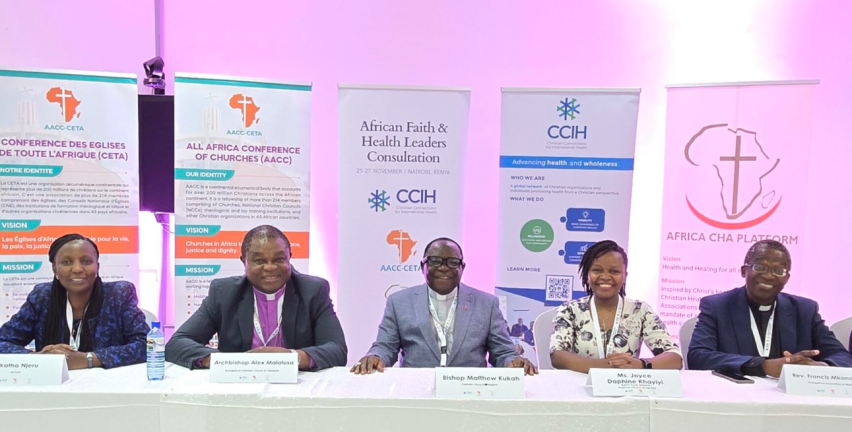
Christian leaders across Africa are urging governments to step up and fill the healthcare funding gap left by the suspension of USAID programs, warning that millions of lives hang in the balance.
At the African Faith and Health Leaders Consultation, held in Nairobi on Nov. 27, 2025 religious leaders from 10 countries delivered a stark message: African nations must find new ways to fund essential health services.
The conference, co-hosted by Christian Connections for International Health, All Africa Conference of Churches, and Africa Christian Health Associations Platform, lamented the sudden withdrawal of USAID support.
Nkatha Njeru, CEO of the Africa Christian Health Association's platform, painted a grim picture. "The cuts have impacted our health workers and service delivery for HIV, tuberculosis, and malaria," she explained. "We continue engaging with the U.S. government, but we're pleading with the (US) State Department to maintain substantial support for the faith sector so we can help our governments provide healthcare to citizens."
The crisis began in early 2025 when the Trump administration moved to disband USAID. The result was an immediate gap of roughly $5.6 billion that USAID provided annually to supplement health programmes in Africa. The cuts slashed major PEPFAR (HIV) and other global health programs, terminating or pausing dozens of USAID awards and forcing rapid program closures.
The impact hit African countries hard. Clinics and drop-in centers closed their doors. Supply chains for antiretroviral drugs and diagnostics halted. Tens of thousands of health workers who depended on U.S. funding lost their jobs or faced uncertain pay. The disruption undermined HIV testing, treatment, and prevention efforts across the continent.
Rev. Francis Mkandawire from the Evangelical Association of Malawi detailed how funding cuts are straining Africa's health systems. "Our continent faces shrinking resources and declining official development assistance," he noted. "Access to services and commodities has dropped for those who need them most."
Mkandawire underscored the impact of USAID’s withdrawal, pointing out “lives are being threatened and lost” as health facilities run out of essential medicines. He added that hundreds of health workers go unpaid. “Preventable deaths are rising. We face a crisis driven by eight urgent pressures."
He highlighted the most pressing concern: "Across our continent, funding cuts for HIV, tuberculosis, and malaria programs are weakening prevention and community care, putting families and congregations at risk once again."
Research from UNAIDS reveals the human cost of the cuts. Among respondents in affected African countries, 62% reported difficulty accessing pre-exposure prophylaxis (PrEP). Nearly half of people living with HIV experienced treatment disruptions. Another 23% received smaller amounts of antiretroviral medicines, often less than a three-month supply instead of the standard three to six months from local dispensaries.
The faith leaders grounded their appeal in religious conviction. "Healing was central to Jesus' ministry," their statement declared. "The Church's mission extends to the physical, emotional, and spiritual well-being of all people. Provision for health is a spiritual mandate, rooted in love of neighbor and the pursuit of wholeness."
They emphasized that speaking about health lends moral authority to their actions, builds community trust, promotes compassion, addresses stigma, and helps people seek care.
The conference urged Christian leaders to address health issues boldly from the pulpit and in public life, tackling topics like maternal and child health, mental health and substance abuse, HIV, non-communicable diseases, adolescent health, and pandemic preparedness. This approach, noted the leaders, strengthens the Church's witness to the value of life and human dignity.
Archbishop Alex Malasusa from the Evangelical Church in Tanzania called on national health ministries throughout the continent to actively involve faith-based communities in planning, financing, and evaluating national health goals.
"We're calling on international development partners, global institutions, the private sector, and local partners to maintain predictable support that strengthens national systems," the archbishop urged. "Leverage the trusted role of faith-based networks while respecting local organization values."
Faith-based networks operate more than 14,000 health facilities across sub-Saharan Africa, providing between 30% and 70% of healthcare depending on the country, according to the group.
The statement represented faith leaders from Cameroon, the Democratic Republic of Congo, Ghana, Kenya, Nigeria, Malawi, Rwanda, Uganda, Tanzania, and Zambia.
Mkandawire summed up the new reality facing African healthcare. "We've agreed we cannot continue with business as usual. We need to raise resources in our own countries to fill the gap. Our overdependence on international partners has created problems. There's donor fatigue out there, and it's already affecting us. That's why we're here."








