
From the outset, I need to state clearly, so there is no confusion about what I am about to share, that I have never personally been discriminated against. Not in any way that I could point to and say, “This happened because I am Congolese.”
But I have learned, through years of research and through hundreds of conversations with migrants across East Africa, that my own experience is not the full story. The fact that I was spared something does not mean it does not exist. It simply means I was fortunate, or perhaps protected by circumstances I did not even notice at the time.
So, I am not writing as an expert on xenophobia, and I do not claim to understand how discrimination works in every country or every context. What I present here is something simpler and, I think, more honest: I am reporting what I have heard, directly, from migrants themselves; stories told to me in interviews, in long conversations, in the quiet honesty that comes when someone finally has a chance to speak about something they have carried alone for a long time.
What I heard when I listened
He could not shake the feeling that his nationality... had become the reason his opportunities were smaller than his qualifications deserved.
One man, an engineer with a master’s degree, told me about the day his first boss in Uganda looked at him and said, “We hired you by grace. So you can’t give us conditions on how to be paid.” He had arrived full of hope, ready to work hard and prove himself. Instead, he was sent to a posting with minimum wage, and he could not shake the feeling that his nationality (something he never chose and could not change) had quietly become the reason his opportunities were smaller than his qualifications deserved.
A woman told me about trying to buy something in a local market for five thousand shillings (Ugandan, USD $1.35), only to watch the price double the moment the seller realized she did not speak the local language well. It happened again and again, every transaction a small reminder that she did not fully belong yet.
Another man told me about searching for a house with a group of fellow Congolese, full of hope, only to have a landlord look at them and say plainly, before any conversation even began, “If you are Congolese, I am not giving you a house.” No explanation. No chance to prove themselves first. Just a closed door, decided before they had said a single word.
Discrimination not simply... hatred, but... something tangled up with fear and exhaustion.
And one young man named Franck, who had lived in Kampala for years by the time we spoke, told me something I have thought about often since. He said that over time he came to understand discrimination not simply as hatred, but as something tangled up with fear and exhaustion; locals who were themselves struggling to survive, watching new arrivals stretch already limited resources even further.
“It’s not personal,” he told me, “but it feels personal.” He had learned, slowly and painfully, to separate the sting of being treated like an outsider from the deeper truth that most of what he experienced came from fear rather than malice.
I share these stories not to create bitterness, and not to suggest that every Ugandan, or every host community anywhere, treats migrants this way. Many migrants I spoke with said the opposite: that they had been welcomed, protected, and treated as equals. But both realities are true at once. Some doors open. Some doors close before a word is even spoken. And when enough doors close, something predictable happens.
Why migrants build their own churches
When a person feels they do not fully belong, they instinctively look for somewhere they do.
When a person feels they do not fully belong, they instinctively look for somewhere they do. This is not a weakness. It is simply how human beings are made. We were not designed to survive alone, untethered from anyone who understands us without explanation.
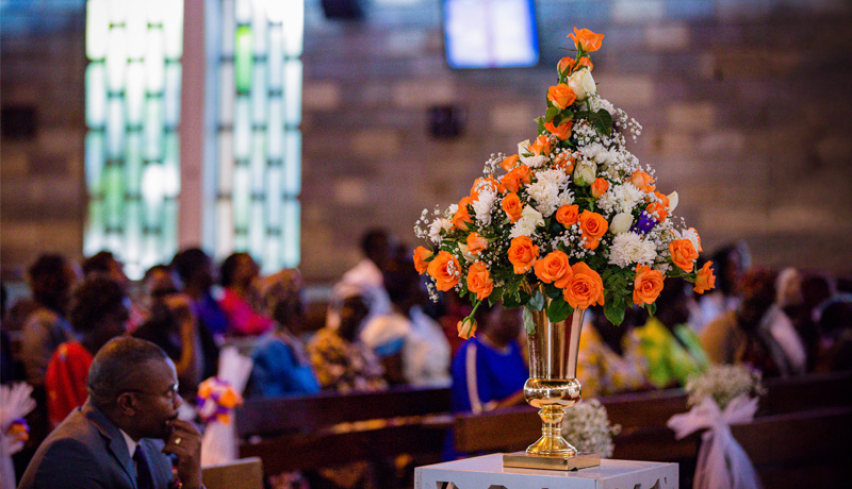
This is part of the reason why what researchers call “migrant churches” exist: congregations where the majority of members and even the pastors come from one particular country or tribe. A Congolese church in Kampala. A Burundian fellowship in Nairobi. A Somali congregation in a corner of a city far from Somalia. These churches are not a failure of unity. In many cases, they are an act of survival and healing.
I have seen this myself in my research. Some of the women I interviewed told me they had stopped wearing their traditional kitenge clothing for fear that it would mark them as foreign and invite mockery or mistreatment. But within the safety of a church made up of people from home, many of them eventually put those same clothes back on.
One woman described the moment she did this as feeling like coming home; not because she had physically returned anywhere, but because she had found a community that allowed her to be fully herself again, without having to hide the parts of her that did not match the people around her.
A migrant church can offer a place to plant your home inside a country that is not yet home.
This is what a migrant church can offer. A place to plant your home inside a country that is not yet home. A place where your language is not a barrier but the normal way people greet one another. A place where nobody asks you to explain yourself before they accept you.
To be honest, there is real beauty in this. A church gathered entirely from one background shows us something true about how God meets people in their own language and culture, the same way the Holy Spirit met people at Pentecost; each one hearing the wonders of God in their own tongue, not a foreign one imposed on them (Acts 2:6-8).
A migrant church is not a lesser church. It is, in its own way, a faithful response to discrimination and isolation, and a sign of how resilient faith can be even when everything around a person feels unfamiliar.
A different kind of beauty
Beauty is “the harmony of opposites.”
And yet, I want to share something my mentor, Professor Mark Shaw, taught me, a definition of beauty I have carried with me ever since. He says beauty is “the harmony of opposites.”
Think about what that actually means. A single, perfectly matched color is pleasant, but it is not what moves us most deeply. What moves us is when different things (different colors, different sounds, different textures) come together and somehow create something whole, something that could not have existed if everything had simply been the same.
This is also true of the church.
A congregation made up entirely of one tribe or one nationality is beautiful. But a congregation where Kamba and Baganda and Barega from the DRC and Taiwanese believers all walk into the same building on a Sunday morning, and together lift their voices to worship the same God, that is a different, deeper kind of beauty. It is the harmony of opposites made visible.
All are one... Not because our backgrounds disappear, but because they no longer determine whether we belong at the table.
It is a living picture of what Paul meant when he wrote that in Christ there is no longer Jew or Greek, slave or free, but all are one (Galatians 3:28). Not because our backgrounds disappear, but because they no longer determine whether we belong at the table.
The book of Revelation gives us a vision of what this looks like when it is finally complete. A multitude from every nation, tribe, people, and language, standing together before the throne, worshiping with one voice (Revelation 7:9). That image is not many separate congregations standing in many separate rooms. It is one gathering, made beautiful precisely because of how different everyone in it is.
To be clear, I am not saying that migrant churches are wrong, or that a congregation made up mostly of one background somehow falls short of being a true church. They do not. They are a real and good expression of the body of Christ, often born out of genuine pain and a genuine need for belonging. But the picture becomes even more beautiful, even more like the vision in Revelation, when diversity and unity meet together under one roof.
What this means for pastors
If discrimination is part of what pushes migrants toward forming separate congregations, then pastors and churches, who want to reduce that discrimination and build the kind of diverse beauty Scripture describes, have real work to do; not as a side project, but as part of what it means to faithfully shepherd a community in a world filled with movement and migration.
First, pastors should name discrimination honestly rather than pretend it does not exist in their congregation or community.
The hardest part of discrimination was not the act itself but the silence around it.
Many of the migrants I interviewed said the hardest part of discrimination was not the act itself but the silence around it; the sense that nobody wanted to acknowledge it was happening. A pastor who simply says, openly and without defensiveness, “We know this happens, and it grieves us,” gives migrants in the room permission to stop pretending everything is fine.
Second, churches should intentionally create spaces where locals and migrants serve together, not merely sit in the same room.
Sitting near someone does not create belonging. Serving alongside someone does.
Sitting near someone does not create belonging. Serving alongside someone does. When a Ugandan usher and a Congolese usher work the same Sunday service, when a Kenyan and a Burundian lead worship together, something happens that polite greetings alone cannot produce: a shared sense of ownership over the same work.
Third, pastors should teach on hospitality and the stranger as a normal, recurring theme, not an occasional special sermon.
The stranger living among God’s people should be treated as one of your own.
The Bible has far more to say about how God’s people treat the foreigner among them than most churches address from the pulpit. Leviticus instructs that the stranger living among God’s people should be treated as one of your own, loved as yourself, because Israel too was once a stranger in Egypt (Leviticus 19:34). The writer of Hebrews reminds believers not to neglect hospitality to strangers, because some, without knowing it, have entertained angels in doing so (Hebrews 13:2). These are not obscure verses. They simply need to be preached as often as the verses we already love to quote.
Fourth, leadership matters more than language. A migrant church will always feel like home in a way a host-led church may not, simply because the pastor speaks the same heart-language.
Raise migrants into real leadership and decision-making roles.
If host churches want migrants to feel they truly belong, not merely tolerated, they must be willing to raise migrants into real leadership and decision-making roles, not only into membership. Belonging is rarely felt fully until a person has some say in shaping the place they belong to.
Fifth, churches should resist the temptation to see migrant-led congregations and diverse congregations as competitors.
Both are valid expressions of the same body of Christ. A wise local church might even partner with a nearby migrant congregation (sharing resources, occasionally worshiping together, or walking alongside one another, etc.) rather than treating them as separate, unrelated communities that happen to share a city.
The God who sees what we sometimes choose not to
I often think about the women in my research who hid their kitenges out of fear, and the relief they felt when they could finally wear them again among people who understood. I think about the man who was told his hiring was an act of charity, not merit. I think about Franck, who learned to separate fear from malice but still felt the sting of being treated as an outsider.
None of these stories are abstractions to me. They are real people, and their pain is real, even when (as in my own case) it does not touch every migrant in the same way or to the same degree.
God... knows, intimately, what it costs to be unwelcome in a place you did not choose to need.
The God we serve is not a distant observer of this pain. He is the same God who commanded his people, again and again, to remember the stranger, because they themselves had once been strangers in a land that was not theirs. He is the God who, in Christ, became a stranger himself without a place to lay his head (Luke 9:58). He knows, intimately, what it costs to be unwelcome in a place you did not choose to need.
If our churches can hold both truths, the real comfort that migrant congregations rightly offer, and the deeper, harder beauty of diverse congregations worshiping together, we will be building something closer to the vision John saw on Patmos: every nation, every tribe, every tongue, finally together, finally home.
Dr. Fabrice Katembo is a lecturer in Church History and Administrator of the Center for World Christianity at African International University. A Congolese scholar with a PhD in World Christianity, his research and writing focus on migration, diaspora Christianity, and the changing face of the global Church. His work seeks to help Christians understand migration not merely as a social phenomenon but as a significant context for God’s mission today.








