
Tanzania's tax authority is enlisting religious leaders in its latest effort to improve tax compliance and encourage citizens to see paying taxes as both a legal duty and a moral responsibility.
The Tanzania Revenue Authority, known as TRA, recently launched an ethics partnership that brings together Christian and Muslim leaders to promote integrity, accountability and voluntary tax compliance. Officials say the initiative is designed to strengthen public trust in the tax system while encouraging people to contribute to national development through honest tax payments.
The partnership reflects the important role religion plays in Tanzanian society. Although the government no longer includes religion in its national census, estimates by the Pew Research Center indicate that about 63 percent of Tanzanians are Christians while about 34 percent are Muslims. Traditional African religions and people with no religious affiliation make up a small minority. On the islands of Zanzibar, the population is overwhelmingly Muslim.
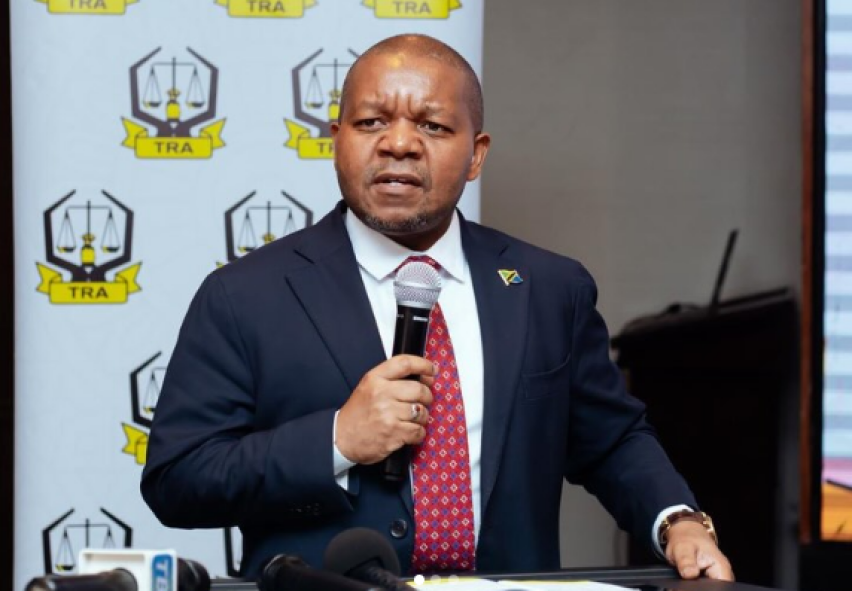
Deputy Commissioner General Mcha Hassan Mcha said ethical leadership and cooperation between public institutions and society are already producing positive results.
“These achievements demonstrate that when integrity, accountability and cooperation are given priority, positive results can be achieved,” Mcha said during the launch, referring to recent improvements in tax collection. He said mainland Tanzania collected 2.96 trillion Tanzanian shillings ($1.1B) in tax revenue in May, equal to 104.4 percent of its target, compared with 2.40 trillion shillings ($914M) collected during the same month last year.
The initiative comes as Tanzania continues to focus on increasing domestic revenue without placing greater tax burdens on citizens. Instead, officials have emphasized expanding the tax base, improving services for taxpayers and encouraging voluntary compliance through education and public trust.
Religious leaders welcomed the partnership, saying faith communities have a responsibility to encourage ethical behavior that benefits the wider society.
Bishop Charles Howard of the Evangelical Fellowship Church Tanzania also supported the initiative, saying religious teachings encourage believers to respect lawful authority and contribute to the common good.
“Fairness in taxation is important for maintaining peace, stability and economic growth. Taxes should be paid and administered with integrity,” Howard said.
Sheikh Alhad Mussa Salum, chairman of the Tanzania Peace and Reconciliation Community, said paying taxes should be viewed as a civic responsibility that supports the country's future.
“Paying taxes is an act of responsibility towards society. Integrity is required from everyone involved in the process, both those who collect taxes and those who pay them,” Sheikh Salum said.
The partnership is notable because it brings religious institutions directly into public efforts to improve tax compliance, an area usually associated with government enforcement and financial regulation.
Decision backed by research
Recent academic research suggests the approach could have a meaningful impact. A 2025 study by researchers from the ifo Institute and the Chr. Michelsen Institute found that messages about taxes were significantly more effective when delivered by religious leaders rather than tax officials. In an experiment involving business owners in Dar es Salaam, researchers found that providing information about how taxes fund public services increased voluntary tax compliance only when the message came from a religious leader.
The study concluded that trusted faith leaders can play an important role in improving compliance in countries where confidence in public institutions is low.
The findings offer support for the strategy now being adopted by the TRA. Faith organizations have long been influential in Tanzania beyond their religious activities. Churches and mosques frequently work with the government on public health campaigns, peacebuilding initiatives, education and disaster response. Their extensive community networks allow them to reach millions of people through weekly services and local outreach programs.
Tax justice advocates have also argued that faith leaders can help improve conversations around taxation by encouraging accountability from both governments and taxpayers. Regional organizations have previously called on religious groups to take a greater role in discussions about tax reforms and public finance across Africa.
The TRA says its ethics platform is intended not only to encourage citizens to pay taxes voluntarily but also to strengthen integrity within the authority itself. Officials say the agency will continue improving transparency, fighting corruption and building stronger relationships with taxpayers as part of its broader effort to increase public confidence in the country's tax system.








