
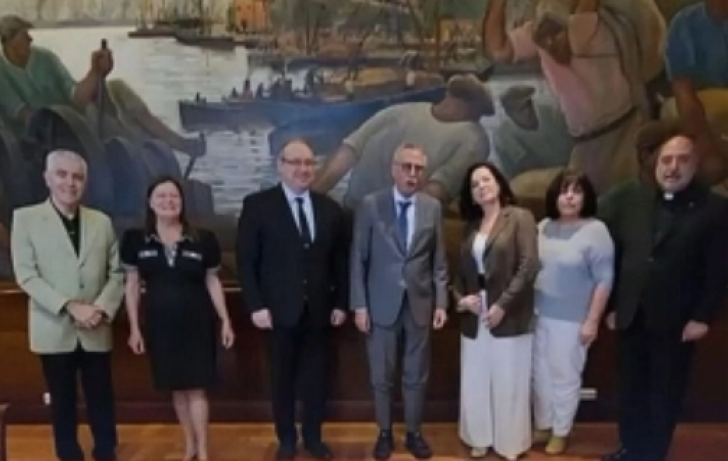
Argentina’s Ministry of Health has formed a National Advisory Commission on Bioethics that includes prominent Christian and other faith leaders, giving religious voices a formal role in advising on sensitive ethical issues in medicine and public health.
The initiative seeks to offer recommendations on complex issues that arise in the health care and biomedical fields amid continuing technological advances, according to reports from both specialized and general national media.
According to PharmaBiz, the commission was established as a consultative body intended to address issues of high social and scientific impact in a context of rapid change in medicine, biotechnology and public health policy.
Similarly, La Nación reported that the body will have an advisory role and may intervene at the request of the executive, judicial and legislative branches, as well as civil society organizations, with the goal of providing a broad-based and specialized perspective on emerging bioethical challenges.
ACIERA (the Christian Alliance of Evangelical Churches of the Argentine Republic) announced on Monday via its social media channels that the Ministry of Health officially presented the Bioethics Commission and that Pastor Alejandro Rodríguez—member of ACIERA’s board of directors and president of JUCUM—was invited to join it. Also invited were Father Rubén Revello, Rabbi Dr. Fishel Szlajen, Dr. Damasia Becú de Villalobos, and Dr. Rosa Angelina Pace, coordinator of the Bioethics Center at the Italian Hospital of Buenos Aires.
ACIERA highlighted the participation of leaders from different faiths and academic backgrounds, reflecting an inclusive approach to addressing sensitive issues related to life, human dignity and medical practice.
Diario Cristiano contacted Pastor Alejandro Rodríguez, who declined to comment, noting that only an “initial introductory meeting” of the commission has taken place so far.
To date, working methodologies and specific guidelines have not been defined, nor has the full composition of the body or the specific roles of its members been announced.
The creation of this commission opens a new space for national debate and advisory work in bioethics, at a time when public decisions increasingly have a direct impact on society and require interdisciplinary ethical analysis. In this context, the Evangelical Church will have a voice represented by one of its most committed advocates for life and family values.
The importance of bioethics from a Christian perspective
For the Evangelical community, bioethics extends beyond legal or clinical debate and is grounded primarily in theology, rooted in the concept of the Imago Dei (the image and likeness of God) and divine sovereignty.
From this perspective, human life possesses intrinsic and inalienable dignity from conception to natural death. Human beings are not viewed as the absolute owners of their existence or their bodies, but as stewards responsible for caring for the gift of life. Medical intervention is understood as a means of alleviating suffering without violating the established moral order.
In the public sphere, these principles shape the Church’s response to dilemmas ranging from the beginning of life—questioning practices such as abortion and surrogacy—to the rejection of euthanasia in favor of palliative care and orthothanasia.
In recent years, this bioethical agenda has expanded to address emerging challenges such as gene editing and gender reassignment, prioritizing the defense of bodily integrity, the protection of vulnerable populations, and the right to conscientious objection to procedures considered contrary to created human nature.
Originally published by Diario Cristiano, Christian Daily International's Spanish edition.








