
This coming week, some four thousand young leaders from across Asia and beyond will converge on Manila, Philippines, for the Arise Asia 2026 Congress, held July 27–31. For Rev. Dr. David Ro, the co-founder and executive director of Arise Asia, the gathering is the next big step on a longer journey: one he hopes will carry a generation to the places where the gospel has not yet been named.
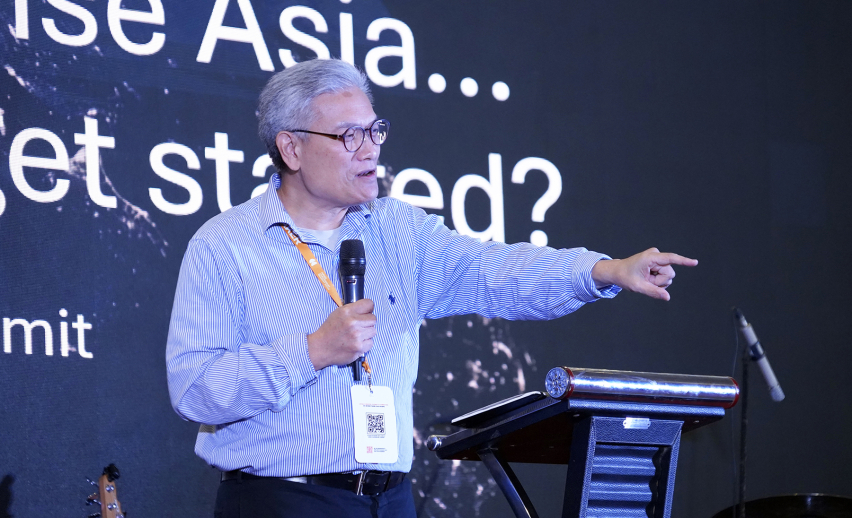
Ro spoke with Christian Daily International on the sidelines of last year’s Arise Leadership Summit where he expressed his excitement about the rapid growth he has witnessed since the movements beginning in 2023. "The main thing is that I'm getting a sense now that the leaders we have are not just catching the vision, but they're really owning it and bringing it back to their own context," he said. "This is not just coming to an event overseas and then going back. They're going to bring this movement into their own country and their own churches."
More than 200 people have committed to long-term cross-cultural mission at a recent gathering, Ro said, and those commitments are what concern him most. "We have lots of young people who have committed, and we've got to help them follow up on that commitment," he said. "That will be the true measure of long-term success for Arise."
Building toward Manila: turning collaboration into something concrete
Much of the groundwork for the Congress has already been laid at the national level. At the Arise Leadership Summit last year, national committees gathered to build five-year strategy plans for their countries, including how many people they hope to send to the 2026 Congress, how they will support and finance them, and how they will follow up with those who make commitments.
"I think that will be the most significant thing," Ro said of that process. "It solidifies the national teams to move forward with their strategies." That, in his view, is what separates Arise from the leadership conferences he and others have attended for years, where people "hear about it, come in and meet in meetings, and then go back and do their own thing."
This time, he said, participants "truly are going to come in and commit to a collaborative effort," because now they have something concrete to collaborate around.
Ro cautioned that the language of collaboration risks becoming empty if there is no specific direction. "Everyone talks about collaboration on the high level and it sounds good. No one's against that. You can't be against it, to be a Christian," he said. "But what is the actual collaborative thing we can do together?"
His answer is to mobilize young people to go where there is no gospel, with different ministries working side by side rather than any single agency owning the effort. "It's not just one ministry like OM doing it, or YWAM, or OMF, or even the national alliance. We're bringing the whole church to see how we can collaborate."
Sending — and supporting
For all the enthusiasm young people bring, Ro said a commitment card is not a missionary. Therefore, Arise is building support at two levels. At the higher, more structured end is a three-year training program, developed with a range of mission agencies supplying mentors and drawing on training material Arise owns.
"We're going to really make sure these leaders are trained well," he said, though he cautioned it will take a year or two to roll out fully.
At the grassroots level, the pathways are more organic: young people joining existing mission agencies or being sent by their own churches and denominations.
Ro gave an example of three young people he met who received their calling at an Arise event and are now serving with the Christian and Missionary Alliance. He has heard of a group from another country coming into Thailand with Pioneers. "I just hear these anecdotal stories of people automatically doing that," he said.
His central concern is the gap between commitment and deployment. "I know there are a lot of people who committed that are still waiting to follow up," he said, adding that they are working on connecting with them to ensure they can follow through.
His counsel to every national committee is to not try to do everything at once. "Focus first on one team, find one place of an unreached people group in your own country. Send that team, find a missionary working in that area, send that team to work with that missionary, provide all the training. Let's get one team going first as a model — and then from there we can multiply," he said.
The old wineskin has to bless and release the new wineskin
Asked whether the movement's youthful energy risks straining the structures meant to carry it, Ro pointed to the image of the wineskins in Matthew 9:17. "Yes, we need the new wineskin," he said, speaking about the younger generation. "But the old wineskin has to still bless and release."
The two cannot be pitted against each other, he said. "If we only go with the new wineskin, the movement will go fast, but it will eventually die out," he said, "because the old wineskin still has all the power and the resources and the structures behind it. All they have to do is be against it and it'll stop the new wineskin."
Working with the established institutions, he said, is not always easy. Ro highlights two obstacles in particular.
The first is the mission agencies. "In the mission world they're saying, young people, we just don't have time for them until they're ready to commit long-term. But you won't get long-term missionaries with that kind of mindset," he said. "We have to convince them that working with 20-year-olds is important."
The second is the local church. "These church leaders don't want to release their young people, because they’re afraid that they're going to lose their best people to the mission field."
His response, however, is that sending people "to the ends of the earth" is part of the church's own mission. And the investment returns. "When you release young people to go and they come back, it'll actually benefit the church in the long run," he said. "They'll be on fire for God and they will bring more energy and mission for the church."
Bridging the generations — and staying authentic
Ro's focus is on the young, but he acknowledges that "young people are very messy," as one of the speakers at last year’s Arise Leadership Summit put it. Still, the church cannot wait for a generation to become theologically polished and mission-ready before engaging it, he said. "If we're expecting mature people who are theologically educated with all this Christian character before they're ready to go, then we're not going to reach this generation. Instead, we're going to journey with them through that process."
What is critical when raising Gen Z for mission, he said, is to recognize that they prize authenticity in a way even millennials did not. He pointed to TikTok videos where Gen Z shares raw emotions about the joys and challenges they face. "They like the authenticity of life," he said.
Ro connects the implications to a framework he has laid out, which distinguishes between "platforms" — the public work — and "pathways," the private walk, warning that influence without integrity is dangerous and blind. "When they look at us, we've got to be very authentic," Ro said. "They're just going to look at a platform and say, that's all fake. You've got to come down to what's real underneath. That's what they're really interested in."
Missions is not a Western construct, it is biblical
Ro also addressed a critique that has grown more common among some Asian mission leaders: that cross-cultural sending is tainted by colonialism. He described a mindset in which "the West has done a lot of damage to missions," and a preference for talking about "mission" as the church's local witness rather than "missions" as the sending of people across cultures. Read between the lines, he said, the message becomes: "The West to the rest was a bad model, so we're not going to do it anymore."
Ro disagrees, and he said the stakes are high. "If that mindset comes into the younger generation, then we will never have missionaries out to where there's no gospel, because the church will only grow stronger and deeper where it's at. It won't go beyond." Reaching the hardest places, he said, "takes a lot of energy, you have to sacrifice yourself, you could possibly die — and if we're just multiplying within our own context, we will never get out there."
He points to the Apostle Paul’s ambition to preach where Christ had not been named and argues that the biblical foundation for missions remains valid and necessary. "This is not a Western construct. This is a biblical thing that the Apostle Paul did," Ro said.
He acknowledges Western failings but emphasizes that this does not nullify the calling: "Yes, they made mistakes, but at least they laid down their children and came. Let's remember there's some good: that's why we have the churches here in Asia, because of what they did. So let's honor and celebrate that."
He said he learned that posture from the church in mainland China, which carries little of the anti-Western baggage because foreign missionaries were expelled generations ago. "They see the grave sites where missionaries came and died and buried their kids here," he said. "They have a real positive image of missionaries."
He thanks God for the Hudson Taylors and William Careys who brought the gospel to Asia and urges the church to learn from their mistakes without abandoning their calling.
15% going to missions, 85% revitalizing the church
Asked what success would look like five to ten years out, Ro said, "My success would look like thousands of young people who have committed themselves to go to a place where there's no gospel, and then follow up on that commitment, at least for a year."
Some 10,000 young people have come through Arise events already. "Fifteen percent have committed to go long-term. Eighty-five percent are still very open to it," he said. "But we want everyone to at least give one year of their life to go."
Even those who return, he said, will change the church they come back to. "The 15% may go long-term. The 85%, after a year, may come back and revitalize the church and missions. But that will change the whole church."
Looking at the conference starting this week, Ro emphasized, "This is not just about another conference. It's about a generation stepping into its calling — for the nations, for the gospel, for the glory of God."








