The moving twin dedications (both authors contribute) are personal and theological: a foretaste of the direction of travel of the whole book (which is also very practical) as it continually dives into Scripture and to central truths about God and humanity and the Lord’s work in hearts and minds.
Discovering in Chapter 4 (spelt out again in Chapter 12) that both authors have very traditional complementarian views of male/female roles in church leadership makes this book emphasising the leading role of women in Scripture, the call of all women to co-labour in mission and the emphasis on the fellow-citizenship of women all the more powerful.
In some ways it’s even more surprising given Fitzpatrick’s moving expositions of the lives and actions of the Old Testament characters Miriam, Hannah and Deborah and the way that both authors unpack lessons from Bathsheba, Tamar, Abigail and Jael, and the wonderfully liberating lessons from the New Testament.
The whole book is full of fresh and thought-provoking biblical insights for all churches, whatever their current perspectives on male and female roles in the church. As they say, ‘it’s easy to read the Scriptures and overlook the surprising ways that wise women contributed to the story of our redemption.’
After Chapter 4, I began to realise that the authors’ primary purpose is probably pastoral (rather than polemic) and there’s obviously huge value in that. But they’re not afraid to challenge shibboleths. Quoting a friend, they point out that ‘we can’t have conversations about race, gender or injustice in fruitful ways until we address the systematic silencing of voices that ask questions’.
In a world full of casual sexism, chauvinism, misogyny and abuse (in churches – the authors tell a few awful stories in Chapter 12), Schumacher’s exegesis of Genesis 3:15 is sobering ‘Satan would have a particular disgust and hatred for the woman due to her role as the mother of his downfall’. ‘Satanic hatred of women …. must end.’ The authors suggest that there is a way to end it and that this way is found in the Christian Scriptures.
Fitzpatrick points out who Paul chose to carry his letter to the Romans. ‘Wasn’t he concerned that she shouldn’t leave her home? Didn’t he worry that he might be greasing the slippery slope and that women all over the Mediterranean would start looking for ministry opportunities and travelling abroad?’ Schumacher claims that Eve’s ‘statement of faith is the first human words recorded after the Fall’ and that ‘Eve is the first recorded human being to speak the divine, covenant name of God.’
Schumacher also observes: ‘In both the Old Testament and the New Testament, God’s ability to accomplish the impossible is first spoken in relation to women.’
Given the cultures in which the Bible was penned, these are real surprises: probably reflecting the fact that the Bible is so often expounded from a male perspective.
Written for a general audience, it’s nevertheless theologically rigorous, whilst also being deeply pastoral, and painfully honest as Schumacher charts his progress from early misogynistic theological thinking. Is it sometimes intentionally provocative? If so, let’s hope that it provokes fresh respectful discussion of gender in Scripture: something that both authors actively encourage. An index of Bible verses would have been helpful, to more easily find these insights again – perhaps in the next edition?
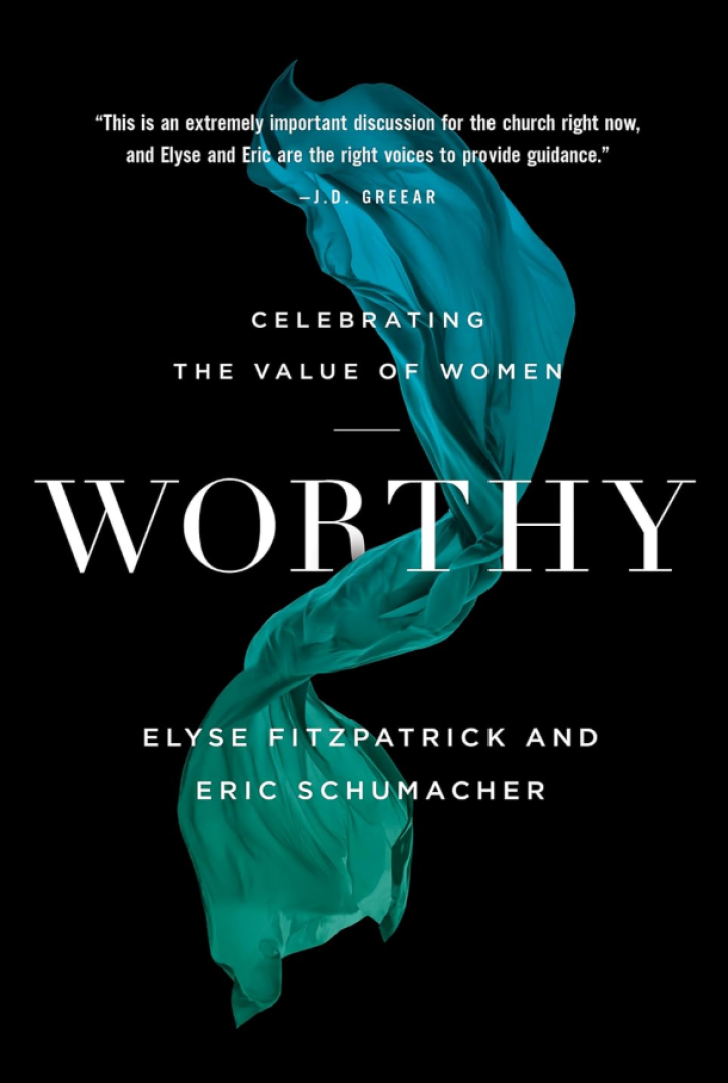
Worthy: Celebrating the Value of Women, Elyse Fitzpatrick and Eric Schumacher, Bethany House Publishers, USA, ISBN 978-0-7642-3436-1.