A Christian lawmaker in Punjab province in Pakistan has introduced sweeping legislation aimed at safeguarding properties belonging to Christians and other religious minorities, amid longstanding allegations of land encroachments, disputed titles, unauthorized sales and weak oversight.
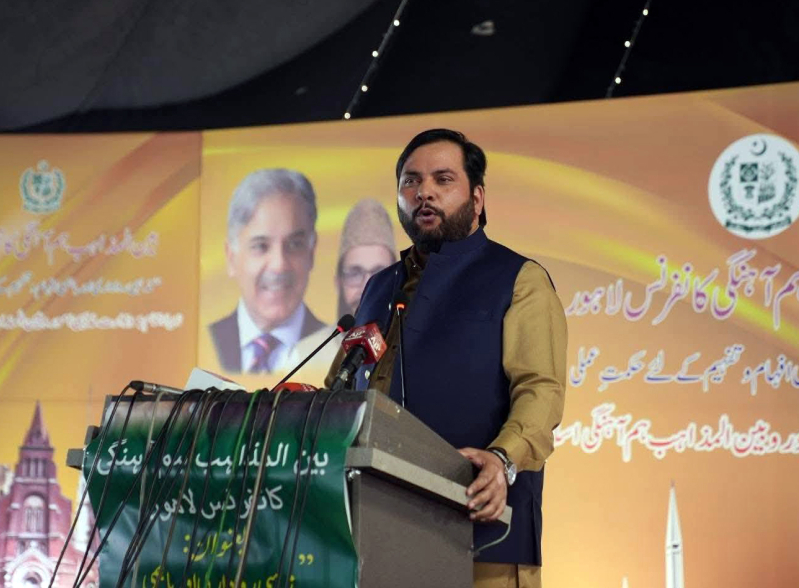
The proposed Punjab Protection of Communal Properties of Minorities Act 2026 was introduced last week to the Secretariat of the Punjab Provincial Assembly by Falbous Christopher, a ruling party member who chairs the Assembly’s Standing Committee on Human Rights and Minorities Affairs. The bill is expected to be tabled in the Punjab Assembly’s upcoming session.
Christopher said the legislation would broaden the definition of protected minority properties and introduce a provincial oversight framework.
“The legislation will significantly expand what constitutes protected minority properties,” he told Christian Daily International. “In addition to religious institutions such as churches, Sikh gurdwaras and Hindu temples, the bill covers properties acquired or developed through government grants, public funds, charity contributions, joint community funds and foreign donations earmarked for minority welfare. Institutions working with such funds will also be treated as collective community properties.”
Longstanding disputes
Punjab, Pakistan’s most populous province, is home to a large share of the country’s estimated Christian minority, alongside Hindu and Sikh communities. Property disputes involving churches and other communal assets have remained contentious for decades.
Community representatives allege that in some districts, church administrators have colluded with private developers or local land mafias to sell or lease valuable urban properties, sometimes through forged documents or by exploiting gaps in record-keeping systems. Allegations of internal mismanagement have further eroded trust within minority communities.
Concerns about internal governance intensified following high-profile controversies within religious institutions.
In 2018, the Vatican removed Archbishop Sebastian Francis Shaw of Lahore from administrative control of the archdiocese during an inquiry into alleged financial irregularities, including disputed property transactions linked to the Catholic Education Board. Church officials denied wrongdoing at the time. The episode nonetheless intensified debate within Catholic circles about transparency in the management of church assets.
The Church of Pakistan, formed in 1970 through the union of Anglican, Methodist, Presbyterian and Lutheran denominations, has also been embroiled in prolonged litigation over ownership and recovery of properties ranging from worship sites to commercial land. Many disputes trace back to colonial-era titles held by missionary societies and later transferred to local church bodies after independence in 1947.
“These properties are communal trusts, not private estates,” said Alvin Nayyar, a member of the Lahore Diocese of the Church of Pakistan. “Most of them are situated in prime urban locations and carry enormous financial value. There should be a complete ban on the sale or lease of Christian or any communal properties, and church leaders must be held accountable in the event of any such incident,” he told Christian Daily International.
Proposed oversight body
According to the draft legislation, a Provincial Action Committee would be established to oversee the protection and management of minority communal properties.
The committee would be chaired by a minority member of the provincial assembly nominated by the chief minister. Its members would include the secretaries of the Human Rights and Minority Affairs Department and the Law and Parliamentary Affairs Department, the senior member of the Board of Revenue, a deputy inspector general of Punjab Police, and six eminent persons from minority communities, including at least one woman.
The committee’s responsibilities would include preparing a comprehensive inventory of minority communal properties across Punjab — an exercise that has not previously been conducted at the provincial level. It would monitor encroachments, illegal occupation, misuse and unauthorized construction, and advise the government on proposed sales, transfers or leases of communal assets. It would also assist communities in resolving property disputes.
Under the draft bill, no communal property could be sold, transferred, leased or mortgaged without prior government approval. Any unauthorized transaction would be deemed legally void. Individuals would be barred from claiming exclusive ownership over communal properties, and assets currently registered in an individual’s name would have to be transferred to communal ownership within six months of enactment.
Violations could carry penalties of up to seven years’ imprisonment and a fine of 100,000 Pakistani rupees ($360).
Concerns over enforcement
Minority rights advocates welcomed the bill as an acknowledgment of persistent governance failures, but warned that key enforcement gaps could undermine its effectiveness.
James Rehmat, head of the Lahore-based Ecumenical Commission for Human Development (ECHD), said the proposed Provincial Action Committee lacked direct enforcement authority.
“On paper, the committee will identify properties, maintain records, hear complaints and make recommendations. But it has no power to take immediate action against land grabbers, issue restraining orders, seal properties or order evictions,” he stated in a Facebook post. “It can only write to relevant departments.”
Rehmat also questioned the absence of an electoral or clearly defined mechanism for community representation on the committee, and the lack of institutional infrastructure such as a permanent secretariat, allocated budget, legal cell or technical survey unit.
“Land disputes in Pakistan often involve complex, fragmented records,” he said. “Without digital documentation, GIS mapping or a public portal, transparency will remain limited. Paper lists do not prevent encroachments.”
He further noted that the bill sets no statutory deadlines for resolving complaints or for government decisions on property approvals, warning that administrative delays can enable irreversible changes to disputed land.
Another concern relates to accountability for public officials, he stated. “While the bill prescribes penalties for illegal transfers, it is silent on disciplinary measures for government officials whose negligence or alleged collusion facilitates such transactions.”
Overlapping legal regimes
The proposed law’s scope also raises questions about properties administered by the Evacuee Trust Property Board (ETPB), a federal body responsible for managing Hindu and Sikh assets left behind during the 1947 Partition.
“In Punjab, a significant portion of Hindu and Sikh religious properties falls under the ETPB,” Rehmat said. “If those properties are excluded, this creates a dual legal regime with some protected under provincial law, others not.”
At the federal level, minority property governance has also faced scrutiny. In 2021, Pakistan’s Supreme Court ordered a forensic audit of communal properties managed by the ETPB. The same year, proposed amendments to the Protection of Communal Properties of Minorities Act 2001 sought to shift authority for sales and transfers from the federal cabinet to the Ministry of Religious Affairs and Interfaith Harmony. Minority advocacy groups, including the People’s Commission for Minorities Rights, opposed the move, citing transparency concerns. The amendments were not enacted.
Rehmat also highlighted what he described as insufficient safeguards for “community consent.”
“While the bill mentions consultation, it does not require written approval by a defined majority of a recognized community body before a sale or transfer. Nor does it clearly outline transitional procedures for determining whether properties registered in individual names were built with communal funds,” he said.
The draft further states that an annual report “may” be presented, rather than making its submission mandatory or requiring it to be tabled in the provincial assembly, he concluded.
Constitutional backdrop
Legal experts said the proposed Punjab bill reflects principles articulated in a landmark 2014 judgment by the Supreme Court of Pakistan, authored by then–chief justice Tassaduq Hussain Jillani. The ruling emphasized the state’s constitutional obligations under Articles 20 and 36 to safeguard the rights, dignity and places of worship of religious minorities and called for institutional mechanisms to ensure their protection.
“The 2014 judgment made clear that minority rights require proactive state action,” said Lazar Allah Rakha, a Christian lawyer who has litigated minority-rights cases. “This bill attempts to translate constitutional principles into an administrative structure.”
Rakha cautioned, however, that legislative passage alone would not guarantee impact.
“Previous court directives on minority protections have encountered bureaucratic delays and weak implementation,” he said. “Transparent record-keeping, meaningful community participation and sustained political commitment will determine whether this law becomes a practical safeguard or remains largely symbolic,” he told Christian Daily International.