
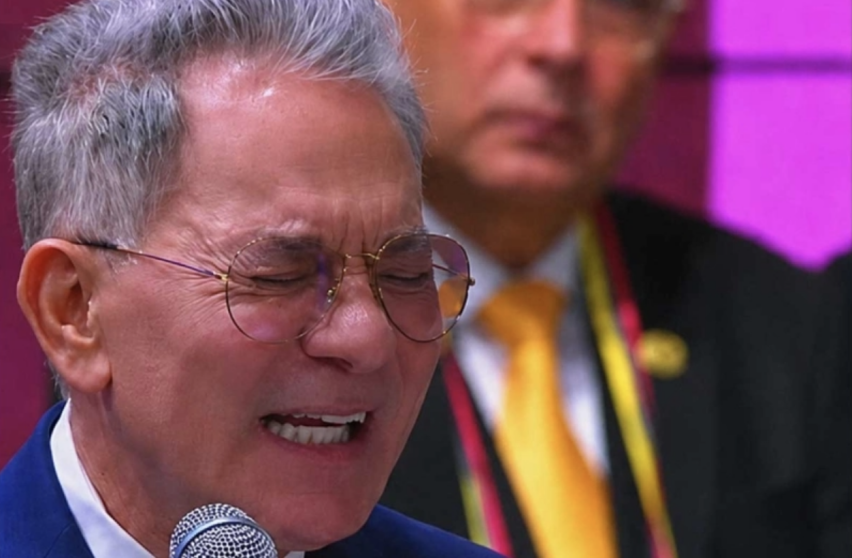
The Evangelical Confederation of Colombia (CEDECOL) has expressed its "absolute support" for Pastor Eduardo Cañas Estrada after a court found that the religious content of President Abelardo de la Espriella's inauguration breached the state's duty of religious neutrality.
In a statement dated Sept. 1 and signed by its president, Pastor Lyda Elena Arias, the confederation criticized the legal action as an attempt at "censorship and stigmatization against faith in the public sphere."
The case turns on a tutela filed over the Aug. 7 ceremony in Cali, at which Cañas and clergy from other traditions took part in a segment of prayer and praise. A Bogotá court ruled at first instance that the ceremony violated state neutrality, but it dismissed Cañas and the other religious representatives as parties and directed its orders at the officials who organized the event. The dispute has revived a longstanding question in Colombia: how far the state must go to avoid favoring one faith without restricting the public expression of religion.
"[Cañas'] participation in the ceremonial protocol was a legitimate invocation of peace and blessing for the nation," the confederation said, while rejecting any stigmatization or judicial persecution tied to the public exercise of faith.
The tutela and the ruling
A tutela is a fast-track judicial mechanism by which a person may ask a judge to protect their fundamental rights when they believe those rights have been violated or threatened. In this case, a citizen, Omar Alberto Franco Becerra, alleged that the religious content of an official act of state had impaired his freedom of conscience and of worship.
The Fifth Labor Circuit Court of Bogotá ruled in favor of the claimant. It held that the ceremony had breached the state's duty of religious neutrality and ordered De la Espriella to apologize publicly to the Colombian people in an address broadcast on radio and television on Sept. 30 at 7 p.m. In that address, he must say he will refrain from conduct implying a leaning toward the Catholic Church or any other creed. He must also issue a directive requiring public servants to respect and enforce state religious neutrality at official events.
The court also issued an order to the president of Congress, Honorio Miguel Henríquez, because the inauguration took place within the framework of a legislative session.
The ruling did not sanction Cañas or bar him from praying. The court released Cañas, Rabbi David Michaan and Monsignor Francisco Javier Múnera from the action, according to information published by Cambio. In the court's view, responsibility lay with the officials who determined the content and the institutional character of the ceremony.
For that reason, to say that Cañas was "sued for praying" gives an incomplete impression. His prayer was one of the facts examined in the tutela, but he was not the recipient of any judicial order.
De la Espriella apologized publicly on Aug. 30, before CEDECOL released its statement. El Espectador reported that, in his remarks, he defended his right to profess his faith and said he respects the separation of church and state. The presidency maintains that this satisfies the court's order, although the ruling set Sept. 30 for an address on radio and television.
The prayer at the inauguration
When Cañas took the lectern on Aug. 7, he prayed for Colombia, for the new government, for the Military Forces and for various sectors of society. It was an act of faith before members of Congress, national authorities and international guests.
De la Espriella assumed the presidency at the Arena USC in Cali for the 2026-2030 term. Alongside the constitutional protocol for the transfer of power, the ceremony included a segment titled "Invocation and Praise."
Representatives of different religious traditions took part in that segment: Michaan; Cañas; the chaplain of the presidency, Álvaro Duarte Torres; and Múnera, president of the Colombian Bishops' Conference. There was also an image of Our Lady of Fátima and a rendition of "Aleluya" by the singer Maía.
Cañas, founder of Manantial de Vida Eterna, offered a Christian prayer for the country. El Heraldo reported that he asked for protection and wisdom for Colombia and its authorities.
The prayer took place within an official ceremony rather than at a private, campaign or congregational event. That is what brought the matter into judicial dispute.
Cañas' response
Cañas defended his participation in a video released after the proceedings became known. "I am not ashamed of the Gospel ... nor of having represented a Christian people who love God," he said.
His post drew messages of support from believers and Christian leaders.
The constitutional argument
CEDECOL said the presence of spiritual representatives at events of national significance should be seen as an expression of pluralism, not a breach of state neutrality. It cited Article 19 of the Colombian Constitution, which guarantees freedom of worship and the right of every person to profess and disseminate their religion individually or collectively, and recognizes that all confessions and churches are equally free before the law.
The statement also invoked Article 192, which provides for the presidential oath "to God" and before the people. A spiritual invocation at an inauguration, CEDECOL argued, is not foreign to the country's constitutional tradition.
The confederation further challenged the idea of a secular state understood as the exclusion of God or of religious expression from the public square. The constitution, it said, defines Colombia as a pluralist state, called to recognize and respect the diversity of beliefs among its population.
Colombia is a secular state, which does not mean it is atheist or hostile to religion. Within that framework, the state may not adopt an official faith or institutionally favor one confession over the others. The Constitutional Court explained in Judgment C-350 of 1994 that religious neutrality seeks to protect pluralism, equality among confessions and the autonomy of churches from political power.
CEDECOL said the evangelical churches will go on praying for the authorities and for Colombia, which it called an inalienable right of believers.
Original reporting by Diario Cristiano, Christian Daily International's Spanish edition.








