Gafcon, a conservative Anglican movement that claims to represent the majority of Anglicans worldwide, particularly in the Global South, is moving toward a formal reordering of global Anglican leadership following its October renunciation of the Archbishop of Canterbury’s authority.
On Oct. 16, in a declaration known as the “Martyr’s Day Statement,” Gafcon leaders formally rejected the authority of Dame Sarah Mullally, the first female Archbishop of Canterbury, after she voiced support for same-sex blessings. The statement marked a decisive break with Canterbury-aligned structures and set the stage for what Gafcon leaders describe as a new phase in the life of the Anglican Communion.
The group has voiced growing concern about what it sees as the mainstream Communion’s departure from biblical teaching, citing recent controversies including the appointment of the Rt. Rev. Cherry Vann, a practicing lesbian, as Archbishop of Wales.
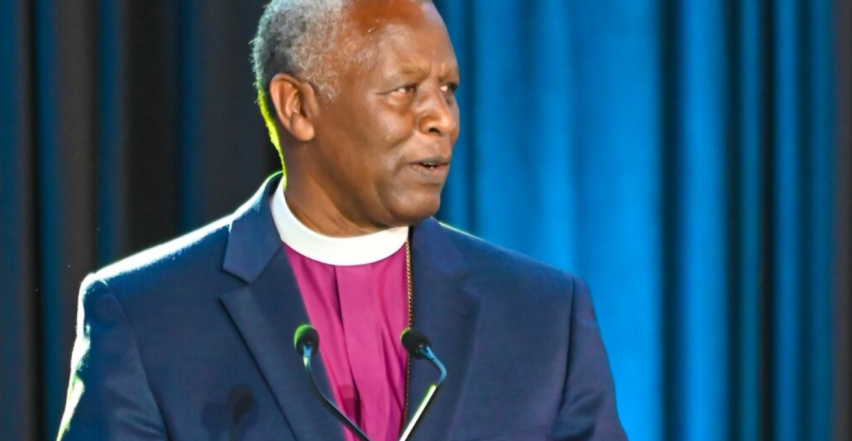
The Most Revd Dr. Laurent Mbanda, chairman of the Gafcon Primates Council, confirmed that invitations have been sent to 500 delegates for the first official meeting of what Gafcon is calling the Global Anglican Communion since the Oct. 16 statement — although 50 bishops have requested financial assistance to attend.
“As primates, we have issued this solemn summons because this is a vital moment of counsel, unity, and shared conviction for our Global Anglican Communion,” Mbanda said.
“Now that the future has arrived, we must come together to discern the path ahead.”
“I can say that the G26 Bishops Assembly in Abuja in March will be where there is clarity about the future of the Global Anglican Communion,” a Gafcon spokesperson told Christian Daily International.
The spokesperson also referred to an AnglicanTV Ministries’ interview “Gafcon to Re-Order Communion” on YouTube on Dec. 11, when presenter Kevin Kallsen interviewed Gafcon General Secretary Bishop Paul Donison about the future of the Anglican movement.
Kallsen asked the bishop where Gafcon “will be” in five to 10 years and in response, Donison said that “After Abuja, we’ll know more,” adding that “eyes are on Abuja to see how this reordering takes shape.”
“But I believe we’ll be doing what Anglicans have always done—rooted in tradition, expanding globally. I also believe the global church will increasingly help renew the Western church,” said Donison.
The bishop also said that the announcement by Gafcon renouncing the authority of the Archbishop of Canterbury in October had been met with a “resounding alleluia” by Anglicans globally, especially in the Majority World.
“Praise God that we are finally reordering the Communion in a true global sense,” he said.
“In the Western churches, even among those very Gafcon-friendly, there have been good questions, especially from those still contending within Canterbury-aligned structures.”
The Archbishop of Canterbury, the Lambeth Conference, the Anglican Consultative Council, and the Primates’ Meeting are not essential to Anglican identity, according to the bishop.
“They are modern innovations,” he said in the interview. “Lambeth dates to 1867, the ACC to 1971, and the Primates’ Meeting to 1979. They were attempts to hold unity together, but they failed.
“Instead, leadership must be located in the global church. In Abuja, the primates who affirm the Jerusalem Declaration will together form a new council of primates and elect a chairman, a primus inter pares, first among equals. Leadership is shifting globally because Christianity itself has shifted globally.”
Donison said there had been “no desire for repentance” within the revisionist structures of the Anglican Consultative Council or Canterbury.
“There has been no desire for repentance within those revisionist structures. If repentance had happened, that would have been the future. Since it hasn’t, the future is reordering. We are still praying for repentance, but we are moving forward.
“For 17 years we’ve said don’t look to Canterbury to determine if you’re Anglican. What’s different now is that we’re saying look here instead. The locus of leadership has moved. Stop asking whether Canterbury will turn around. Let’s move forward and get on with mission.”
Kallsen pointed out that Gafcon had been described as the missional not political arm of the Anglican movement.
“That was accurate at the time,” responded Donison. “But Gafcon has done more structural work than any other body in global Anglicanism. We’ve established new provinces, consecrated new bishops, and created dioceses in England, Australia, New Zealand, Europe, and among Muslim-background believers. We love mission, but we’ve also become structural and ecclesial because Gafcon actually does things.
“This is not a new communion. We are the ongoing Anglican Communion, now reordered to reflect its global reality. We are the supermajority. The fear is being labeled schismatic, but reformers have always been called schismatics. This is not schism; it is reordering under global leadership.”
Furthermore, the bishop acknowledged “pushback” by the Gafcon decision and that it the “job” of the Anglican Communion Office to “say we’re illegitimate.”
“But Anglican identity has never depended on Canterbury,” he added, “That claim is ahistorical.
“Gafcon stands for the Global Fellowship of Confessing Anglicans. We confess together and therefore walk together. There is diversity on secondary issues, but not on first-order doctrinal issues. Endless dialogue without doctrinal clarity only preserves English dominance, and the world has changed.”