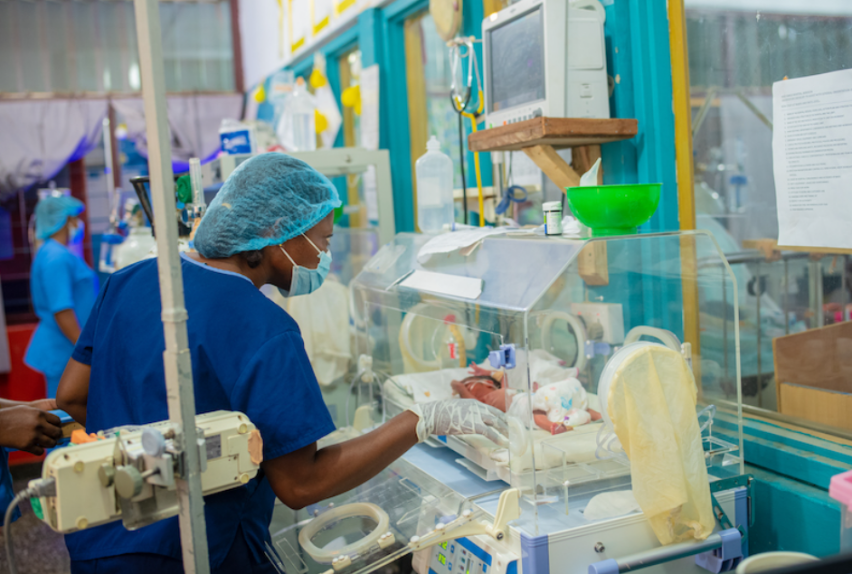
Africa is emerging as a major center for Christian medical training in the developing world, but health leaders warn the continent still faces severe shortages of specialist doctors, rural physicians and residency programs needed to meet growing healthcare demands.
New findings unveiled during a webinar hosted by Christian Connections for International Health (CCIH) revealed that Christian institutions across low- and middle-income countries currently operate 275 graduate medical education institutions offering 1,668 residency and fellowship programs.
The first-ever global census of Christian graduate medical education programs found Africa leading the world in the number of institutions, with 100 institutions spread across 27 countries. However, South America far outpaces Africa in the number of specialist programs, driven largely by Brazil’s extensive Christian hospital network.
The data paints a picture of both growth and inequality in Christian medical education globally.
“We felt a real burden when we saw this number,” said Dr. Ron Yee during the webinar. Yee, a CCIH Senior Technical Advisor, served as a clinician, medical doctor, and CEO of a community health center serving farm workers in California.
Yee stated that 80 low- and middle-income countries still have no identified Christian graduate medical education programs.
“There are no Christian graduate medical education programs identified yet in 80 LMICs,” Yee said. “This data reveals a challenge really for God’s global church and educators.”
The research was conducted by CCIH and the Christian Health Asset Mapping Consortium (CHAMC), which sought to document Christian residency and specialist training programs across developing countries.
According to the findings, Africa has the largest number of Christian medical training institutions globally, but only 296 specialist programs. By contrast, South America, with fewer institutions, hosts 697 residency and fellowship programs.
Brazil alone accounts for 354 programs across 40 institutions, making it the world’s largest hub of Christian graduate medical education identified in the study. India followed with 277 programs, while Argentina and Lebanon recorded some of the highest program concentrations per institution.
But one thing that stood out for Africa is its worsening shortage of doctors and specialists, especially in rural areas.
Brain drain
That concern was sharply illustrated by Dr. James Duah, the deputy executive director of the Christian Health Association of Ghana (CHAG). He described how Ghana continues to struggle with doctor shortages despite significant investments in healthcare training.
“We have a severe shortage of doctors,” Duah said during the presentation. “We have less than one to 10,000 doctor-patient population in some of the regions. Actually, we have less than one to 17,000, which is really a big issue.”
Duah explained that while Ghana has expanded medical education over the years, many doctors continue to leave for wealthier countries including the United States, the United Kingdom and parts of Europe. “Some of them we have lost to the US, to the UK,” he said.
The trend reflects a wider continental problem. A World Health Organization policy brief on health workforce migration in Africa notes that many African countries continue losing trained healthcare workers because of low salaries, weak infrastructure, limited specialist opportunities and difficult working conditions.
At the same time, Christian health networks already play a major role in African healthcare delivery systems.
In Ghana, the Christian Health Association of Ghana (CHAG) operates 344 health facilities to date, and contributes an estimated 30 to 40 percent of national healthcare delivery, particularly in underserved rural communities, according to CHAG annual reports.
Duah said Christian institutions now believe they must move beyond healthcare delivery and directly invest in training the next generation of doctors.
The Christian Health Association of Ghana is currently working to establish a new Christian medical school built around rural service, ethics and faith-based medical formation.
The proposed school will be based at Holy Family Hospital in Berekum, one of Ghana’s oldest mission hospitals.
“We want to form physicians who are more sound, adequately informed, who will be focusing on rural areas where government-trained doctors will not be able to go,” Duah said.
The school plans to begin with small student cohorts, anatomy laboratories and simulation facilities while partnering with local universities and international institutions.
Duah argued that overcrowding in existing public medical schools has weakened hands-on training.
“During my time in medical school we were very few on one bedside,” he said. “Now we have sometimes 40 people, and if you are short you will not get the opportunity to have hands-on education.”
The initiative is also designed to counter the long-standing “brain drain” problem that has seen many African medical professionals emigrate after qualification.
Duah noted that Ghana previously experienced major losses of doctors seeking specialist training abroad, but conditions improved after the country expanded local residency programs.
“Before the year 2000, we used to have a lot of brain drain because we didn’t have opportunities for residency training and specialist training in Ghana,” he said.
“Then the government started residency training and formed a college of physicians and surgeons,” he added. “We saw a downward trend (in brain drain). In fact, there was a significant shift of people training locally.”
In April 2026, GFA World announced an ambitious healthcare initiative in Rwanda, aiming to train thousands of African medical workers and expand access to care across underserved communities.
The US-based Christian organisation said it plans to open a 300-bed specialist hospital by the end of 2026 as part of a broader effort to establish a medical university and research center that is expected to serve as a continental hub, training African doctors, nurses and researchers while supporting outreach programs in remote areas.
The study also emphasized that Christian medical training is no longer confined to small missionary clinics, but increasingly operates as part of large healthcare systems with specialist hospitals, nursing colleges and residency programs.
Bridging the gap
The research identified nearly equal numbers of Catholic and Protestant institutions globally. Protestant organizations accounted for 139 institutions, while Catholic organizations operated 128 institutions. However, Catholic institutions hosted significantly more residency programs overall.
Speakers described the findings as a wake-up call for churches, medical educators and international Christian organizations.
Dr. Gary Cloud, CCIH Senior Technical Advisor, said the project revealed both the scale and fragmentation of Christian medical education globally.
“We’re trying to figure out what’s happening in God’s kingdom here with graduate medical education,” Cloud said.
The researchers acknowledged that the database remains incomplete and continues to be refined through collaboration with healthcare workers and institutions on the ground.
Still, the findings revealed major opportunities for expansion, particularly in mental health and behavioral healthcare specialties.
The webinar noted that psychiatry and behavioral health training remain relatively limited despite rising rates of depression, anxiety and substance abuse globally.
Yee suggested Christian medical institutions could play a larger role in responding to those growing needs.
“Is this an opportunity for psychiatry and the mental health related disciplines to really grow?” he asked.
Beyond statistics and institutional mapping, speakers framed the issue as both a healthcare challenge and a Christian mission concern.
“This should hurt,” Yee said. “Three and a half billion people who’ve not had a chance to hear the gospel and four and a half billion people who do not have adequate healthcare. This should hurt. And we should be doing something about it.”