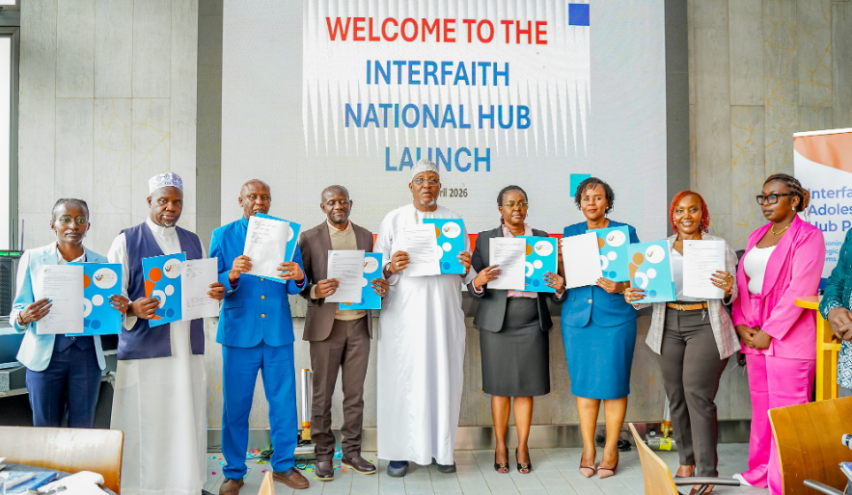
Religious leaders, health officials and development partners in Kenya have launched a national interfaith platform aimed at addressing persistent gaps in maternal, adolescent and family health, positioning faith institutions as central actors in shaping community health outcomes.
The initiative, known as the Interfaith National Hub on Family Health and Wellbeing, was unveiled in Nairobi on April 23 and brings together major religious bodies, government representatives and civil society organizations in a coordinated effort to improve access to care and influence health-seeking behavior at the community level.
The hub is led by Faith to Action Network in partnership with national faith umbrella groups, including the National Council of Churches of Kenya, the Kenya Conference of Catholic Bishops and the Supreme Council of Kenya Muslims.
Peter Munene, the Chief Executive Officer of Faith to Action Network, said the initiative marks a shift toward more unified engagement across sectors.
“The establishment of the Interfaith National Hub represents a significant step towards strengthening coordinated, inclusive and community-responsive approaches to family health and wellbeing,” Munene said during the launch.
Kenya continues to face significant challenges in adolescent and family health despite policy and infrastructure gains. Data cited by organizers shows that about one in five girls aged 15 to 19 has begun childbearing, while many young people still lack access to accurate health guidance, mentorship and age-appropriate information on relationships and well-being.
In a joint declaration issued at the launch, faith leaders framed the issue as both a public health and moral concern.
“We, the undersigned faith leaders, interfaith bodies, faith-based organizations, and faith actors from across Kenya… recognize that the health and wellbeing of families is central to the social, economic, and moral fabric of our nation,” the declaration states.
The document highlights persistent barriers, including stigma, misinformation and cultural norms that limit open discussion around adolescent health.
“Silence driven by fear, shame, and social norms remains a significant barrier, limiting open dialogue on adolescent health and contributing to negative outcomes, including teenage pregnancy,” the declaration adds.
Christian and evangelical leaders involved in the initiative emphasized the role of churches as trusted spaces for guidance and community engagement, particularly in areas where public health systems have limited reach.
“Communities are looking to faith leaders to provide direction, to interpret and respond to emerging challenges, and to help align responses with shared values and beliefs,” the declaration states.
Faith-based organizations already play a major role in healthcare delivery in Kenya, especially in rural areas, and organizers say the new hub is designed to strengthen coordination rather than duplicate existing services.
Munene said the platform will focus on aligning messaging, improving collaboration and supporting community-level action to address gaps in care.
The declaration also outlines specific commitments by faith leaders, including promoting family health, engaging openly on adolescent health issues and addressing harmful social practices.
Safe spaces in churches
In the declaration, faith leaders also pledged to create safe and inclusive spaces within churches, mosques and communities where young people can receive guidance and openly discuss adolescent health and other social challenges.
The document further calls on faith actors to confront gender-based violence, child marriage and other practices that undermine the wellbeing of women and girls.
“Speak out against practices that negatively affect the health, dignity, and future of adolescents and families, including child marriage, gender-based violence, stigma, and harmful norms,” it states.
Government officials welcomed the initiative, noting that faith institutions are critical partners in expanding access to healthcare and advancing national health priorities.
The hub is expected to support ongoing efforts to improve maternal and child health outcomes and strengthen primary healthcare systems, particularly at the community level.
Organizers said one of the key goals is to bridge the gap between existing health services and the communities they are intended to serve, where trust, cultural norms and access barriers often determine whether care is sought.
The declaration underscores the influence of religious institutions in Kenya, where a large majority of the population identifies with a faith tradition.
“Acknowledging that nearly 90% of Kenyans identify with a religious faith, placing faith leaders in a unique position of influence within families and communities,” the document states.
Faith leaders said that influence comes with responsibility.
“We therefore recognize this moment as a call to action to respond with courage, compassion, and leadership, and to speak into the realities our communities are facing today,” the declaration states.
The launch reflects a growing shift toward community-based healthcare approaches, where faith institutions are playing a larger role in guiding families and addressing challenges such as teenage pregnancy and adolescent wellbeing.
Organizers said the success of the hub will depend on sustained collaboration between faith actors, government agencies and development partners, as well as the ability to translate commitments into measurable improvements in health outcomes.