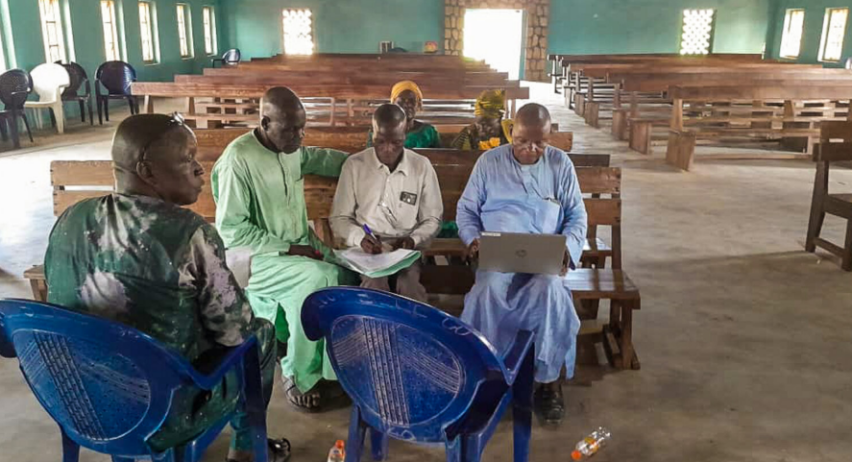
Insecurity, inadequate funding and a shortage of trained language specialists are hampering efforts to translate the Bible into Nigeria’s indigenous languages, the Nigeria Bible Translation Trust (NBTT) has warned.
The organization’s Executive Director, Patience Toma, said some translators working in rural communities had been killed, while insecurity had forced residents to flee their homes and disrupted translation projects.
Speaking in Jos, Plateau state, on Oct. 12 during activities marking the organization’s golden jubilee, Toma called on the federal government to strengthen security in rural areas so translators and language development workers could continue their work.
“We have translators working in rural communities, and insecurity has affected the work in those areas. Some translators have been killed, although we do not have official statistics on the number of casualties,” she said, according to The Evangelist News.
Toma did not provide details about the identities of the translators killed or the circumstances of their deaths. The organization’s lack of official casualty figures also means the scale of the losses remains unclear.
She urged authorities to ensure security personnel were deployed in rural communities where language workers operate.
The warning highlights how insecurity can disrupt work that extends beyond producing religious texts to include documenting indigenous languages, developing writing systems and supporting literacy programs.
Foreign funding sustains translation work
Funding is another major challenge. Toma said approximately 95% of the resources available for Bible translation in Nigeria came from outside the country, largely from Western nations.
She urged Nigerian churches, individuals and local institutions to take greater responsibility for supporting the work, warning that dependence on foreign contributions raised questions about its long-term sustainability.
“We need Nigerians, churches and local institutions to show greater interest in supporting Bible translation. It is important that we take responsibility for the languages and communities that we serve,” she said.
The funding challenge comes alongside shortages of translators, consultants and linguists, which the organization identified as obstacles to expanding its projects.
According to NBTT, Nigeria has more than 600 minority languages, many of which still require attention through Bible translation and broader language development.
The organization says its work includes studying local languages, analyzing their sounds and grammar, developing alphabets and dictionaries, and translating Scripture. It also produces literacy materials to help preserve languages and enable communities to read and write in their mother tongues.
Translation and language preservation
For minority language communities, translation work can provide written materials in languages used in homes and local communities, including languages that have limited published resources.
The work can also help establish writing systems and document vocabulary and grammar, creating resources that may be used in literacy education and other community activities.
NBTT said funding constraints and shortages of skilled personnel continued to limit the expansion of translation projects and related literacy programs.
The organization urged mission agencies and language development groups to make greater use of digital technology and artificial intelligence to reach younger generations.
“Social media and digital technology, including artificial intelligence, have come to stay. We must learn to use them positively to reach the younger generation through languages and formats they understand,” Toma said.
The organization’s comments did not identify specific projects already using artificial intelligence or quantify how much the technology might reduce translation costs.
Church leaders call for renewed commitment
Also speaking at the anniversary, Job Ayuba Bagat Mallam, president of the Evangelical Church Winning All (ECWA), described Bible translation as an important part of Christian evangelism in Nigeria and beyond.
He said people from different linguistic and cultural backgrounds needed access to Scripture in languages they could understand.
“How can people really create an encounter, understand and respond to the gospel if the Word of God remains inaccessible to them in the language they can understand?” he asked.
Mallam commended the missionaries, translators, church leaders and partner organizations that had sustained the work over the decades. He also urged NBTT and its partners to adapt to changes in language, communication and technology rather than treating the anniversary solely as a celebration of past achievements.
“Fifty years is a milestone, but it is not a destination,” he said.
He reaffirmed ECWA’s commitment to working with NBTT and other partners to advance Bible translation, evangelism and Christian discipleship.
Toma said the organization’s anniversary should serve as a reminder that the work remained unfinished. She called on younger people to take up leadership roles in language development, information technology and missionary work.
“The future of Bible translation cannot depend upon those who began the work 50 years ago,” she said.
She also highlighted the continuing need for language documentation, stronger literacy programs and the adoption of emerging technologies.
NBTT says that the next stage of the work will require stronger local participation and new approaches to communication if more Nigerians are to gain access to Scripture in their own languages.