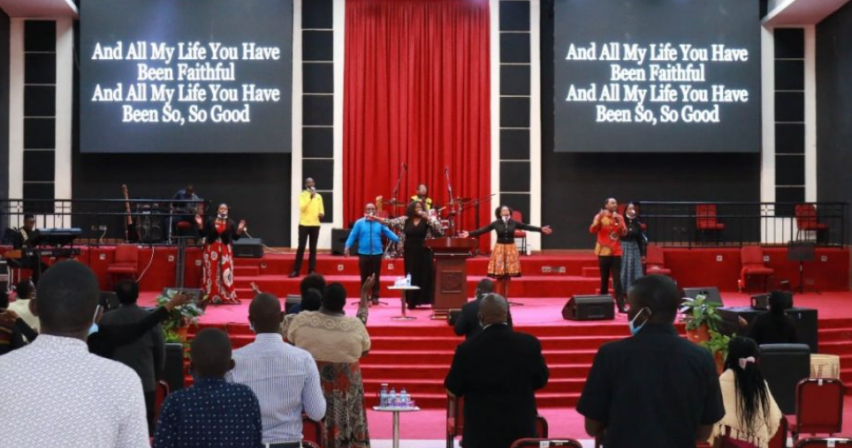
Churches across Kenya are issuing filming notices and introducing opt-out arrangements following a warning from the outgoing Data Protection Commissioner even as prominent public and Christian voices question the practicality of obtaining individual consent from every worshipper.
The debate has prompted reactions from church leaders, congregants and public figures, with some defending the use of cameras as an important tool for evangelism while others insist that worshippers should retain control over how their images are captured and distributed.
The controversy emerged after Immaculate Kassait, who was completing her six-year term as Kenya's first Data Commissioner, addressed the issue during an interview with Citizen TV program on November 17.
Kassait explained that photographs and video recordings that identify individuals constitute personal data under Kenya's Data Protection Act, 2019. Churches that livestream services therefore need to establish an appropriate legal basis for processing congregants' information, including obtaining consent where consent is relied upon.
She warned that organizations violating the law could face administrative penalties of up to KSh5 million (US$38,000) or one per cent of their annual turnover, whichever is lower.
Her remarks have raised questions about how churches can comply with data protection requirements while continuing to broadcast services to audiences beyond their physical congregations.
Challenges to the interpretation of consent
One of the strongest public reactions came from former CEO of the Kenya Film Classification Board Ezekiel Mutua, who defended churches' right to photograph and livestream their services.
In a Facebook statement on November 22, Mutua argued that people who voluntarily attend church services should expect to be photographed or recorded, particularly where churches have already communicated their filming policies.
"If you do not wish to appear in church live-streaming sessions or photographs, you should not attend the church," Mutua stated.
He argued that choosing to attend a service should be considered consent to being recorded or photographed. He also urged churches to display notices at their entrances informing worshippers and visitors that photography, recording and livestreaming may take place.
Mutua maintained that data protection laws should be applied reasonably and should not become a tool for targeting or undermining churches. He further argued that the same principles should apply to political rallies and other public gatherings where photography and video recording are common.
His position has added another dimension to the debate, particularly regarding whether entering a church where recording has been announced should constitute implied consent.
Churches introduce filming policies
Several churches have since issued notices outlining their photography and livestreaming arrangements.
Jesus Christ Compassion Ministries (JCM), led by Bishop Ben Kiengei, issued a communication on November 21 informing worshippers that services and other activities could be broadcast through JCM TV, Facebook, YouTube and occasionally TikTok.
The church asked members who did not wish to appear in recordings to notify its administration or media team before entering filming areas so that alternative arrangements could be discussed.
JCC Thika, led by Reverend Kelvin Ephraim, also issued a notice informing congregants that services could be photographed, recorded and broadcast through its television station and digital platforms.
The church explained that worshippers' images, voices and appearances could feature in its television programs and online content. Those uncomfortable with being recorded were encouraged to contact the administration or designated media team, cautioned JCC Thika.
Christian Foundation Fellowship, led by Archbishop Harrison Ng'ang'a, also informed congregants that photography, video recording and livestreaming could take place during services and ministry events. Its notice identified Faith TV Kenya, CFF ChemiChemi and other ministry platforms as channels through which recordings could be shared.
Other churches have adopted more explicit approaches. Voice of Salvation and Healing Church International in Kayole stated that attendance at its services would be interpreted as consent to appearing on its social media platforms.
CFF Church Kiambu Town, led by Bishop Michael Wanderi, similarly referred to the Data Protection Act, 2019, informing congregants that entering its premises constituted agreement to being recorded without compensation.
Christians divided over privacy and evangelism
The debate has extended beyond church leadership, with Christians expressing differing views on the implications of restricting livestreaming.
Speaking to the Daily Nation, Frank Abura said livestreaming allows Christians who cannot physically attend services to participate in worship from wherever they are. However, he argued that churches should obtain permission from congregants before recording them.
He suggested introducing consent forms through which worshippers could indicate whether they were comfortable being photographed or filmed.
Joshua Mwangi, a 31-year-old Seventh-day Adventist congregant, also supported livestreaming but said churches should respect the privacy of individuals who do not wish to appear in recordings.
He suggested establishing designated seating areas outside camera coverage for worshippers who prefer not to be filmed.
The contrasting views highlight the challenge facing churches that increasingly depend on digital platforms to reach people beyond their physical congregations.
For many ministries, livestreaming has become an important means of evangelism, allowing elderly people, the sick, essential services workers, people with disabilities and those living abroad to follow services remotely.
However, the growing use of cameras in sanctuaries has also raised concerns about recording deeply personal moments of prayer, worship and emotional expression without the knowledge or agreement of those involved.
The debate now presents Kenyan churches with the challenge of balancing their evangelistic objectives with worshippers' privacy rights. While the Data Protection Act applies to religious institutions, questions remain about how individual consent can be practically obtained and implemented in large congregations.
As more churches introduce filming notices and alternative arrangements for members who do not wish to appear on camera, the discussion is likely to continue shaping how religious institutions approach digital evangelism in Kenya.