For decades, the Middle East has been a significant hotbed of conflict, plagued by international wars, civil unrest, and ongoing battles between geopolitical and ideological rivalries that often transcend national boundaries.
Although it is often considered a Middle Eastern country, the Islamic Republic of Iran bridges the gap between the Arab world and Central Asia. Iran also has some unique distinguishing features, such as its distinct Persian culture and the use of Farsi rather than Arabic as the official language.
Iran’s economy is in distress.
Regionally, Iran is a military powerhouse, having one of the strongest militaries in the region. However, despite having bountiful natural resources and the potential of a thriving economy based on trade and tourism, Iran’s economy is in distress and Iranians suffer one of the highest poverty levels in the region. Essentially, the basic framework exists in Iran for people to thrive and enjoy the life God intended for his creation, but that is not currently the case.
For many of us in the West, Iran conjures up images of Islamic radicalism along with death to Israel and death to America chants. But did you know that Iran and Israel did not become geopolitical enemies until the 1979 Islamic Revolution?
The negative attitudes toward Israel and the West are prevalent among Iran’s political leadership and military, but they are not reflective of the average Iranian person. In fact, surveys show Iranians to be the least anti-Semitic people in the Middle East, by a fairly wide margin.
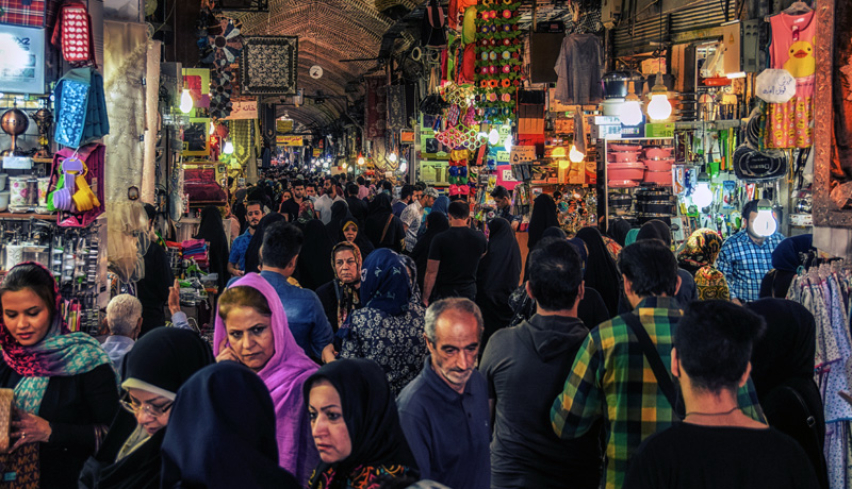
Iranians are known to be kind, generous, hospitable and respectful of others.
By nature, Iranians are known to be kind, generous, hospitable and respectful of others. Sadly, it is the Iranian people who are the most affected by crippling external sanctions and restrictive government laws, losing their homes and their lives when a radical religious ideology supplants basic human rights.
The recent increase in mass public protests and extensive unrest across Iran is the inevitable result of an oppressive regime. The tragedy is that this turmoil can be directly attributed to a distorted view of God.
As an increasing number of Iranians come to the realization that their current belief system is the reason for their suffering, they are questioning their deeply entrenched cultural religion and becoming more open to considering alternative views of God. This questioning is an expression of spiritual hunger that can only be satisfied by the gospel truth.
50,000 of the country’s 75,000 mosques have closed.
Organizations and ministries that engage heavily in Persian outreach report that the gospel has taken root in Iran, and underground church networks are growing. Iranian officials recently reported that 50,000 of the country’s 75,000 mosques have closed, and there are reports that over a million former Muslims in Iran have come to faith in Jesus in the 21st century. Across the Muslim world, this amounts to heresy and carries severe repercussions.
Iranian Christians are doubly persecuted as they live in one of the few countries in the world under Sharia law. This law, as expressed in the Qur’an, raises particular concerns for Christians in the region because apostates, or those who renounce Islam and change their religion, are to be killed.
Additionally, jihad, the idea that Muslims are obligated to kill non-Muslims, is still a widely held belief in much of the Middle East. The freedom of worship, criticism of Islam, and harsh punishments, including stoning and execution, are among other reasons Christians live in daily fear where Sharia law is used.
Iranian Christians continue to be brave witnesses and disciple-makers.
This often leads to believers being tracked and hunted down by a sophisticated surveillance regime that views conversion to Christianity as a betrayal. Yet, Iranian Christians continue to be brave witnesses and disciple-makers, pursuing the Lord with a zeal that encourages us to live out our faith boldly.
The ministry I lead, The Tide®, has seen the doors gradually closing in Afghanistan since the Taliban regained control in 2021 and decoupled the Afghan people from foreign influence. As a near-culture people speaking a mutually intelligible language, Iranian Christians are well-positioned to take up the burden of evangelizing the Afghan people.
While many Iranians are hoping for a change in political leadership, we are reminded that God is not so small that he needs a specific type of regime in order to accomplish His purposes.
Let us continue to pray for the people of Iran.
Nonetheless, let us continue to pray for the people of Iran, that they would experience both spiritual and physical freedom. Regardless of the geopolitical outcome, let us pray that the love of Christ would overflow the nation of Iran and that the peace of Christ would permeate hearts throughout the region.
Don Shenk is the Executive Director of The Tide® ministry and has been serving the ministry since 2001. Through twenty-eight years living in Zimbabwe, and numerous visits to Africa, Eastern Europe, and India as a ministry administrator and resource person for church conferences and leadership training events, Don has acquired a wealth of international, cross-cultural ministry experience. As the world becomes more and more of a global village, Don’s greatest passion is to reach people for Jesus Christ and to bring them into the Church.