
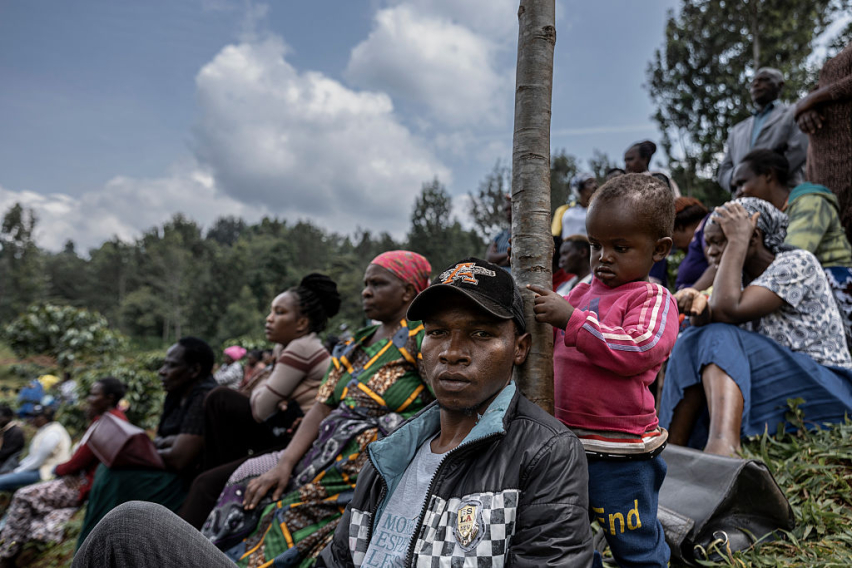
The National Council of Churches of Kenya (NCCK), led by Chairman Rev. Dr Elias Otieno Agola, outlined pressing issues the government must address: healthcare, education, and the soaring cost of living.
"Kenyans are a devastated people," the council, which represents 32 church groups and 18 Christian organisations, declared in its Dec. 4, 2025 statement. "In every assessment the NCCK has done in the nine regions and here at the national level, more than 80% of the people say the nation is heading in the wrong direction."
The findings paint a bleak picture. More than 79% of respondents reported feeling either depressed or unhappy. About 77% indicated they are poorer today than they were one year ago.
The council also criticized the failure of oversight institutions, including political leaders. More than 60% of those surveyed would not re-elect any current political leader, from Members of County Assembly to the President.
"This state of despair and frustration, which is driven by injustice, is not sustainable," the council warned. "If the people of Kenya do not arise and rescue the nation, even the constitutional and legal bonds that bind the nation together shall fall apart. Let us be spurred into action by the instructions God has given us in Deuteronomy 18: 20."
Over the last two years, the country has witnessed nationwide protests dubbed the Gen Z protests because of the large participation of young people. The demonstrations erupted over the cost of living and rampant corruption.
In June 2024, young Kenyans took to the streets to condemn a new bill that introduced new tax measures which would have worsened the cost-of-living skyrocketing amid job scarcity and economic hardship. Human rights activists reported that the state responded with extrajudicial killings and abductions as Church leaders urged young people not to give up their demand for better leadership.
"In human history, every generation faces a challenge they must overcome for their society to progress," the statement noted. "It is in this context that the young people of Kenya in June 2024 successfully diagnosed the problem facing our nation and offered a viable solution. The youth must realize that the older population, who constitute less than 30% of the population, will not create for you the Kenya you want to live in. You must do it for yourselves."
A 2025 Afrobarometer survey (report "AD988") reveals that among young Kenyans aged 18 to 35, 43% are actively looking for work, a rate much higher than older age groups. This age bracket makes up 36% of the population, according to the Kenya National Bureau of Statistics (2022).
"The cost of living in Kenya is too high, and the impact is devastating," the church leaders wrote. "The exit of multiple companies from the country due to a toxic business environment has led to massive unemployment, which has led to a radical drop in the purchasing power of citizens, which has led to collapse of small and micro businesses."
The consequences are severe: children dropping out of school, instability in families, depression, gender-based violence, and increased crime as desperate people steal to make ends meet.
"It is a sad reality that the government keeps releasing reports that imply economic growth while people are suffering," they added.
NCCK accused members of parliament of betraying Kenyans rather than representing their interests when making laws. The church leaders asserted that MPs have lost legitimacy and become perpetrators of injustice by crafting laws that hurt ordinary citizens.
The letter also instructed churches across the country to engage with politicians in ways that protect the church's reputation and prevent political divisions within congregations.
The council announced strict guidelines to reduce political influence in places of worship. Politicians attending services will now be treated like any other congregant. Any financial contributions will be handled as ordinary offerings without ceremony or public recognition.
Under the new guidelines, politicians can no longer address worshippers during services. If they wish to speak, they must do so outside the church after the service ends. The leaders emphasized that churches will not endorse or oppose any political figure or party, signaling a firm commitment to keeping the pulpit free from partisan politics.
The letter concluded with the words of Micah 6:8: "He has showed you, O man, what is good. And what does the Lord require of you? To act justly and to love mercy and to walk humbly with your God."








