
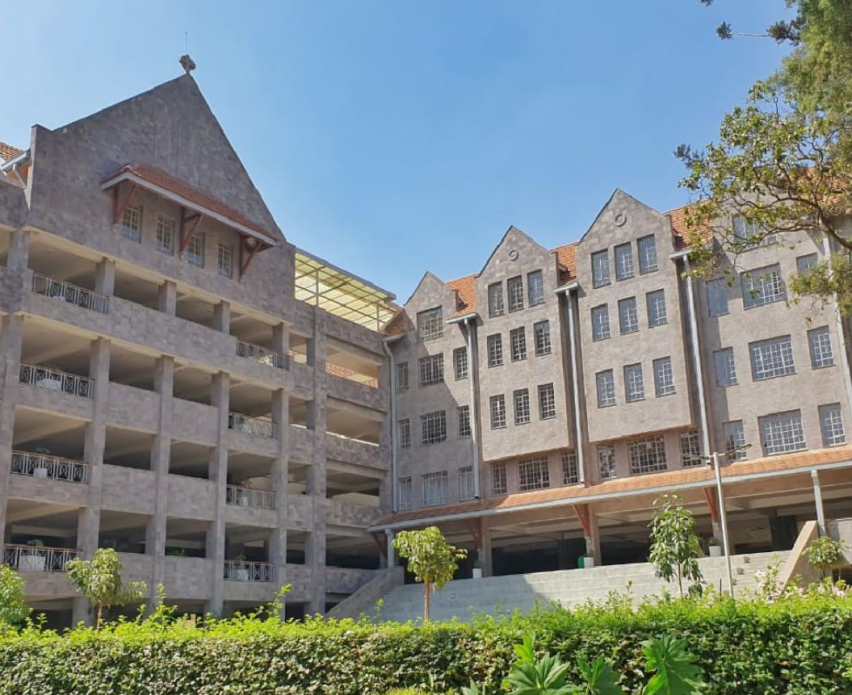
Anglican Church leaders have demanded swift action against those behind the disruption of a public forum at Nairobi's All Saints Cathedral, describing the incident as a direct attack on constitutional freedoms and warning that growing political violence threatens public participation ahead of Kenya's next general election.
The outrage has intensified following the invasion of the cathedral by a group of young men who disrupted a budget accountability meeting organized by civil society groups and members of the public.
Anglican Archbishop Jackson Ole Sapit called for the arrest of both the attackers and those who may have sponsored them. He also challenged the country's top police leadership to account for the incident.
“They have to be brought to book together with their sponsors. If they don't, then the DCI and the Inspector General of Police have no business sitting in those offices. They should resign as an honorable thing,” Sapit said.
His remarks reflected growing concern within the church over what leaders described as an alarming rise in organized violence targeting public gatherings and spaces meant for civic engagement.
The meeting at All Saints Cathedral had been convened to examine the country’s budget and discuss spending proposals for the 2026-27 financial year. Church leaders and participants said the forum was intended to provide citizens with an opportunity to scrutinize government spending and contribute to public debate.
Instead, the discussions descended into chaos. According to CCTV footage reviewed by local media, groups of young men were seen gathering outside the cathedral compound before the disruption. Some reportedly entered the premises and later left. Minutes later, dozens returned and forced their way into the compound by bypassing the main access point and overwhelming security personnel.
The group then moved directly toward the conference venue where the discussions were underway.
Along the way, several participants were reportedly attacked and robbed of personal belongings, including mobile phones.
Police officers later intervened and fired shots in the air to disperse the crowd. Authorities said one suspect was arrested and no injuries were reported.
Provost Evans Omollo condemned the attack and suggested investigators should pursue those who may have organized it.
“We condemn this in the strongest terms possible. Once the investigators establish those links and lead politicians who sent them, we will be making their names known very soon for the public to shame them,” Omollo said.
Church leaders argued that the incident represented more than a security breach. They described it as an attempt to intimidate citizens participating in public affairs.
“The attack here especially in the church demonstrates an infringement, a risk, an attack on the constitution,” one participant at the forum said.
The incident has renewed concerns about the growing use of organized groups to disrupt political and civic activities in Kenya.
Growing concerns over civic rights
Since the anti-finance bill protests of 2024, concerns have mounted over increasing violence surrounding public demonstrations, political gatherings and civic forums. Rights groups, religious organizations and civil society leaders have repeatedly warned that intimidation and the use of hired gangs risk shrinking democratic space and discouraging citizens from engaging in public debate.
For church leaders, the invasion of a cathedral compound marked a troubling escalation.
All Saints Cathedral has long been regarded as a venue for public dialogue and national conversations. The disruption of a meeting inside church grounds has therefore raised broader questions about the safety of institutions traditionally viewed as neutral civic spaces.
Government officials have pledged action. Interior Cabinet Secretary Kipchumba Murkomen described the incident as unfortunate and unacceptable and said investigations were already underway.
“The DCI is already analyzing that CCTV camera. A number of them, one of them was arrested immediately and a number are being arrested. We will take those people to court and they will be held to account,” Murkomen said.
Murkomen also linked the persistence of criminal gangs to political actors who allegedly mobilize and fund such groups before abandoning them. He announced new security measures, including the establishment of a Nairobi Metropolitan Unit and the expansion of surveillance systems aimed at improving monitoring and response capabilities within the capital.
As pressure mounted on authorities, Omollo raised additional concerns during a news conference a day after the attack.
He alleged that a suspect arrested following the incident had subsequently been released and claimed that two individuals who reported stolen phones had later been reimbursed.
“This suspect was released,” Omollo said. “And the two people whose phones were allegedly stolen and went to complain, they were reimbursed.”
Omollo further alleged that efforts were being made to prevent the case from progressing because of the public attention it had attracted.
The allegations could not be independently verified, and authorities had not publicly responded to the claims.
For many church leaders, however, the central issue remains accountability. Sapit warned that failure to identify and prosecute those responsible would send a dangerous message at a time when the country is preparing for another election cycle.
His concern is shared by many within Kenya's religious and civil society communities who fear that unchecked political violence could become increasingly normalized.
The attack at All Saints Cathedral, they argue, was not simply a disruption of a meeting. It was a test of whether citizens can gather peacefully to discuss matters of national importance without fear of intimidation.








