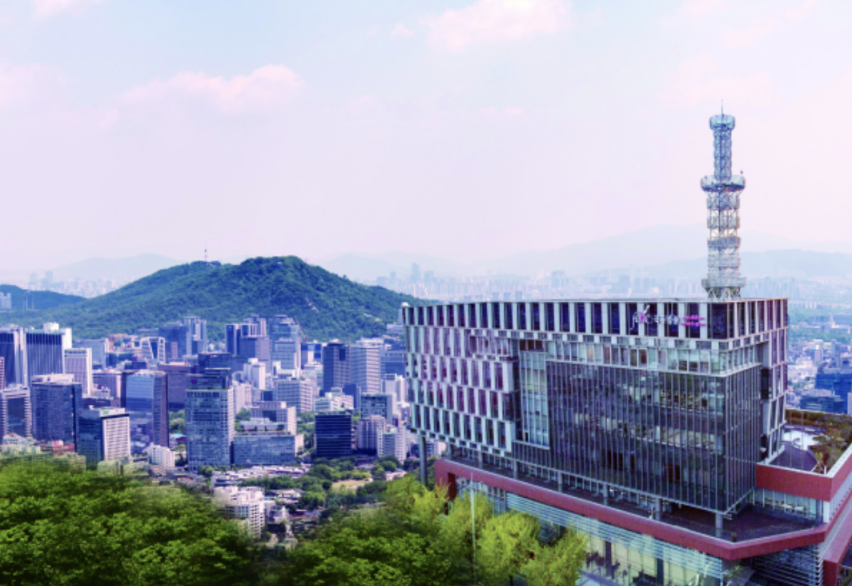
Far East Broadcasting Company-Korea, a Christian radio network whose signals have reached listeners in North Korea, China and Russia for decades, is marking its 70th anniversary with a series of events running through December.
At a press briefing Wednesday (Sept. 30) at its headquarters in Seoul's Mapo district, the broadcaster reviewed a history built largely around what Korean churches call the "Northern Mission," Christian Daily Korea reported. The term refers to outreach toward North Korea and the communist and formerly communist countries beyond it, where sending missionaries was not possible during the Cold War. FEBC-Korea says its programs served believers in underground churches in North Korea, China, Russia and Mongolia throughout that period.
Signals across the border
FEBC-Korea says its AM signal carries farther at night, reaching all of North Korea as well as northeastern China and parts of Siberia.
The broadcaster said many North Koreans secretly kept radios and listened to its sermons and hymns "with blankets pulled over their heads." It said accounts from Christians who later left North Korea have confirmed the practice.
After China began its economic reforms in the late 1970s, the station reportedly received tens of thousands of letters a year from listeners abroad. FEBC-Korea said those included handwritten notes from ethnic Koreans living in China and messages from Siberia.
The broadcaster described its role as "laying the foundation for a spiritual and peaceful reunification" of the Korean Peninsula despite political and ideological division.
From Incheon to Jeju
American missionary Tom Watson founded the station, which first went on the air Dec. 23, 1956, from Incheon, west of Seoul. It was then known as the Korea Evangelical Broadcasting Station and later moved to Seoul.
FEBC-Korea says it was the country's third terrestrial broadcaster, after the public Korean Broadcasting System and the Christian Broadcasting System. It also describes itself as the first broadcaster on the Korean Peninsula to air foreign-language programs for listeners outside the country.
A second operation began in 1973, when the U.S.-based Far East Broadcasting Company moved a transmitter from Okinawa, Japan, to South Korea's Jeju Island. The station, called Asia Broadcasting, aimed its programs at communist countries in the region. The Rev. Billy Kim served as its first director.
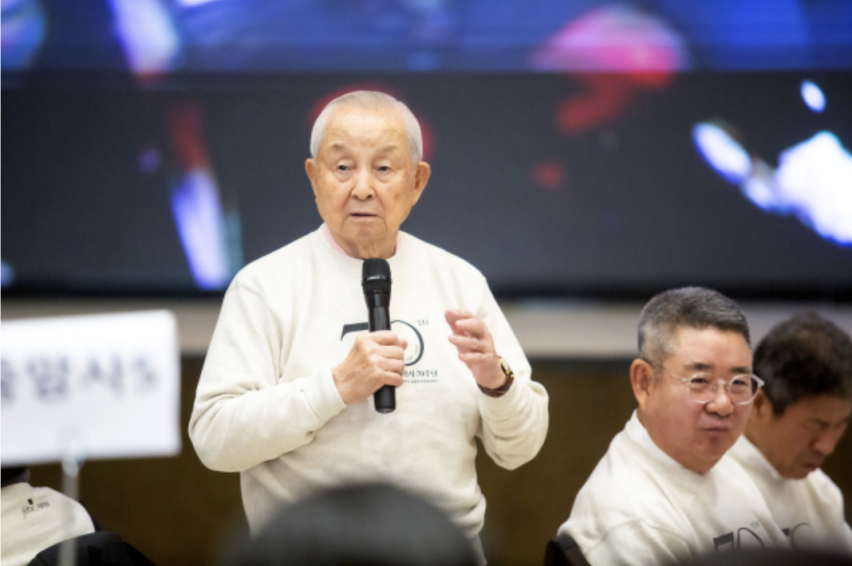
The two stations have operated jointly under Kim's leadership since 1977. They merged into a single legal entity in 2001, when the Jeju station was renamed Jeju FEBC.
Christian Daily Korea reported that Jeju FEBC remains the Korean-language broadcast heard most clearly in North Korea. It transmits in Korean, Chinese, Japanese and Russian and has a large Christian audience in China, according to the broadcaster.
Anniversary events
FEBC-Korea now operates 15 radio stations across South Korea, supported by 14 relay stations. Kim is chairman of its board.
Anniversary events held so far this year include a launch ceremony, a seminar for pastors, an Easter concert and evangelistic rallies in the country's southeastern and southwestern regions. A choral festival is scheduled for Oct. 15 at Busan Concert Hall, followed by a homecoming event Oct. 17 at Hanyang University in Seoul.
A thanksgiving service will be held Dec. 23, the founding date, at the Seoul headquarters.
FEBC-Korea President Maeng Ju-wan acknowledged concerns that radio has lost some of its former standing. He said the broadcaster is moving quickly onto digital platforms, including YouTube and smartphone apps, to extend its reach.
The Korean War ended in 1953 with an armistice rather than a peace treaty, and the peninsula remains divided.
"In an era when the pain of division caused by the Korean War has passed 70 years and the gulf of distrust and disconnection is deepening, FEBC-Korea's northward broadcasts continue, unchanged, to cross the armistice line and shine into every corner of the northern land," Maeng said, according to Christian Daily Korea.
"Just as a small flame kindled in the darkness in 1956 has today become a great lighthouse illuminating the nation, the airwaves of hope proclaimed by FEBC-Korea will be the most powerful spiritual energy hastening the dawn of a coming unified Republic of Korea," he said.