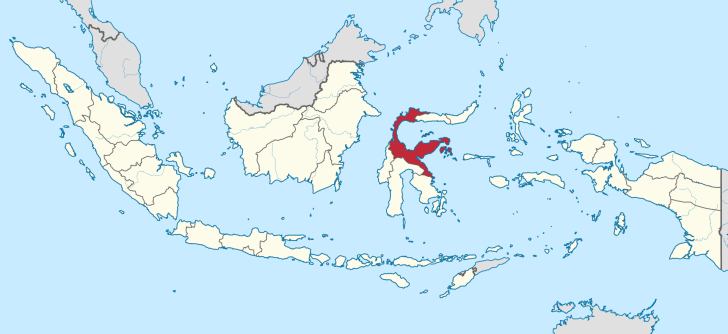
A protest in Indonesia against a restaurant specializing in pork dishes reflects a trend of Muslims pressuring Christian-owned businesses serving food forbidden in Islam, sources said.
The protest by dozens of Muslim residents in Tondo Urban village, Palu, Central Sulawesi Province in August garnered widespread attention on social media, reigniting a national debate over intolerance, minority business rights, and the use of Islamic “non-halal” [non-approved] food as a pretext for pressure campaigns.
“It appears that protests of this nature, centering on the issue of non-halal status, have become a new trend of intolerance in Indonesia,” Bonar Tigor Naipospos, deputy chair of the Setara Institute for Democracy and Peace, told Morning Star News. “There are actually no regulations requiring a non-halal eatery to obtain permission from 30 households, whether at the local or national level.”
Obtaining permission from 30 area residents of Tondo Urban village, Palu, was one of six requirements that Muslims imposed on Warung Ajik Tondo restaurant in an agreement forged at mediation meetings in July.
The other five requirements were removing the image of a pig from the eatery’s signboard; displaying a “non-halal” label on its signboard; prohibiting the processing of pork or the keeping of live pigs on the premises; and installing a dedicated waste disposal system to prevent food scraps from being discarded in public areas, the head of the Tondo Urban Village Community Development Institute, Azwar, who goes by a single name, reportedly said.
Setara’s Naipospos said it is the local government’s duty to protect freedom of business conduct and ensure that the rights of minorities to choose food and beverages are respected, without those of the majority religion imposing their preferences. The protestors had objected to the restaurant’s location on a heavily-trafficked road and its conspicuous signage in a predominantly Muslim neighborhood.
Videos circulating online show dozens of residents from Jalan Roviga, in Tondo Urban village, Mantikulore District, Palu, protesting against the Christian owner of the Warung Ajik Tondo eatery in the presence of police and military personnel on Aug. 2.
Residents accused the owner of failing to honor the six requirements agreed upon during meetings on July 5 and 18 and disrespecting the Muslim majority. They maintained that their protest was not a rejection of his choice of livelihood or an act of intolerance, Detik.com reported.
A protester identified only as Ismail claimed the protest was spontaneous, according to detikSulsel.com.
“Yesterday’s incident [Aug. 2] was actually a community’s spontaneous reaction because the eatery is located in their neighborhood,” Ismail reportedly said.
He said residents did not object to the economic activity itself but to the eatery’s location on a main road, with signage that made it easily visible to the public.
“In our view, such matters should take the local community’s situation into account,” he said, according to detikSulsel.com.
Likewise, the holder of Instagram account @sesetanpost wrote that “…opposition to the babi guling [roast suckling pig] establishment arose because protesters felt the restaurant’s presence was unsettling due to its proximity to residential areas, leading them to demand that the owner dismantle the business.”
A prostitution complex is less than a mile from the disputed venue but has faced no legal or public opposition, Probali.id reported.
“Many are questioning why enforcement actions seem swifter against eateries clearly labeled as non-halal, while places suspected of being hubs for vice remain untouched,” the outlet noted.
The legal framework around halal labeling in Indonesia focuses primarily on consumer protection and transparency, not on granting neighborhoods veto power over non-halal businesses. Under Law No. 33 of 2014 on Halal Product Assurance and its implementing regulations, businesses that handle non-halal products are expected to clearly label them to avoid misleading Muslim consumers. Violations can lead to administrative sanctions and, in some cases, criminal penalties under the Consumer Protection Law.
Another Restaurant Torched
In Central Java Province, a storage facility of the Tepi Sawah Noodle and Pork Restaurant in Parangjoro village, Grogol District, Sukoharjo Regency, was set ablaze by four unidentified people in the early hours of Sept. 12, various media outlets reported.
The restaurant is located near rice fields away from residential areas.
The restaurant’s Christian owner, Jodi Sutanto, received a call from an employee around 3:30 a.m. that the facility had suffered some property damage due to the fire. The assailants reportedly wore helmets and masks and threatened two night watchmen positioned at the rear and front of the restaurant.
“A warehouse and a bed were burned down,” Jodi reportedly said. “It was a scrap storage warehouse, for used items, not a facility for storing finished products.”
Two fire trucks were deployed to extinguish the blaze, said the head of the firefighting division at the Public Order Agency, according to detikJateng.com.
“The report came in around 4:35 a.m., and the firefighting operation concluded around 5 a.m.,” said Margono, who goes by a single name. “Two fire trucks and six personnel were deployed.”
Sukoharjo Police Chief Anggaito Hadi Prabowo stated that his team immediately launched an investigation into the arson incident.
“We are investigating it immediately because it was clearly a case of deliberate arson,” Anggaito reportedly said. “There was also a witness who saw it happen.”
Anggaito added that they requested assistance from the Central Java Regional Police and Special Detachment 88 (Densus 88) Anti-Terror to investigate the case.
Indonesian society in recent years has adopted a more conservative Islamic character, and churches involved in evangelistic outreach are at risk of being targeted by Islamic extremist groups, according to Open Doors.