Widespread criticism from Christian leaders, rights advocates, heritage conservationists, and alumni of Pakistan’s only church-run chartered university appears to have prompted the Punjab government to publicly rule out the demolition of a century-old university hostel at the center of a growing dispute over ownership, heritage preservation, and minority rights.
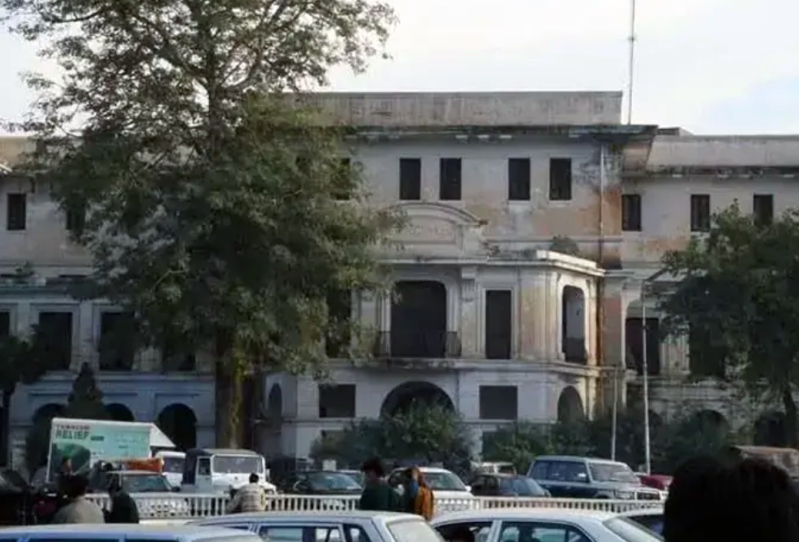
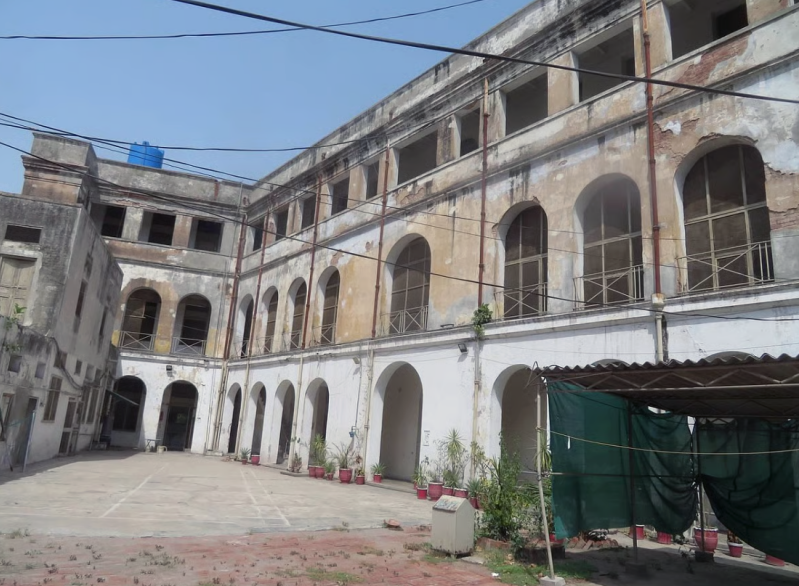
The controversy concerns Ewing Hall, a historic building constructed in 1916 and located in Lahore’s Anarkali area. Named after Dr James Caruthers Rhea Ewing, the renowned principal who played a pivotal role in shaping Forman Christian College University (FCCU) in Lahore, the building has long served as a student hostel for the Christian institution founded in 1864 by the Presbyterian Church USA and regarded as one of Pakistan’s leading higher education institutions.
In a statement issued on June 14, the Lahore Heritage Areas Revival Board (LHAR) rejected reports that Ewing Hall would be demolished following the provincial government’s repossession of the property. The board said the structure would instead be preserved and restored.
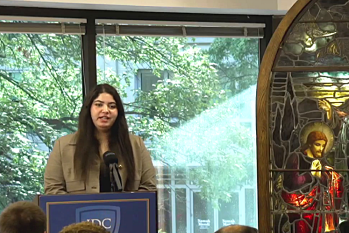
The assurance followed public criticism after FCCU Rector Dr Jonathan Addleton announced that provincial authorities had "forcibly taken over" the building.
In a Facebook post on June 11, Addleton said government officials had requisitioned Ewing Hall, evicted university security personnel and residents, and instructed the university to remove all movable property, including furniture, generators, and historical artifacts, within 24 hours.
"While we will look for legal remedies, this decision seems incomprehensible," Addleton wrote, noting that an engineering assessment commissioned by the university and completed in March 2026 had found the building to be structurally sound.
According to the rector, FCCU had previously vacated the hostel as a precautionary measure following safety concerns but had subsequently decided to renovate the building and return it to student use based on the findings of the engineering report.In a video statement released on the FCCU Facebook page on June 12, Addleton said the original lease for the property had been signed in 1915 and renewed multiple times, most recently extending well into the 2040s. He argued that the government's sudden repossession fueled fears that the building could be demolished despite the university's willingness to collaborate on preservation efforts.
"Under any scenario, discussions need to involve various stakeholders and interested parties, including Pakistan's minority communities for whom Forman means so much," he said.
The dispute quickly drew the attention of rights organizations and heritage conservation advocates.
Groups including, the Lahore Conservation Society Collective and the Human Rights Commission of Pakistan (HRCP), urged the Punjab government to reconsider any plans involving the acquisition, demolition, or irreversible alteration of Ewing Hall, describing it as a protected heritage structure listed under the Punjab Special Premises (Preservation) Ordinance, 1985.
While expressing support for government initiatives aimed at revitalizing Lahore’s historic areas, the Lahore Conservation Society Collective emphasized that development should be guided by internationally recognized conservation principles focused on restoration and adaptive reuse rather than demolition.
The group noted that the Neela Gumbad-Anarkali precinct represents an important symbol of Lahore’s shared cultural and religious history, encompassing landmarks such as Valmiki Mandir, Holy Trinity Church, Neela Gumbad, Mayo Hospital, FCCU’s original campus, and the old campus of Punjab University.
It proposed the establishment of a "Heritage and Interfaith Harmony Corridor" highlighting the contributions of Muslim, Hindu, Sikh, Christian, and colonial institutions to the development of modern Punjab.
Separately, HRCP expressed concern over reports of the forcible takeover, questioning the transparency of the process and warning against any action that could result in irreversible damage to a site of historical significance.
"The physical integrity of Ewing Hall must be protected at all costs," the commission said.Reverend Reuben Qamar, the moderator of the Presbyterian Church of Pakistan (PCP) and serving as the pastor in-charge of the FCCU Presbyterian Church, also condemned the hostile takeover of Ewing Hall by the Punjab government.
“I strongly condemn the forcible takeover of Ewing Hall by the Punjab Government, a historic hostel & an integral part of Forman Christian College since 1916. For more than a century, Ewing Hostel has provided thousands of students with a home that has nurtured academic excellence,” he wrote on X.
Rana Iftikhar Ahmad, a former Muslim student of FCCU, urged the Punjab government to preserve Ewing Hall “as a tribute to the thousands of alumni whose lives were shaped there and as an inspiration for generations yet to come.”“As a former President of FCC and a proud resident of Ewing Hall, I am deeply saddened and strongly opposed to any plan to demolish this historic landmark. Ewing Hall is far more than a building. It is a living symbol of FCC's heritage, traditions, and values. Generations of students have lived, learned, and grown within its walls, carrying its memories throughout their lives. For many of us, Ewing Hall represents friendship, character, leadership, and a profound sense of belonging.
“Demolishing Ewing Hall would mean destroying a priceless part of our collective history and emotional legacy. Once lost, it can never be replaced,” he wrote on Facebook.
As calls for the protection of Ewing Hall spread across social media, the Punjab government defended its actions, arguing that the lease had expired and that substantial rental dues remained unpaid.In its June 14 statement, the LHAR Board said the property had originally been leased to Forman Christian College in 1915 for use as a student hostel but had remained vacant and unused for its intended educational purpose since 2015.
The board further claimed that approximately 107 million Pakistani rupees (about $385,000) in outstanding rent had accumulated since 1975 despite repeated notices and reminders.
According to the board, the matter proceeded through a formal legal process. A show-cause notice was issued in March 2026 by the Punjab Board of Revenue, after which all concerned parties, including FCCU representatives and the Higher Education Department, were given an opportunity to present their positions.
The government said that following hearings, the Member (Colonies) issued an order on April 27 resuming possession of the land in favor of the provincial government.
Rejecting allegations that the building was at risk, the board stated: "We are not going to demolish Ewing Hall."
It added that both the Lahore Heritage Areas Revival Board and the Walled City of Lahore Authority are legally mandated to preserve and restore historic structures rather than destroy them.
The statement also emphasized that the action was based on legal and heritage management considerations and was not directed against any institution or religious community.
"We deeply respect Forman Christian College and its long history of service to Pakistan. We also deeply respect the minority communities who hold this institution close to their hearts," the board said.
FCCU, however, disputed several elements of the government's account.
In a statement issued on June 14, the university questioned the basis for rent claims covering the period between 1975 and 2003, when the institution was under state control following the nationalization of educational institutions by former Prime Minister Zulfikar Ali Bhutto.
The university also challenged the characterization of the building as unused, stating that Ewing Hall continued to function as a student hostel until the COVID-19 pandemic and was vacated only after structural concerns emerged.
FCCU said it maintained a hostel guardian at the site throughout this period and commissioned a comprehensive structural assessment at a cost of approximately five million Pakistani rupees ($18,000).
The March 2026 engineering report, the university said, supported plans for a full renovation that would allow the building to resume its original role as student accommodation.
University officials added that they had already been engaged in discussions with the Walled City of Lahore Authority regarding restoration of the building's historic façade.
Despite the dispute, FCCU said it remained committed to finding a cooperative solution.
"We look forward to a fair and equitable resolution that restores and maintains this historic property while also making hostel accommodation available for future generations," the university said.
The dispute has also renewed attention on the status of church-owned educational institutions nationalized during the 1970s.
FCCU was among hundreds of educational institutions taken over by the government in 1972. The university was returned to the management of the Presbyterian Church USA in 2003 during the administration of former military ruler General Pervez Musharraf, himself an FCCU alumnus.
However, concerns persist over the status of numerous other church-owned institutions that remain under government control. According to a research organization, 118 church-owned educational institutions were still under the Punjab government’s administration as of June 2020.