Scotland recorded its highest-ever number of abortions in 2024, with nearly 18,800 terminations logged in the latest government figures — a development that has drawn a response from a prominent evangelical advocate who says honest, compassionate conversations are increasingly urgent.
Public Health Scotland released the data May 26, showing 18,783 abortions performed last year — a 55% rise in demand since 2016. The termination rate stood at 17.6 per 1,000 women aged 15 to 44. In NHS Lanarkshire alone, the number of terminations was 86% higher than a decade ago.
The report also documented a sharp disparity based on economic status. Women living in Scotland's most deprived areas terminated pregnancies at a rate of 23.7 per 1,000 — roughly double the rate recorded in the least deprived areas, according to the Scottish Index of Multiple Deprivation.
Among other findings: 60.8% of all abortions involved medication taken at home, 277 terminations were recorded as disability-selective, and 209 occurred after 18 weeks of pregnancy. Four in 10 women who had an abortion in the reporting period had undergone at least one previous termination.
Dawn McAvoy, who leads Both Lives, a United Kingdom-wide initiative calling for the protection of both mother and unborn child, said current healthcare systems across the U.K. present abortion as the primary option for pregnant women.
"Across Holyrood, Stormont and Westminster governments are failing to support women to choose life for them and their unborn babies," said McAvoy, who also works with the Evangelical Alliance UK.
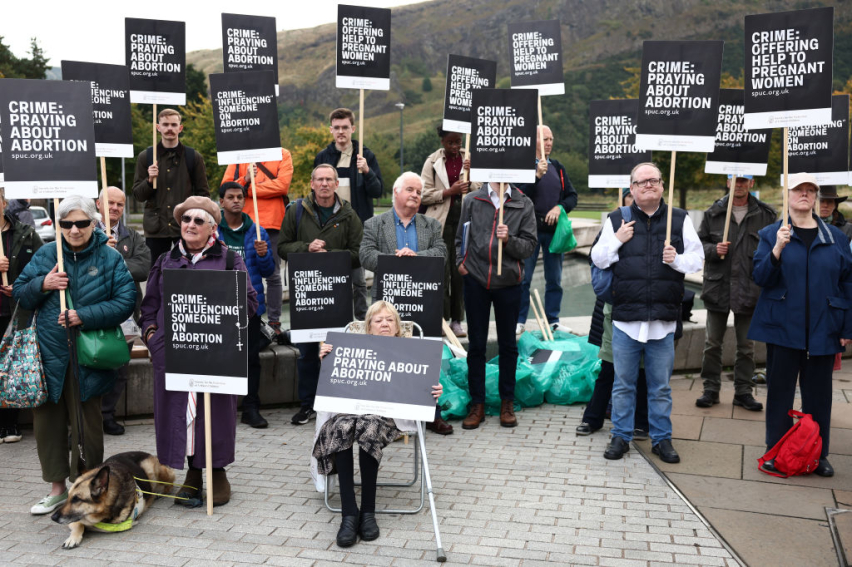
She addressed so-called buffer zones — areas around abortion facilities where conversations with patients are legally restricted — arguing that such restrictions remove a critical, last-minute opportunity for women to access support and reconsider their decision.
"The opportunity to speak with a woman outside an abortion clinic — to offer support, compassion, and practical help — may be the last chance for her to choose life," she said. "That matters because we know that, even at that stage, some women have been supported to continue their pregnancies."
But McAvoy also told Christian Daily International that the need for open dialogue extends well beyond clinic doorsteps. "There has always been a need to think beyond those specific locations and to foster compassionate, thoughtful, and honest conversations long before a woman faces a pregnancy crisis or begins considering abortion," she said.
With the majority of U.K. abortions now carried out through self-administered medication at home, McAvoy said that earlier, community-based support has become more critical than ever. "Those earlier conversations and sources of support matter more than ever for many women," she said.