On 18 December 2025, the Council of the European Union (EU) and European Parliament agreed provisionally on creating EU-wide "safe countries of origin" and "safe third countries" lists. Spain has responded and, here, the Spanish Evangelical Alliance explains our position on the new laws.
Making applications for asylum in Europe much harder to defend.
Countries of origin on the safe list include Bangladesh, Colombia, Egypt, India, Kosovo, Morocco and Tunisia. These nations will be considered generally safe for their citizens, therefore making applications for asylum in Europe much harder to defend, with faster (likely negative) application processing for migrants from these places.
Safe third countries are not the asylum seeker’s home country, but a country they passed through (or could be sent to) which the EU considers to be safe enough for them to live in or seek protection. These nations have yet to be identified.
This is part of a new Migration and Asylum Pact, a major overhaul of European Union migration rules aimed at managing irregular migration, asylum procedures, border control, and returns more uniformly across member states. It is intended to take effect from June 2026, potentially resulting in widespread deportations.
The EU proposal and Spain's response must be understood in their respective contexts.
Spain supports the pact in principle but is eager to implement aspects of it faster as it faces asylum migration pressures upon Spain’s territory, especially the Canary Islands. However, the EU proposal and Spain's response must be understood in their respective contexts.
On the one hand, there is asymmetry within the EU in terms of the pressure of immigrant arrivals, which is very different in Spain, Italy, and Greece than in northern Europe; and southern countries are calling for a redistribution of the charge of these immigrants throughout the EU.
On the other hand, polarization is becoming increasingly marked in Spain; the Spanish government is in minority, and it is becoming increasingly impossible to agree on a consensus regarding state policies on issues such as education, health, foreign policy or immigration policy. Therefore, the Spanish government's proposals to the EU do not have the internal agreement that an issue such as this would require.
A clear balance must be found between the desire to welcome immigrants and the realistic possibilities of doing so in a dignified manner.
As Evangelicals, we understand that a common policy based on widely shared principles is essential in this area. We therefore believe that a clear balance must be found between the desire to welcome immigrants and the realistic possibilities of doing so in a dignified manner.
In this regard, the words of Exodus 12:49 are clear: “The same law applies both to the native-born and to the foreigner residing among you.” Immigrants who are welcomed must have the same rights as nationals.
In line with this, the EU Charter of Fundamental Rights has been binding since 2007 (approved in 2000) and must be complied with in terms of human rights and equal rights for third-country nationals; EU Regulations 883/2004, 987/2009 and 1231/2010 stipulate equal rights for foreign nationals from third countries who have been residing in the EU with permanent residence for five years—or less in some specific cases.
At the same time, we are equally clear about the words of the previous verse (Exodus 12:48): “A foreigner residing among you who wants to celebrate the Lord’s Passover must have all the males in his household circumcised; then he may take part like one born in the land. No uncircumcised male may eat it.”
Translated to our present situation, immigrants have an obligation to fully integrate into our society by embracing our democratic values and criteria and respecting the dignity of every human being.
Resistance to integration is giving rise to xenophobic populism.
In this regard, there are clear differences between different immigrant groups in terms of their degree of respect for European values and democratic culture based on Christian values. This must be resolved not only as a matter of loyalty to the host country, but also because this resistance to integration is giving rise to xenophobic populism, which is becoming increasingly popular in European nations.
In our current context, it seems clear that immigration is helping to cover the population replacement rate deficit in Europe, which is very low due not only to low birth rates but also to the very high number of voluntary abortions. But it also seems evident that the flow of immigrants to Europe will exceed what can be absorbed.
Therefore, as Evangelicals, we promote:
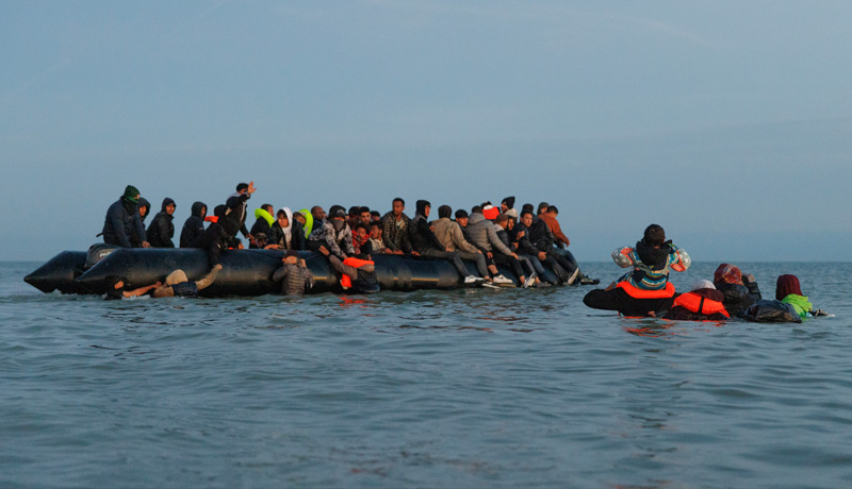
- Cooperation for the development and promotion of human rights, religious and political freedom in the countries of origin, which would prevent the need to emigrate and the tragedies at sea that arise from the “European dream”.
- The formation of a common policy in the sensitive area of immigration, and specifically halting illegal immigration.
It is precisely in the area of agreed immigration policy that the problem discussed in recent news reports arises. Unfortunately, there are a number of relevant areas of competence, such as the area of freedom, security and justice, and defense, in which, throughout the history of the EU from the Treaties of Paris and Rome, through the Treaty of Amsterdam to the Treaty of Lisbon and the current Treaty on European Union and Treaty on the Functioning of the European Union, it has not been possible to reach agreement between countries.
There is no guarantee that the third countries to which immigrants are eventually sent will protect their human rights.
Italy proposed a solution that sought to gain consensus, which we consider to be a positive objective. The Spanish government is reluctant in the sense that there is no guarantee that the third countries to which immigrants are eventually sent will protect their human rights.
This can be resolved by establishing within the agreements with these third countries strict mechanisms for supervision and control by the EU to ensure such protection.
However, it is not only important that this response to illegal immigration be realistic and feasible, but it must also be consistent with the objective pursued.
If that objective is simply to get rid of a problem, forgetting that we are talking about human beings, the implementation of that solution will not be humanizing. If the objective is to deter illegal immigration and prosecute it, but also to address the human drama that often lies behind it, then every effort must be made to ensure that the aforementioned supervision instruments guarantee respect for the human rights of illegal immigrants.
Finally, we must be very aware that illegal immigration sometimes hides tragedies and, in some cases, people in serious danger—such as Christians persecuted in their countries of origin (potentially designated "safe") for their faith, or political dissidents—have been forcibly returned to their countries, thus delivering them to persecution, imprisonment, torture or death.
We must never forget that human beings must be at the center of every political initiative.
On this issue, as with others, we Evangelicals understand that, even with agreed and reasonable rules, we must never forget that human beings must be at the center of every political initiative.
Dr. Xesús-Manuel Suárez-García is from Galicia (Northern Spain). He serves as the Secretary General of the Spanish Evangelical Alliance and member of the Executive Comitte of GBU España (IFES). He has authored various books and articles on Christian faith and political engagement.