
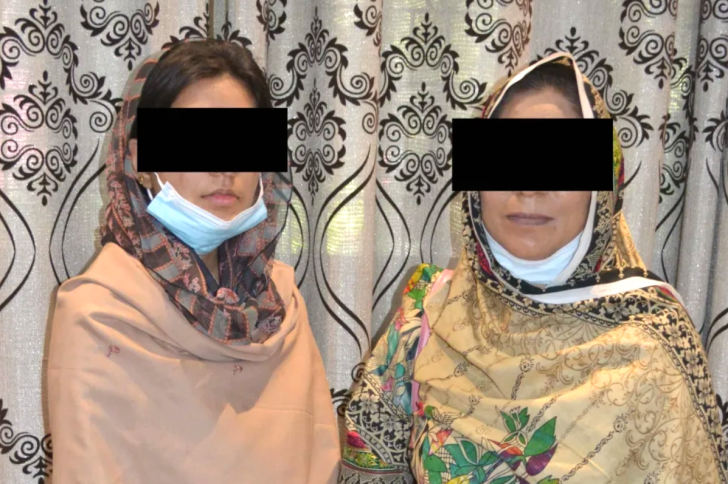
A court in Pakistan has acquitted two Catholic nurses who have been in hiding for nearly four years after they were charged with blasphemy in 2021, rights advocates said.
Nurse Mariam Lal and student nurse Navish Arooj were arrested on April 9, 2021, and charged under Section 295-B of Pakistan’s controversial blasphemy laws, which criminalize desecration of the Quran and carry a mandatory sentence of life imprisonment. The case stemmed from a complaint by a Muslim colleague at Civil Hospital Faisalabad in Punjab Province, who accused the two women of defiling a sticker bearing an Islamic inscription that was affixed to a hospital cupboard.
Although the two nurses were granted bail after spending five months in detention, they were forced into hiding for nearly four years due to security concerns while a sessions court conducted the trial.
Faisalabad Additional Sessions Judge Muzaffar Ali Anjum acquitted the two women on Nov. 29 but the verdict was not made public until recently due to fears for their safety. In acquitting them, the judge cited serious inconsistencies in witness testimony and a lack of credible evidence, according to Behram Francis, national coordinator of the legal and paralegal department at the Catholic rights group National Commission for Justice and Peace (NCJP).
“The court noted glaring contradictions in the prosecution’s case and ruled that the charge had not been proven beyond doubt,” Francis told Christian Daily International-Morning Star News, describing the allegations as baseless.
Catholic charity Aid to the Church in Need (ACN), which supported NCJP’s legal efforts, announced the acquittal after the deadline for filing an appeal had expired.
“Throughout the trial, the two women and their legal team endured threats from extremists, and the nurses were unable to work during this period,” ACN stated, adding that NCJP Faisalabad granted permission for the case to be made public once legal risks subsided.
Father Khalid Rasheed Aasi, director of NCJP Faisalabad, said the ruling was particularly significant because the trial court itself dismissed the charges on evidentiary grounds.
“In Pakistan, trial courts in blasphemy cases are often reluctant to acquit due to intense social pressure and security threats, and instead defer decisions to higher courts,” Aasi told ACN. “The independent and courageous decision of a district court in this case marks a rare and positive departure from prevailing judicial practice.”
Aasi said the families of the two women were relieved by the verdict but continued to feel vulnerable.
“Our struggle now continues for their secure future, rehabilitation and dignified reintegration,” he said. “Justice does not end with acquittal, it is fulfilled only when life can be rebuilt with dignity.”
Blasphemy accusations in Pakistan are frequently disputed by rights groups, who say the laws are often misused to target religious minorities or settle personal and economic disputes. Such allegations can trigger mob violence, vigilante killings and mass protests.
Human Rights Watch (HRW) stated in a June 9 report that Pakistan’s blasphemy laws are being systematically exploited to dispossess vulnerable communities and intimidate religious minorities.
“Blasphemy accusations are increasingly weaponized to incite mob violence, displace marginalized groups and seize their property with impunity,” HRW said in its 29-page report, “A Conspiracy to Grab the Land: Exploiting Pakistan’s Blasphemy Laws for Blackmail and Profit.”
The report documented multiple cases in which blasphemy allegations were used to target business rivals or coerce property transfers, noting that the laws’ vague and sweeping provisions enable abuse with little or no evidence.
HRW also criticized Pakistan’s criminal justice system for failing to hold perpetrators of mob violence accountable. Police often fail to protect the accused or conduct proper investigations, the group said, while political and religious figures accused of inciting violence frequently evade arrest or prosecution due to intimidation and lack of political will.
International watchdogs continue to rank Pakistan among countries with high levels of persecution of Christians. The country ranked eighth on Open Doors’ 2026 World Watch List of the 50 countries where it is most difficult to be a Christian. The report cited systemic discrimination, mob violence, forced conversions, bonded labor and gender-based abuses, noting that perpetrators often operate with impunity amid weak law enforcement and societal pressure.








