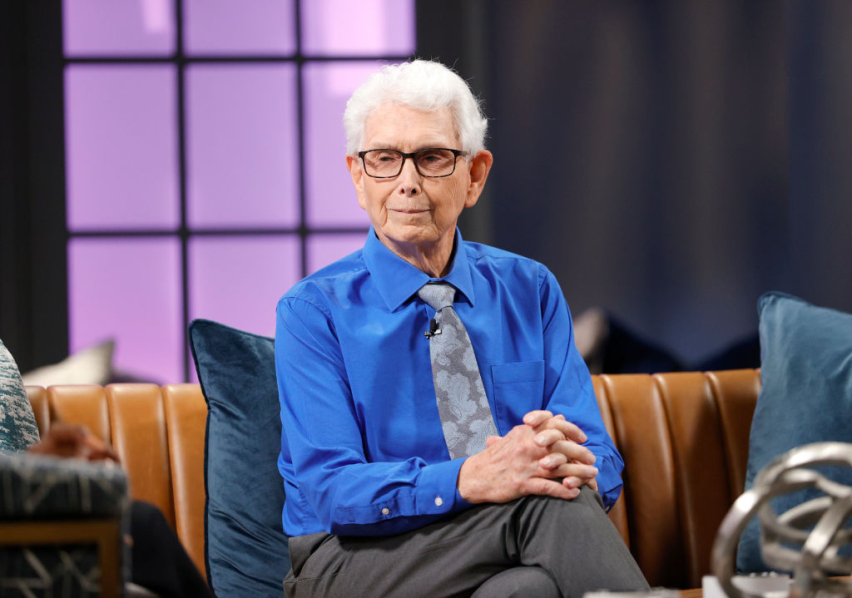
When Walt Heyer speaks about gender identity, he does so as someone who spent years trying to escape himself. The 85-year-old author and speaker remembers the confusion that marked his childhood long before he underwent what he later came to describe as a failed attempt to become someone else.
In an interview with Christian Daily International, Heyer repeatedly returned to one central conviction that he believes is key for pastors and Christian leaders to understand: people struggling with gender identity are often trying to flee pain, trauma or deep emotional distress rather than truly changing who they are.
“The most important thing for people to realize is that nobody can change their gender,” Heyer said. “A person can identify as a transgender. They can’t become one.”
Heyer, a former corporate executive who underwent gender reassignment surgery at age 42 and lived as a woman for eight years before later detransitioning, now speaks internationally about his experience. He has authored eight books and more than 60 articles and now serves as a senior fellow at the Family Research Council.
His latest book, “Embracing God’s Design,” co-authored with trauma researcher Jennifer Bauwens, seeks to equip pastors, families and churches to address questions surrounding gender identity through what the authors describe as biblical and psychological frameworks.
During the interview, Heyer spoke in direct and often very personal terms. He described childhood experiences that he believes shaped his later struggles with identity, beginning with his grandmother dressing him in girls’ clothing as a small child.
“Grandma cross-dressed me,” he said. “She caused the psychological emotional abuse. Then my dad physically abused me because of the dress, then because of the dress my uncle sexually molested me. And so all that before I was 10 years old.”
“Trying to escape some pain”
Heyer said those experiences left him deeply confused about himself for years. Looking back, he believes many people who identify as transgender are responding to unresolved wounds rather than pursuing a genuine change of sex.
“People who take on this identity called transgenderism are not trying to become a female or male,” he said. “They’re trying to escape some pain or discomfort or confusion they have.”
He linked his own eventual decision to undergo surgery to earlier trauma and fear.
“I’m sure this affected me in my later years, cutting off body parts so that no one would ever sexually molest me,” he said. “It was a protection against sexual molestation.”
Heyer stressed the importance of language, arguing that churches often adopt terminology that, in his view, reinforces confusion rather than helps people address underlying causes.
He objected strongly to the term “gender dysphoria,” describing it as a symptom rather than a diagnosis.
“If somebody has the diagnosis of gender dysphoria, then you need to change that to, ‘No, that’s a symptom of something down here that we need to work on,’” he said. “We need to find out what it is.”
The question he believes churches and counselors should ask people wrestling with identity issues is: “What caused you to not like who you are?”
“That’s the bottom line to this whole thing,” he said.
Churches facing fear and uncertainty
Heyer also addressed the uncertainty many churches feel when someone identifying as transgender begins attending services. He said congregations should avoid panic or hostility, but he also urged churches to respond intentionally rather than passively.
“The church needs to become educated in what language is appropriate,” he said. “Pastors and others really don’t know how to deal with it.”
Rather than leaving individuals isolated, he suggested churches appoint a trusted person — an elder, pastor or deacon — to walk alongside someone struggling with gender identity.
“You assign someone in the church to walk with that person,” he said. “Somebody that the church can fully trust and who’s got expertise in this.”
Heyer specifically suggested that individuals should write regular letters describing their struggles and spiritual journey and asking for prayer.
“Have that individual who’s struggling write a prayer letter every week,” he said. “Then they start praying for them.”
He described the process as a way of drawing people into community and spiritual accountability over time.
“And then over a period of time, can we expand this out to a larger group?” he said. “Can we have a home group that does this?”
For Heyer, willingness to engage in prayer is a significant indicator of whether someone is genuinely open to change.
“If you ask the person, ‘Can you write a prayer letter?’ and they say, ‘No, I’m not going to write a prayer letter,’ then you automatically tell them, ‘This is not a place we can help you,’” he said.
He believes it is important for the church to distinguish between what he described as a compliant posture toward faith and a defiant one.
“There’s the word compliant toward the fact that they believe Jesus Christ can restore their life and they’ll pray about it,” he said, contrasting it with “defiant where they don’t believe prayer works.”
Patience, prayer and long recovery
Heyer cautioned churches against expecting rapid transformation.
While he said some individuals may quickly rethink their identity after beginning deeper self-reflection, he described restoration as a process that often takes years.
“The expectation is maybe two or three years,” he said. “If they’ve struggled for 10 years, it might take them five years. If they struggled for 20, it might take them 10.”
Patience, he said, becomes essential.
“You have to be very patient,” he said. “This is where prayer really comes in handy and having them surrounded by people.”
At the same time, Heyer described moments where a single conversation triggered sudden reconsideration. “I’ve actually had people, when I’ve had that conversation, who struggled for many years,” he said. “Within a week, they’ve restored their life. They go, ‘This was nuts!’”
Still, he acknowledged that such cases are unusual. “Not everybody’s that healthy,” he said. “You can’t hit that all the time.”
What about pronouns?
Asked about how believers should deal with the sensitive issue of first names and pronouns, Heyer advised Christians not to use requested pronouns tied to a transgender identity. Instead, he suggested avoiding pronouns altogether or using surnames when necessary.
“When they say, ‘Use the pronouns,’ I can talk to you for three hours and never use a pronoun,” he said. “If they’re insisting on using the first name, then I insist on using their last name.”
He emphasized that, in his view, asking thoughtful questions can be more compassionate than affirming identity claims.
“The most caring, most wonderful thing you can do is get them to start having self-reflection,” he said.
Concerns about schools and culture
The conversation also touched on concerns many Christian parents face as discussions surrounding gender identity increasingly appear in schools and childhood environments in ways that previous generations did not experience.
Heyer expressed alarm about what children encounter in educational settings and said many parents feel they have little influence over those environments.
“Parents can’t control what goes on in school,” he said. “That’s the part that’s scary.”
He argued that schools often shape children more powerfully than family conversations once students enter those environments daily, and trans activists have been planting seeds in children’s minds.
“When they get to school, it’s their environment that they’re in that’s going to have bigger influence over their life,” he said.
Although he pointed to homeschooling or attending Christian schools as possible responses, he also acknowledged that many families around the world do not have that option.
The evidence has been there for decades
While the broader cultural debate surrounding gender identity has been developing for decades, Heyer emphasized that it has also been scientifically known for a long time that affirming someone’s gender identity and letting them transition is not a solution.
He referenced Dr. Charles Ihlenfeld, an endocrinologist and homosexual activist who, according to Heyer, administered hormone treatments to hundreds of men before later opposing gender transition procedures.
“He came out against it in 1979!” Heyer said. “He said, ‘I’ve worked with 500 of them, I’ve talked to them and I found too much unhappiness and too many have committed suicide.’”
Heyer also pointed to earlier media reporting questioning the effectiveness of sex-change surgeries. “We have all these data points,” he said. “It’s like the guy driving through a stop sign and finally he hits another car and crashes.”
Heyer argues it is important for churches to be informed in order not to be misled by mainstream narratives and trends that ignore the science and facts that have existed for a long time.
‘They never changed their gender’
Despite the emotional complexity surrounding gender identity, Heyer said he believes churches should approach the issue with hope rather than fear. Instead of viewing transgender-identifying individuals primarily through political or cultural conflict, churches should recognize pain, trauma and spiritual struggle.
For Heyer, the church’s task is not to treat gender identity struggles as uniquely strange or untouchable, but as part of the broader brokenness people experience in life.
“We work with people whose parents have died, people who’ve lost limbs, people who have cancer,” he said. “This is just something tragic that’s happened.”
“The most critical view of hope is that they never actually changed their gender,” he said. “We need to bring them back to how God created them.”
He emphasized that it is a scientific fact that men cannot become women and women cannot become men. Therefore, a person who underwent surgery has not in actuality changed their gender.
“No, they didn’t change them at the clinic,” Heyer said. “They don’t know how to do it. They’re not God.”
That perspective, he said, changes how congregations respond.