Leaders from across Asia recently convened for a webinar organized by the Asia Evangelical Alliance to address one of the most sensitive issues facing churches in the region: how to respond biblically and pastorally to homosexuality.
Participants included theologians, youth leaders and pastors from multiple countries across Asia. Because of the sensitive nature of the topic and the political and cultural contexts in which some participants serve, names of speakers are withheld in this report.
The discussion focused primarily on homosexuality rather than the broader range of LGBTQ issues and explored biblical interpretation, pastoral care and discipleship in churches across the Global South.
One theologian opened the discussion by acknowledging that the issue is increasingly unavoidable for churches.
“We are Asian theologians wrestling with questions that are not abstract for us,” he said. “These are pastoral realities within our own communities.”
A live poll during the webinar confirmed the issue’s growing relevance. A majority of participants indicated they had already ministered to young people who identified as LGBTQ, while many others said youth in their churches had asked questions about sexuality in the past year.
Even in societies often perceived as conservative, church leaders said young people are increasingly encountering the topic through school, social media and global cultural influences.
“Young people are asking these questions,” one youth leader said. “If the church does not address them, they will look elsewhere for answers.”
Shared commitment to Scripture amid internal differences
One of the most notable aspects of the discussion was the presenters’ explicit acknowledgment that evangelicals themselves do not speak with one voice on homosexuality.
At the same time, speakers stressed that disagreements within evangelicalism should not be framed as disputes over biblical authority.
“This is not a matter of some taking the authority of the Bible more seriously than others,” one theologian said. “Among us, there is a shared commitment to the authority of Scripture that is unquestioned.”
He said differences arise from interpretation and theological synthesis rather than from rejection of the Bible.
“Faithful Christians who confess the authority of Scripture have arrived at different conclusions after careful study,” he said.
Speakers cautioned against reducing the debate to ideological labels.
“The categories of ‘liberal’ and ‘conservative’ often obscure more than they clarify,” one presenter said. “They reduce complex theological discernment into slogans.”
Despite those differences, presenters emphasized the need to maintain unity within the church.
“Unity does not require uniformity,” one said. “But it does require humility and patience.”
Biblical framework and traditional evangelical interpretation
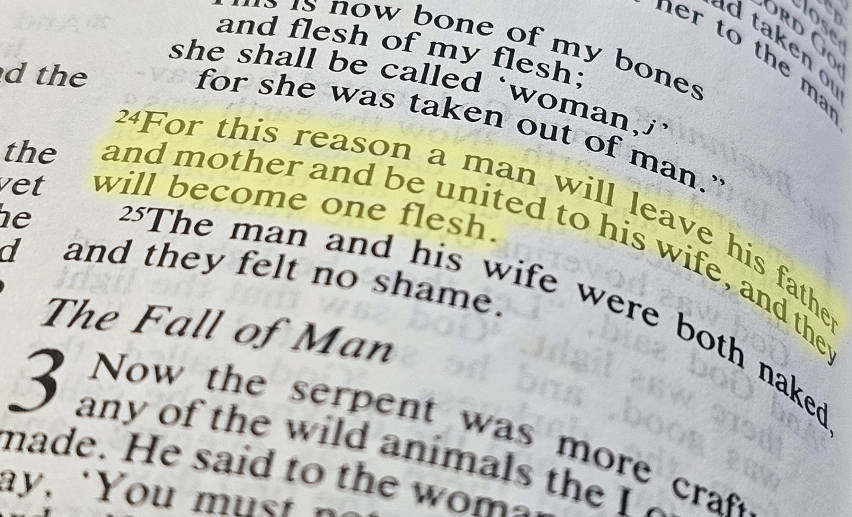
Presenters outlined what they described as a traditional evangelical understanding of biblical teaching on homosexuality, which emphasizes that sexual activity between male and female is part of God’s design in creation (Gen. 1:27-28; Gen. 2:24).
A key starting point was distinguishing between homosexual orientation and same-sex sexual activity.
Homosexual orientation was defined as emotional, romantic or sexual attraction to people of the same sex, while same-sex sexual activity refers to sexual relations between individuals of the same sex.
“The Bible does not explicitly discuss homosexual orientation,” one presenter said. “It addresses sexual activity.”
The speaker noted that the concept of sexual orientation as a psychological identity category is relatively modern.
Biblical texts often cited in evangelical discussions include Genesis 19, Leviticus 18 and 20, Romans 1, 1 Corinthians 6 and 1 Timothy 1.
“In these passages, the Bible consistently presents a negative view of same-sex sexual activity,” the presenter said.
At the same time, the discussion acknowledged that some Christian scholars interpret these passages differently.
“These interpretations argue that certain biblical prohibitions may be culturally bound or address specific forms of exploitation rather than consensual relationships,” one theologian explained.
Others propose what is sometimes called a “redemptive trajectory” approach, suggesting that biblical ethics develop over time.
The presenters did not explore those interpretations in detail but emphasized that such debates exist within contemporary Christian scholarship.
“Serious Christians have studied these texts and reached different conclusions,” one speaker said.
Nevertheless, the presenters said that within traditional evangelical interpretation, heterosexual marriage remains the normative pattern presented in Scripture.
“Throughout the Bible, marriage is consistently described as the union of a man and a woman,” one presenter said.
This sacred union between man and woman is God’s original design for human sexuality, the presenter said, as expressed in the WEA Seoul Declaration.
Orientation, sin and the fallen world
Speakers addressed the theological question of how homosexual orientation should be understood within a Christian framework.
Because the Bible addresses sexual behavior rather than orientation as a psychological category, presenters described orientation as part of the broader brokenness of the fallen world rather than as deliberate rebellion.
“Homosexual orientation is not something people freely choose,” one theologian said. “Many people testify that they did not choose these attractions.”
He said Christians should therefore avoid describing people who experience same-sex attraction as active sinners simply because of their orientation.
“They are not necessarily active sinners in that aspect,” he said. “They find themselves in a difficult position within a fallen world.”
At the same time, speakers said that evangelical theology traditionally does not treat homosexual orientation as morally neutral or part of God’s original design.
“If same-sex sexual activity is understood as contrary to God’s design, then orientation toward that activity reflects the brokenness of creation,” one presenter said.
He added that this framework should not lead Christians to single out homosexuality as uniquely sinful.
“The entire world is fallen,” he said. “We should not magnify homosexuality while ignoring other sins such as pride, injustice or greed.”
Historical reflection and the church’s record
The discussion also included reflection on how Christian communities have historically treated people who identify as homosexual.
One presenter noted that same-sex relationships have been documented in many civilizations throughout history, including in Asia.
At the same time, he acknowledged that Christian institutions have sometimes contributed to discrimination or criminalization.
“Condemnation and criminalization have brought harm,” he said. “The church has sometimes been part of that.”
He said acknowledging that history does not require abandoning biblical convictions.
“It does not mean we must say that same-sex sexual activity is good,” he said. “But it does mean we must stop repeating patterns of harm.”
Speakers emphasized that theological disagreement should never justify dehumanizing treatment.
In the present times, one speaker mentioned, discrimination is also taking place against those who hold to the traditional evangelical view.
“Whatever convictions we hold, people deserve dignity,” one presenter said.
Science, trauma and the limits of explanation
The webinar also addressed scientific and psychological research on sexual orientation.
Speakers said current research does not provide a definitive explanation for why some people experience same-sex attraction.
“Biological and psychological studies can suggest correlations,” one presenter said. “But there is no definitive proof of a single cause.”
Because of that uncertainty, speakers urged caution in making sweeping claims.
“We should be careful about saying we know exactly why this happens,” the theologian said.
Another speaker noted that attempts to forcibly change sexual orientation have often caused harm.
“There have been efforts to change orientation through therapy or spiritual pressure,” he said. “But these approaches have often damaged people rather than helped them.”
Personal testimony and identity in Christ
During the webinar, one Christian leader shared his own story of experiencing same-sex attraction after childhood sexual abuse.
He said the experience shaped his understanding of sexuality and identity.
“It was not something I chose,” he said. “It developed in the context of trauma.”
He described years of shame and confusion, including periods when he considered suicide.
“Many discussions remain theoretical,” he said. “But for someone walking through this, it is deeply personal.”
He said that after becoming a Christian, his struggles did not disappear immediately.
“I thought when I gave my life to Jesus everything would change overnight,” he said. “But it did not.”
Instead, he described gradual healing through prayer, mentorship and community.
“Transformation was not about willpower,” he said. “It involved dealing with trauma and rediscovering identity.”
He said the most important shift came when he began to understand his identity in Christ.
“The miracle was not simply that my circumstances changed,” he said. “The miracle was that my identity was restored.”
Discipleship and pastoral challenges
Participants discussed how churches should disciple believers who experience same-sex attraction.
Speakers emphasized that pastoral care requires patience and long-term relationships rather than quick solutions.
“Discipleship is a journey,” one leader said. “People rarely change instantly.”
Several practical questions were raised, including how churches should respond when people in same-sex relationships seek leadership roles or when young believers struggle with gender identity.
One presenter said churches must balance doctrinal teaching with pastoral care.
“We must hold theological conviction,” he said. “But we must also walk with people in the process.”
Another leader said churches should avoid reactive responses.
“We tend to react when crisis comes,” he said. “Instead we need to prepare our communities ahead of time.”
Shame culture and the Asian context
Several speakers highlighted the importance of cultural context, particularly the influence of honor and shame dynamics in many Asian societies.
“In our cultures, shame is powerful,” one leader said.
He said fear of shame often prevents people from speaking openly about sexual struggles.
“If the church responds with humiliation, people will hide,” he said.
Because of this dynamic, presenters urged churches to cultivate environments where questions can be asked without fear.
“Listening is critical,” one theologian said. “People must feel safe to speak.”
At the same time, speakers stressed that creating a welcoming environment does not mean abandoning biblical convictions.
“We welcome people,” one presenter said. “But we do not affirm every behavior.”
Global implications
The webinar reflects broader conversations taking place across the global evangelical movement.
For many years, debates over homosexuality were seen primarily as issues affecting Western churches. Increasingly, however, churches in Asia, Africa and Latin America are confronting the same questions.
“Globalization means these conversations are no longer confined to one region,” one presenter said.
Participants said churches in the Global South must address these issues within their own cultural frameworks rather than simply importing Western debates.
“We must think from within our own contexts,” one speaker said. “But we also remain part of the global body of Christ.”
A continuing conversation
Speakers said the discussion represents only the beginning of a longer process of theological reflection and pastoral preparation.
“Our task is not simply to win arguments,” one presenter said. “Our task is to make disciples.”
That challenge, participants said, requires both biblical clarity and Christlike compassion.
“If we speak truth without grace, we misrepresent Christ,” one speaker said. “If we speak grace without truth, we misrepresent Christ.”
For churches across Asia and the wider Global South, leaders said the challenge now is learning how to hold those commitments together as they respond to one of the most complex pastoral questions facing the global Church today.