
When Michelle Bader Ebersole became a widow at 41, she quickly discovered something that surprised her: although widows are frequently mentioned in the Bible, few churches seemed equipped to support them beyond the funeral.
Speaking in an interview with Christian Daily International, Ebersole said her experience navigating grief while raising three teenage children revealed a gap in how many congregations respond to widowhood.
Left to rebuild life after her husband’s death, she began asking pastors and churches in her area a simple question: How does your church support widows?
The answer was often the same.
“They said, ‘No, we don’t have a widows group, but you can start one,’” Ebersole recalled. “But I was a brand-new widow. I was in no place to start one.” 
That question eventually led her to launch a nonprofit ministry called Widow Goals, which now connects widows across North America through local support groups, retreats, podcasts and church resources aimed at helping congregations respond more intentionally to loss.
For Ebersole, the ministry grew out of personal grief but has become a broader effort to challenge what she sees as a persistent gap in church care.
“Widows are mentioned 103 times in the Bible,” she said. “Yet so few churches are supporting widows.”
A life interrupted by cancer
Ebersole’s journey into widow ministry began decades earlier, shortly after she married her husband, Luke.
He was diagnosed with bone cancer when he was 25, only a few months after their wedding. She was 24. The diagnosis came at the same time they learned they were expecting their first child.
Within months, Luke had his leg amputated where the cancer had formed. The couple pressed forward with family life despite the health crisis. Over the next few years they welcomed three children in rapid succession.
Life became a balancing act of parenting, medical treatments and financial adjustments after Luke went on disability.
“We had three kids in three and a half years,” she said. “Life was crazy.” 
For more than a decade, the family adapted to the realities of cancer survivorship. But 13 years after the initial diagnosis, the disease returned — this time in Luke’s lungs. The cancer was terminal.
The couple told their children, then in early adolescence, that they would fight the illness together. Luke initially did not want to undergo chemotherapy again but eventually agreed.
They focused on spending time together as a family while they could.
“He tried a lot of things,” Ebersole said. “But it was about quality of life at the end.” 
Luke died on May 23, 2020, during the early months of the COVID-19 pandemic.
Although the timing added complexity, it also meant the family was together at home during his final weeks.
“The kids were home from school,” she said. “We had lots of family time.” 
A sudden sense of isolation
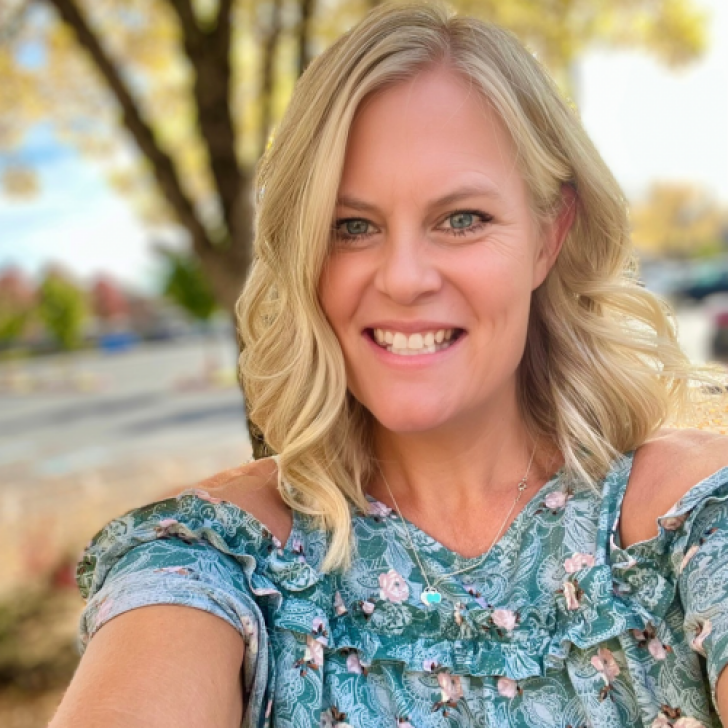
In the months after Luke’s death, Ebersole found herself confronting a reality she had never anticipated.
Despite having a supportive church community, she struggled to find people who truly understood what it meant to lose a spouse at midlife.
“I found myself a 41-year-old widow who didn’t know other people like me,” she said. 
A local widow eventually reached out to her and the two formed a close friendship. But when Ebersole began searching for structured support groups through churches in the area, she found few options.
Many congregations provided practical help immediately after a death — meals, condolences, assistance with funeral arrangements — but little ongoing care once the initial crisis passed.
“The pastor did speak at his celebration of life,” she said. “But after that, that’s it.” 
That pattern, she believes, reflects a common problem.
“We need to follow up,” she said. “Three months later, six months later, a year later.” 
For many grieving spouses, she said, the most difficult moments arrive well after the funeral, when daily routines resume and the absence of a partner becomes more deeply felt.
A ministry for widows
Out of that experience, Ebersole began gathering widows in her community for informal monthly meetings.
What began as a small local gathering eventually grew into a nonprofit organization aimed at helping widows not only cope with grief but rebuild their lives.
The ministry’s name, Widow Goals, reflects that focus.
“It’s widows helping widows not only survive but thrive,” she said. 
Today the organization provides resources for local support groups, including a book and workbook Ebersole wrote based on her experience navigating loss.
The program addresses practical and emotional topics such as rebuilding routines, managing grief, raising children alone and reentering social spaces.
One chapter explores a reality that many widows face but rarely discuss openly: the possibility of dating again.
Another addresses what Ebersole calls “solo parenting,” a term she uses to distinguish widowed parents from those who are divorced or single for other reasons.
To help churches launch their own support groups, she also developed a leader’s guide designed so that even people without personal experience of widowhood can facilitate conversations.
“Even if there wasn’t a widow in the church ready to lead,” she said, “anybody could have picked up that guide and done it.” 
Challenging assumptions about widows
One of the most common misconceptions Ebersole encounters is the assumption that widows are typically elderly.
Before losing her husband, she said, she shared that assumption.
“I thought widows were all in their seventies and eighties when I was 41,” she said. 
Through her ministry, she has connected with widows in their twenties, thirties and forties — many raising children while grieving.
The shared experience often leads to strong bonds.
“When widows meet each other, they get it immediately,” she said.
At the ministry’s recent retreat in Dallas, more than 50 widows attended, forming friendships that continued long after the event ended.
“The biggest thing that happened was the friendships that were made,” she said. “They can’t wait until the next retreat.” 
Understanding grief beyond the “stages”
Another part of Ebersole’s work involves educating churches and communities about grief.
Many people are familiar with the popular concept of the “five stages of grief,” but she says that model often creates unrealistic expectations for those experiencing loss.
“Most people think there are these stages of grief,” she said. “But grief actually comes in waves.” 
The idea of stages was originally developed by psychiatrist Elisabeth Kübler-Ross to describe the experiences of people facing their own deaths, not necessarily those grieving someone else.
Over time, however, the framework became widely applied to bereavement.
In reality, Ebersole said, grief often appears unpredictably.
“You can be doing anything, and then something hits you and you’re on the floor crying,” she said. 
Acknowledging and processing those emotions is an essential part of healing, she added.
“The best thing you can do is feel it,” she said.
A biblical lens on widowhood
For Ebersole, the work of supporting widows is also rooted in biblical teaching.
Scripture repeatedly refers to God as a defender of widows and the fatherless — passages that took on new meaning after her husband’s death.
“The first time I read that, I thought, ‘That’s me and my kids,’” she said. 
Without the daily presence of her husband, she said she found herself relying more deeply on faith when making decisions about parenting, finances and the future.
“God literally became my husband every time I needed help with something,” she said. 
Those experiences strengthened her conviction that widow care should play a more visible role in church life.
Navigating remarriage and expectations
Another sensitive topic in widow ministry is remarriage.
Within Christian communities, widows sometimes face conflicting expectations — pressure to remain single out of loyalty to their late spouse, or pressure to remarry after a certain period of time.
Ebersole said both reactions can be harmful.
“Everybody’s journey is different,” she said.
She eventually remarried, but only after she felt that joy and emotional healing had begun to return.
“Joy came before my next husband,” she said. “He’s not the reason I have joy. He’s a bonus.” 
To explain how love can exist for both a late spouse and a current one, she often uses an analogy from parenting.
“If you have one child, you think you could never love another one as much,” she said. “Then you have another child, and your heart expands.” 
The same, she said, can be true after widowhood.
Widowed Too Soon
About 11 months after her husband’s death, Ebersole launched a podcast called Widowed 2 Soon, initially co-hosted with a widower she met through an online support group.
The podcast began as a way to share perspectives from both widows and widowers raising children after losing a spouse.
Over time it evolved into a platform where she interviews widows from around the world about their experiences.
The stories, she said, often reveal how deeply isolation can affect grieving spouses.
Some listeners have told her the program helped them during moments of despair.
“I’ve had people say, ‘I was thinking about ending my life until I found your podcast,’” she said. 
Responding to a global issue with one person at a time
Although the ministry began in the United States, Ebersole increasingly sees widow care as a global issue.
Through online groups and international connections, she has encountered widows from many different cultural and church backgrounds.
Her long-term vision is to equip churches worldwide with practical tools for supporting grieving spouses.
“My dream is to get this into churches all over the world,” she said. 
The approach, she believes, does not require large programs or budgets.
Sometimes the most meaningful gestures are simple: remembering important anniversaries, sending a message on a difficult day or creating a small gathering where widows can connect with others who understand their loss.
For churches unsure where to begin, her advice is straightforward.
“Just ask your pastor: How do we support widows?” she said. 
From there, she believes, meaningful ministry can grow — often starting with just one person willing to listen.