Opinion Articles

  • In the aftermath of Nepal's natural disaster

    In the aftermath of Nepal's natural disaster

    The recent flood from the Himalayas through Nepal to India, shared via social media, stunned the world. Relief organizations mobilized to capitalize on the catastrophe and the Nepali government collected a great deal of financial aid to assist but relief action was slow. Whereas, NGOs and churches competed for the donor dollar while families grieved.

  • From AI-Native ministry to human-centered learning ecosystems

    From AI-Native ministry to human-centered learning ecosystems

    In response to an AI-Native ministry strategy, this opinion suggests that AI must remain as infrastructure underneath a mutual learning ecosystem, supporting a "ministry with" posture directed towards human flourishing, rather than as its focus or a driving force. The focus, which AI serves must remain people, relationships, communities, local knowledge, theological reflection, and human discernment.

  • Proposing the AI-Native ministry strategy

    Proposing the AI-Native ministry strategy

    An AI-Native Ministry asks, “What is the necessary human element we can serve?” and AI comes along to implement that vision as part of the ministry's core infrastructure rather than a set of tools external to the organization. This is not without its risks but wise Christian leaders must be prepared for the shift that is already upon us.

  • Celebrating the steadfast faith of a people in a disappearing land

    Celebrating the steadfast faith of a people in a disappearing land

    A small island nation with a stable democracy, a high degree of freedom, and a majority Christian population faces a catastrophic threat because of the actions of others in the world. As sea levels rise, the world has a responsibility to ensure that the islands and the people who have flourished on them for more than 2,000 years (over 120 years as Christians) do not disappear.

  • God's bigger mission requires showing up differently when crossing cultures

    God's bigger mission requires showing up differently when crossing cultures

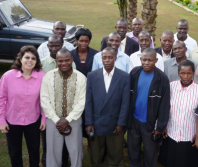
    The mission isn’t ours, it is God’s. But those who hold power in the missions community (usually those holding the purse strings and prioritizing activities) too easily forget that. To reach nations with the gospel requires a posture change. Instead of doing missions through, with, or by sending indigenous leaders, expatriate involvement must show up differently and now be willing to come under indigenous leadership.

  • The gospel in the context of Taiwan's ghost month

    The gospel in the context of Taiwan's ghost month

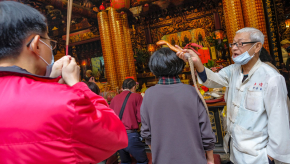
    For a followers of folk religion in Taiwan, who understand religion as transactional with individual spirits, forgiveness of sins may not immediately sound like an answer to the practical fears that emerge during Taiwan's Ghost Month. Yet the gospel can reframe the human problem without ignoring the fear that brought the person to the conversation. Our deepest problem is not that we have failed to satisfy every unseen power. It is that we are sinners before a holy God.

  • Our mission among the nations is rooted in relationship

    Our mission among the nations is rooted in relationship

    Disciples are made to need one another, and in their interdependence they reveal God's glory. Collaboration with those who follow Christ from other backgrounds is a powerful witness in this regard. By living and ministering well together the lives of those who don't know Jesus will be impacted by a community of spiritually transformed, self-giving people who demonstrate a love that is not of this world.

  • The parable of arrivals

    The parable of arrivals

    After a grueling travel journey we can get to our destination and not actually feel welcome. So it can be with arriving at a church. A sign can welcome people to a building but only people can welcome people into a community. Jesus was extraordinary at making people feel welcome.

  • The chemical reaction that induces awe

    The chemical reaction that induces awe

    The controlled use of fire helped develop our humanity. Gathering around fires for warmth and storytelling, singing, teaching, and spiritual rituals became a metaphor for inspiration, spirit, and knowledge. Fire extended human activity into the night with profound implications for learning, productivity and culture. It is worthy of awe.

  • Holy Land 101: What every Christian should understand

    Holy Land 101: What every Christian should understand

    The Holy Land is not merely a collection of sacred sites or ancient stories. It is not an abstract concept but a living homeland shared by peoples carrying different histories, identities, wounds, and hopes. Christians around the world don't need to imagine what the Holy Land is like, we can learn from those who live there today. Here is a corrective starting point for us from someone whose family has lived there for millennia.

Latest

  • God's bigger mission requires showing up differently when crossing cultures

    God's bigger mission requires showing up differently when crossing cultures

    The mission isn’t ours, it is God’s. But those who hold power in the missions community (usually those holding the purse strings and prioritizing activities) too easily forget that. To reach nations with the gospel requires a posture change. Instead of doing missions through, with, or by sending indigenous leaders, expatriate involvement must show up differently and now be willing to come under indigenous leadership.

  • The gospel in the context of Taiwan's ghost month

    The gospel in the context of Taiwan's ghost month

    For a followers of folk religion in Taiwan, who understand religion as transactional with individual spirits, forgiveness of sins may not immediately sound like an answer to the practical fears that emerge during Taiwan's Ghost Month. Yet the gospel can reframe the human problem without ignoring the fear that brought the person to the conversation. Our deepest problem is not that we have failed to satisfy every unseen power. It is that we are sinners before a holy God.

  • Our mission among the nations is rooted in relationship

    Our mission among the nations is rooted in relationship

    Disciples are made to need one another, and in their interdependence they reveal God's glory. Collaboration with those who follow Christ from other backgrounds is a powerful witness in this regard. By living and ministering well together the lives of those who don't know Jesus will be impacted by a community of spiritually transformed, self-giving people who demonstrate a love that is not of this world.

  • The parable of arrivals

    The parable of arrivals

    By J.John

    After a grueling travel journey we can get to our destination and not actually feel welcome. So it can be with arriving at a church. A sign can welcome people to a building but only people can welcome people into a community. Jesus was extraordinary at making people feel welcome.

  • The chemical reaction that induces awe

    The chemical reaction that induces awe

    The controlled use of fire helped develop our humanity. Gathering around fires for warmth and storytelling, singing, teaching, and spiritual rituals became a metaphor for inspiration, spirit, and knowledge. Fire extended human activity into the night with profound implications for learning, productivity and culture. It is worthy of awe.

  • From a persecuted family to helping other to trust in Jesus

    From a persecuted family to helping other to trust in Jesus

    Zeeneta has experienced things in life that seem almost unimaginable as part of a family that was persecuted for their faith. Her parents' resilience modeled a resilience that Zeeneta now encourages others to have, especially women. The young girl that worried about not having a future is now passing on a powerful legacy.

  • Holy Land 101: What every Christian should understand

    Holy Land 101: What every Christian should understand

    The Holy Land is not merely a collection of sacred sites or ancient stories. It is not an abstract concept but a living homeland shared by peoples carrying different histories, identities, wounds, and hopes. Christians around the world don't need to imagine what the Holy Land is like, we can learn from those who live there today. Here is a corrective starting point for us from someone whose family has lived there for millennia.