Faith-based health providers in Africa are restructuring their funding strategies as global aid patterns shift, with leaders in Kenya and Zambia saying the changes are forcing innovation while exposing structural differences in national health systems.
Officials from the Christian Health Association of Kenya (CHAK) and the Churches Health Association of Zambia (CHAZ) told Christian Daily International that recent policy shifts tied to U.S. foreign assistance under Donald Trump have accelerated a transition many experts had long predicted: a gradual move away from donor dependence toward locally driven financing.
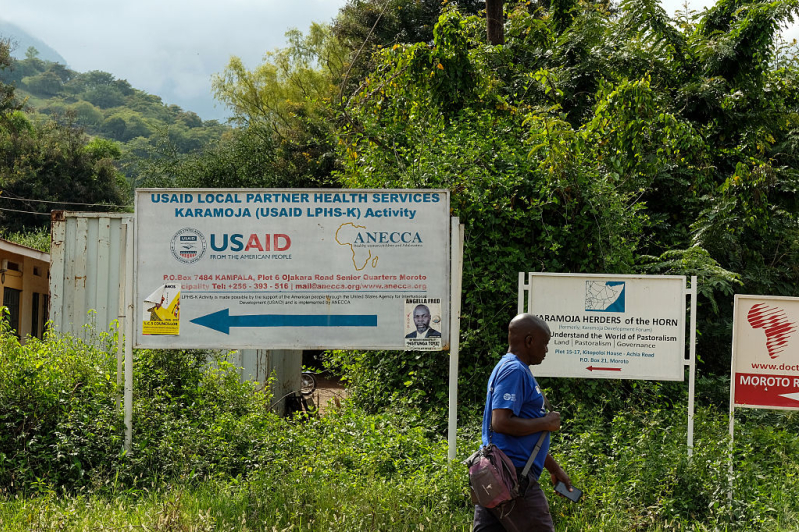
In early 2025, President Donald Trump signed policies that dramatically reduced U.S. foreign assistance, including deep cuts to the United States Agency for International Development (USAID), the U.S. government’s main global development and health agency.
Many aid programs were canceled or frozen, and thousands of USAID staff were laid off. Critics said about 80% of foreign aid projects worldwide were shelved as the agency was dismantled and responsibilities shifted to other government offices.
In July 2025, the U.S. Congress passed the Rescissions Act of 2025, which rescinded about $7.9 billion in international assistance funding, much of it from USAID budgets. This included cuts to health programs, humanitarian aid, and development initiatives globally.
USAID had previously been a backbone for health programs in Africa, from HIV/AIDS treatment to malaria prevention and maternal-child health services. Studies estimate that cuts and the dismantling of USAID threatened millions of lives by reversing progress in disease control.
Research suggests that health funding could drop up to 60% from its peak in recent years and that losing USAID support - particularly for HIV/AIDS programs - could increase new infections and deaths.
Dr. Chris Wekesa Barasa, the General Secretary and Chief Executive Officer of CHAK said the warning signs had been visible for years but were largely ignored across the continent.
“For the last 20 years… we started talking about transition of HIV funding and global aid to developing countries. But I think we never took it seriously,” he said. “The telltale signs were there.”
When funding disruptions came, he said, organizations were forced into rapid reassessment. “It made us go back to the drawing board and start thinking, oh, it’s actually possible that we don’t have money.”
He described the shift as both a shock and an opportunity. While some programs struggled, he said the pressure pushed faith-based providers to rethink sustainability, efficiency and data use.
The impact has varied sharply between countries
Kenya’s faith health network historically depended heavily on donors. CHAK says its member facilities account for about 11 percent of health institutions but serve roughly 40 percent of the population, giving them outsized influence in care delivery.
Zambia operates under a different model shaped by decades of government partnership. Karen Sichali-Sichinga, the Executive Director at CHAZ said that from independence, the state integrated mission hospitals into the national system.
“For us, right from the beginning… the policy was that health centers were free,” she said, explaining that the government pays salaries for health workers in mission hospitals and supplies essential medicines.
That arrangement means Zambia’s faith facilities face fewer operational shocks when donor funding shifts. Sichinga described government support as a major stabilizer. “If they’re going to deploy health workers and pay their salary to mission hospital, really, I mean, that is commendable,” she said.
She cautioned, however, that directing foreign aid only through governments risks overlooking key service providers.
“The health system in Zambia consists of the government, the private sector, the faith sector and traditional healers,” she said. “When a partner just focuses on one… then they start to lose a lot of critical services that are provided by these others.”
In Kenya, funding uncertainty has accelerated efforts to redesign programs around local ownership.
Barasa pointed to CHAK’s county mentorship and transition model, which trains county governments to run health programs independently. Pilots in four counties showed major savings and efficiency gains.
“We actually realized that we were having cost efficiencies,” he said, estimating savings of about 40 percent and workforce efficiency improvements near 50 percent.
The model integrates services instead of separating them by disease. “You’re looking at them holistically… not just as HIV infected mother,” he said.
The approach has drawn international attention. Barasa said global partners have asked other implementing organizations to adopt similar frameworks as donor funding declines.
Sichinga said Zambia’s experience highlights another lesson: funding flows matter as much as funding levels.
She said past aid programs sometimes sent large sums to foreign intermediaries instead of local providers. “You’d see an influx of U.S.-based NGOs… most of the money was going to them,” she said. “Very little money was trickling down.”
If new funding strategies aim to reduce intermediaries, she said, they could improve efficiency, but only if they recognize existing local networks.
“These (local networks) have been there and they have proven that they can deliver,” she said of faith health systems across Africa. “If you’re looking for people who are experienced in rural communities, it’s the mission hospitals.”
Both leaders agreed that Africa must prepare for a future with less foreign aid regardless of political cycles in donor nations.
In place of the old USAID model, the Trump administration introduced what it called the “America First Global Health Strategy,” emphasizing direct government-to-government (G2G) health agreements with countries like Uganda, Kenya and Zambia. These deals commit the U.S. to multi-year health support tied to promises from partner countries to increase their own health spending.
Even with the new US funding model, Sichinga urged stronger regional health institutions and locally led research. “We need home-grown solutions,” she said. “We cannot continue looking up to the north.”
Barasa echoed that message, saying CHAK is investing in digitization, predictive data systems and new financing models to strengthen resilience. The shift, he said, ultimately benefits patients if handled well.
“At the end of the day, the patient benefits by getting access to cost effective and quality health care services,” he said.