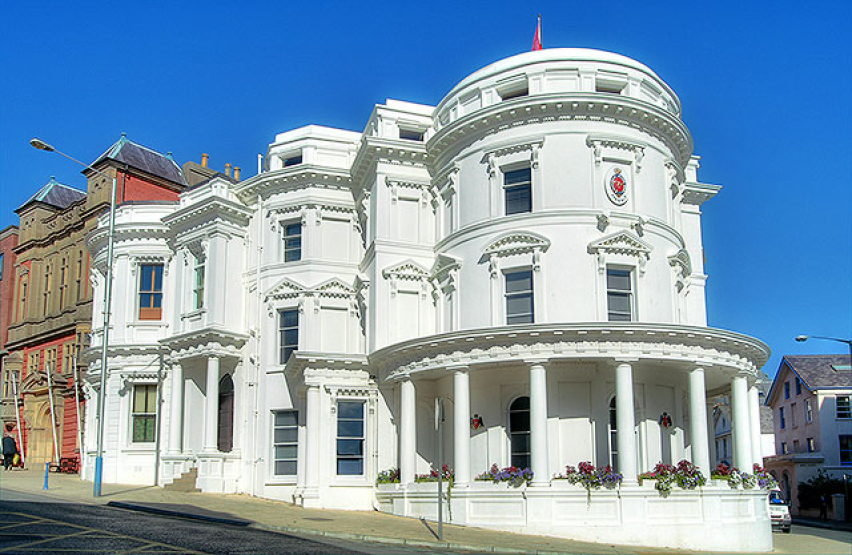
Churches on the Isle of Man are urging members of parliament to reject an assisted dying bill they say is rushed and fails to protect vulnerable people.
Churches Alive in Mann represents the Church of England, Methodist Church, Catholic Church, United Reformed Church, Living Hope, Elim Onchan, Salvation Army, and Broadway Baptist.
The bill is not yet law. Royal Assent was declined once over human rights concerns raised by the U.K. Ministry of Justice, and following amendments in June, the bill has been re-submitted. If assent is not granted by Aug. 13 — when the Manx parliament, known as the House of Keys, dissolves for general elections — the bill would fall.
The Rev. Bill Leishman, minister of Broadway Baptist Church and assisted dying spokesman for Churches Alive in Mann, told Christian Daily International the bill was not "a done deal."
"In reality, there is still a slim chance that it will fall," said Leishman.
"Lots of Christians on this Island are praying for this," he said.
"As to concerns should the Bill pass, the biggest issue is the impact on vulnerable people."
Leishman said the churches had noted real evidence of coercion in contexts where assisted dying has been legalized, including in Canada, the Netherlands, and Belgium.
"Even without explicit and hard-to-spot coercion, there would be a subtle societal pressure," he added.
"In Oregon [U.S.], over the last few years, roughly half of people who have died through the Death With Dignity Act stated burden on family or loved ones as a reason to choose an assisted death," said Leishman.
Too many elderly or vulnerable people already feel a burden to their families, he said, without adding the pressure of assisted dying.
"We are also deeply concerned about the impact this has on suicide prevention. To say to one group of people 'Your life is worth living' while facilitating another group to end their lives is a mismatch of values."
Leishman said the death penalty had been abolished on the Isle of Man and in the U.K. decades ago because innocent people were killed — a punishment with no remedy. He drew a direct comparison with the bill's effect on vulnerable people and said, "it's the same."
"How many vulnerable people would be needlessly killed, or how many people might be coerced without detection?" he asked. "How many of those would make it worthwhile to give others a choice? We believe the risk is too great."
"Alongside our Christian calling to speak up for the voiceless and to protect the neediest in our society, the Churches on the Isle of Man are clear that life is sacred.
"We have consistently called to fund Hospice more adequately, as the only safe way to help people have an end of life choice and a good death."
Churches Alive in Mann issued a statement last month titled "Response to Assisted Dying Bill Amendments," raising concerns about the safety of the proposed law with particular focus on the most vulnerable members of Manx society.
The churches welcomed several protections in the proposed Tynwald Amendments regarding mental capacity, coercion and reporting, but said "deep concerns" remained. Key protections had been "very rushed" without the usual parliamentary scrutiny, they said.
The churches said the island's democratic processes had never seen such a quick turnaround — apart from minor procedural changes — certainly not on matters of life and death.
Calling for fuller scrutiny, the churches raised concerns about the impact on hospice and palliative care funding, alongside concerns from the Isle of Man Medical Society: that the bill would spark a healthcare recruitment crisis, leave vulnerable patients exposed to undetectable coercion, and force clinicians to make unreliable life-expectancy predictions.
Specific concerns remained about the requirement that an attending doctor in an assisted dying case need not have specific experience in diagnosing or managing terminal illness.
With only one medical professional required — and that person not required to be a doctor despite the risk of complications — the churches warned of a lack of transparency or protection against coercion. A doctor would also be free to ignore conclusions of safeguarding and psychiatric referrals in certain circumstances, and the churches said conscientious objectors could face unemployment if they refuse to participate.
"The very existence of this legislation will inevitably cause some of our elderly, disabled or vulnerable people to feel more of a burden," the churches said in their joint statement.
"More worrying still, we believe the proposed amendments don't go far enough in guarding against coercion.
"As churches, we are often there to support people experiencing pain and difficulty, and we speak up now out of deep concern and compassion for all who would be impacted by this legislation.
"For thousands of years, 'Do not kill' has been an ethical foundation for many civilisations. We believe that all human life is a sacred gift from God. The value of any member of our society is not determined by variable measures of the quality of life. The premature ending of individual lives will inevitably diminish the high value we place on all lives."
The churches called on Tynwald members to reject the rushed package of amendments.
Dr. Graham McAll, a retired family physician on the Isle of Man and a member of Manx Duty of Care — an informal group of healthcare workers, social care workers, and others opposed to the bill — told Christian Daily International that the U.K. Ministry of Justice, which advises King Charles III, determined the bill lacked basic human rights protections under the European Convention on Human Rights (ECHR).
"Under ECHR, governments are required to protect the lives of their citizens, especially the vulnerable," said McAll. "This Bill failed on that count and had no independent review mechanism for deaths."
A short timescale before the election led to "some inadequate rushed corrections" being proposed, bypassing the usual process, he said. For that reason, Manx Duty of Care issued a warning of a possible legal challenge in the European Court before the amendments were voted through. Now that the bill is back with the Ministry of Justice, McAll expressed concern that any resulting law could lead to unnecessary deaths.
"We are very worried that this Bill could shorten people's lives unnecessarily, that doctors will make mistakes in their prognosis, that abuse victims will be coerced, that palliative care will be undermined and underfunded, and that, in the end, a choice to die will become for many a duty to die," said McAll.
"We, Manx Duty of Care, along with the charity Autism In Man, the Isle of Man Medical Society, and all the church denominations on the Island are firmly against this Bill. It is clear from Canada, Holland, and Belgium that once euthanasia is normalized, it spreads to those without terminal illness, and undue influence becomes common. And no drugs are licensed for this purpose anywhere in the world."
McAll called for competent Christians to stand for political election on the basis of the assisted dying issue and other relevant matters.
"All candidates in the upcoming election will need to be quizzed hard on their attitude to this complex issue. It could turn centuries of medical and social ethics upside down, and our government's suicide prevention strategy."