
Africa has made significant gains in expanding access to health care and training health professionals, but the continent still faces a large gap between the people it needs to provide care and those available to serve them.
The World Health Organization’s latest assessment projects a shortage of about 5.85 million health workers in the African Region by 2030. Yet, nearly one million trained health professionals are unemployed or underemployed, highlighting a paradox that goes beyond simply building more medical schools.
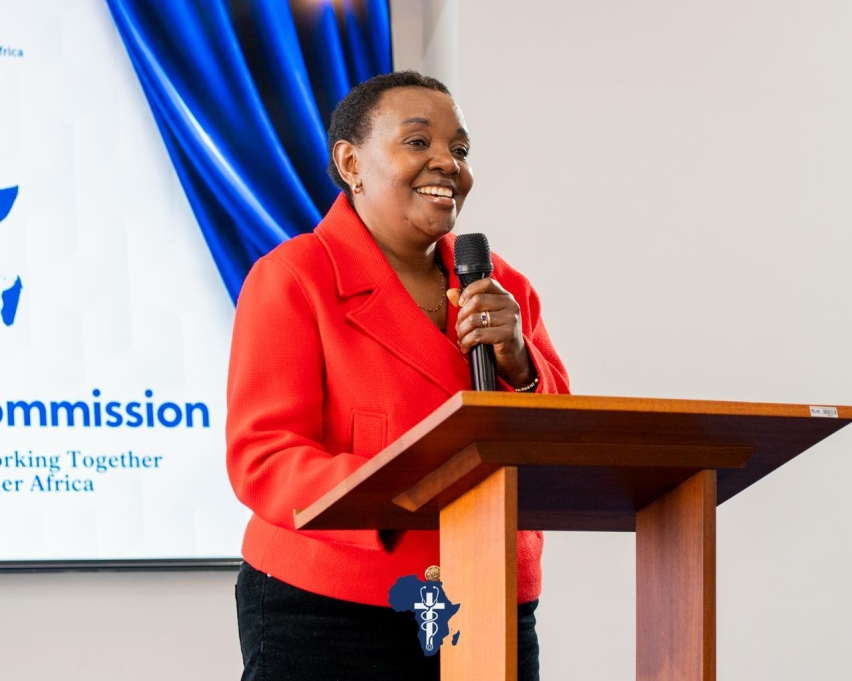
For Dr. Florence Muindi, a physician, missionary and founder of Life in Abundance, this dichotomy of two realities does not negate the progress made over the past three decades but it prompts a reimagining of providing quality healthcare as a ministry, a path that Dr. Muindi has been forging through Life in Abundance.
Muindi trained at the University of Nairobi before pursuing a master's degree in public health. She later worked with AMREF. It was during that period, she said, that she realized her professional path would take a different direction. She eventually stepped away from a conventional medical career to become a missionary.
“I practice as a missionary. My identity is that I am a child of God,” asserted Muindi in an interview with Christian Daily International. She was recently appointed chair of the Health Commission of the Association of Evangelicals in Africa (AEA), placing her at the intersection of health, Christian mission and leadership across the continent.
Her work with Life in Abundance has since taken her into marginalized communities across 12 African countries over more than three decades. Looking back, she said some of Africa's most important gains have come not only through physical infrastructure but through changes in communication, education and accessibility.
“Something happening in the remotest village could make headlines that same day,” she said, contrasting the situation with the 1984 drought crisis in East Africa, when communities could suffer without their circumstances being documented and widely known.
Muindi said better roads, transport, technology and communications have also made it possible to mobilize responses to crises more quickly.
Education, she added, has been particularly important because it enables people to turn information into action. “Education just brings empowered people into action," she said.
Yet the continent's health workforce remains under pressure. WHO says the health workforce in the African Region grew from 1.6 million in 2013 to about 5.1 million in 2022, while approximately 4,000 health-training institutions now produce more than 250,000 graduates annually. But the expansion has not kept pace with population needs, while weaknesses in employment, distribution and retention continue to undermine health systems. The organization has consequently shifted its emphasis from simply training more workers to planning, training, employing and retaining them.
Impact of faith-based institutions
In August, African health ministers endorsed an agenda to train and retain 3 million additional health workers by 2035.
Faith-based institutions already form an important part of that health-training landscape.
Research on faith-based health-professions schools has found that Christian organizations have historically played a substantial role in training nurses, midwives and other health professionals in several sub-Saharan African countries.
In Malawi, colleges linked to the Christian Health Association of Malawi have been reported to train a large share of the country’s health workforce, while faith-based providers in Uganda have also played a major role in nursing education.
Kenya has its own network of faith-based medical and nursing institutions, including schools connected to mission hospitals and Christian health organizations. Institutions such as AIC Kapsowar Medical Training College and PCEA Kikuyu Hospital School of Nursing train health professionals within Christian institutions and clinical settings.
Muindi believes there is room for further expansion. She noted that when she graduated from medical school about 30 years ago, Kenya had only one medical school. Today, she said, the country has roughly 12 to 13 accredited medical schools, while training for nurses, clinical officers, laboratory technicians and other health professionals has also expanded.
“We may not be keeping pace with the growth in population, but for sure, there is so much gain that's being made,” she said.
For Muindi, however, expanding the number of institutions is only part of the answer. The deeper question is what kind of professionals and leaders those institutions produce.
That question extends beyond medicine to the wider role of Christian education in African society.
Muindi argues that Christian education has sometimes adopted a dualistic approach in which faith and professional life are treated as separate worlds. A person may practice Christianity in church and then leave those convictions behind when entering the workplace.
“I do believe leaders are called to be holistic, to develop their character and integrity and be able to practice it in private or in public,” she said.
She believes Christian institutions should therefore prepare graduates to understand their professions as places of service and responsibility, rather than treating professional training and spiritual formation as separate exercises.
As chancellor of Daystar University, Muindi said Christian higher education has a role in producing “all-rounded leaders” whose faith shapes how they work and serve society. Daystar launched its Leadership and Governance Institute in August, with Muindi emphasizing the need to equip young people to become leaders in their generation
The challenge is significant. The African Development Bank has identified weak leadership, corruption, political interference and institutional capacity constraints among factors contributing to weak governance in parts of the continent. It has also linked stronger institutions, accountability and transparency to better development outcomes.
Public concerns about leadership are also reflected in recent Afrobarometer findings. Across 38 African countries surveyed, health care ranked as the top public service concern, while 54% of respondents gave their governments failing marks for health care, infrastructure and electricity.
The survey also found that 22% of people who had sought medical care in the previous year reported paying a bribe to obtain the service.
For Muindi, addressing such problems ultimately requires more than policies and institutions.
She argues that the church has a responsibility to disciple people whose Christian convictions shape how they behave during the six days of the week when they are not in church.
“I believe that is going to be the only way we can fight the social evils that exist,” she said. “Instead of focusing on the evils, we could focus on changed characters and then we dilute the evils.”
Her vision of leadership is therefore closely tied to her understanding of service. She said her work has been driven by a desire to see Africa, know God, confront poverty and ensure that vulnerable people are served with dignity and respect.
“I feel very strongly about raising a voice,” she said, “to enable the poor and the vulnerable to be served with dignity and respect.”
The future of Africa's transformation is therefore not only about building more hospitals, training more professionals or creating stronger institutions. It is also about forming people whose faith, professional calling and character are not separated from one another.








