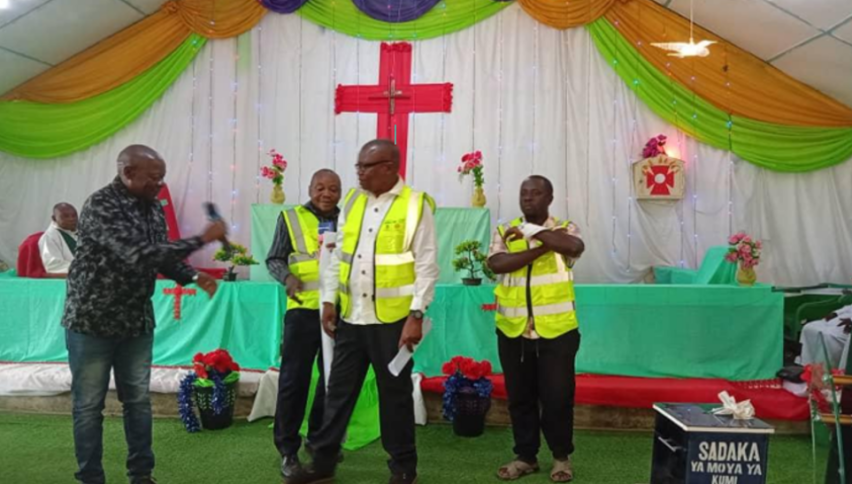
Churches in eastern Democratic Republic of the Congo are stepping up efforts to combat Ebola by equipping pastors and community leaders with lifesaving health information as the region battles one of the deadliest outbreaks in recent history.
The initiative, led by Christian health organization Ensemble pour la Santé et le Développement Holistique en Milieu Rural et Périurbain, or ESADER, received support through a microgrant from the Christian Connections for International Health donor network. The project focused on strengthening Ebola prevention in communities around Beni, a city that has repeatedly been at the center of Ebola outbreaks.
According to Christian Connections for International Health, the project trained pastors, youth leaders, health workers and other community representatives to recognize Ebola symptoms, promote hygiene practices and encourage people to seek medical care quickly if they become ill. Churches, schools and health centers also received educational materials and handwashing supplies to support local prevention efforts.
The effort comes as eastern Congo continues to grapple with a rapidly expanding outbreak of the Bundibugyo strain of Ebola, a rare form of the virus for which there is currently no approved vaccine or specific treatment.
The World Health Organization has repeatedly stressed that community engagement is essential to bringing the outbreak under control.
“The outbreak is occurring in a challenging context,” the WHO said in a recent situation update, citing insecurity, humanitarian needs and frequent cross-border movement. The agency added that “community engagement will be key” to stopping transmission.
Health experts say faith leaders often serve as trusted voices in communities where misinformation, fear and conflict can make public health messaging difficult. Churches are frequently among the first institutions families turn to during crises, giving pastors a unique opportunity to encourage early reporting of symptoms and discourage practices that could spread infection.
Christian Connections for International Health said ESADER’s program sought to build that trust by working directly with local churches and community organizations rather than relying solely on government messaging.
The outbreak has become one of the most serious Ebola epidemics on record. More than 2,500 confirmed cases and over 1,000 deaths have been reported in the Democratic Republic of the Congo and Uganda since the outbreak began in May.
While health officials have seen some signs that transmission may be slowing in certain areas, they warn the epidemic has not yet reached its peak. Contact tracing remains well below the level needed to stop the virus from spreading, and insecurity in eastern Congo continues to hamper response efforts.
The WHO has expanded surveillance, laboratory testing, treatment capacity and cross-border preparedness while supporting the governments of Congo and Uganda. Researchers have also begun clinical trials evaluating potential treatments for the Bundibugyo strain, though officials caution it will take time to determine whether the experimental therapies are effective.
The international concern surrounding the outbreak has also affected Christian humanitarian organizations working on the front lines.
Reuters reported that seven American aid workers with the evangelical relief organization Samaritan's Purse entered a newly established U.S.-backed quarantine facility in Kenya after completing Ebola response work in the Democratic Republic of the Congo.
The workers, who were not showing symptoms, began a mandatory 21-day observation period under new U.S. travel restrictions requiring Americans returning from outbreak areas to spend three weeks in a third country before entering the United States.
Franklin Graham, president and CEO of Samaritan's Purse, told Reuters, “None of them have any symptoms, but they are being quarantined by the Kenyan government for 21 days.”
Graham has previously warned that the new travel policy could make it more difficult to recruit healthcare professionals willing to deploy to the outbreak zone, potentially reducing the organization's ability to respond.
Samaritan's Purse operates Ebola treatment centers in eastern Congo and has been among the largest Christian organizations supporting the international response.
The WHO continues to emphasize that Ebola spreads through direct contact with the bodily fluids of infected people or animals and that individuals do not become contagious until symptoms develop. Early identification of cases, isolation of infected patients, contact tracing and community cooperation remain the cornerstones of controlling the disease.